My post-college-graduation trip took me straight down a meridian to Peru.
With just a handful of highway maps printed off the internet and a rough plan to see three countries in seven weeks, I got off my plane and wandered off into the night.
to the index page
Toss out your romantic visions of a solo traveler in the Andes Mountains, carrying enough cash to be filthy rich among the locals, traveling freely every day with no plans beyond the next meal, exploring ancient ruins, visiting famous cities, eating the best foods, staying at the best hotels, and partying the nights away to cerveza, salsa, and soft Spanish rock. Think instead of lonely wandering, watching for thieves, fearing pickpockets, fending off beggars, and learning to trust no one no matter how good a friend they seem. Think of hard beds and missing toilet seats and food poisoning and overcrowded buses with windows locked shut and bitterly cold mornings and no hot water for weeks at a time and no one to speak with in your native language. Remember, the most beautiful places are the most difficult to get to.
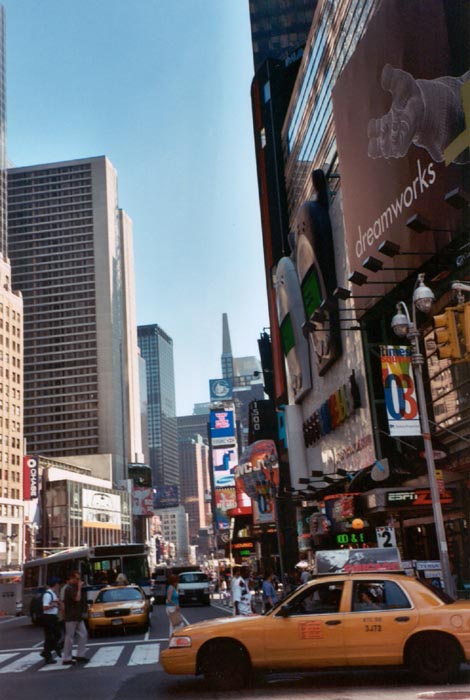
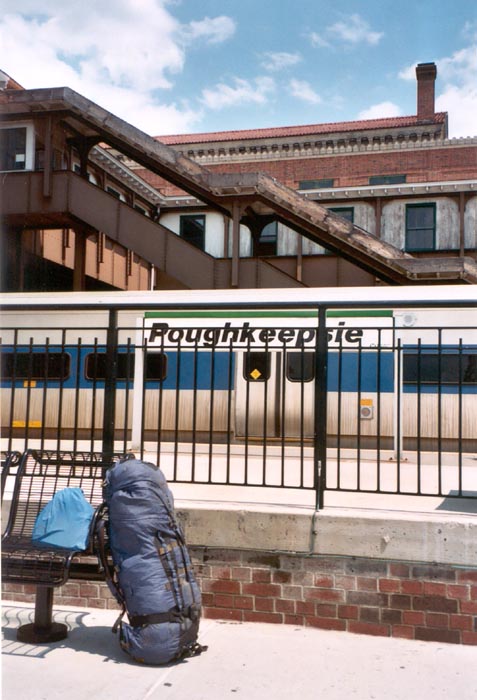
I hadn't planned to go alone. It isn't particularly safe to travel solo, and it is absolutely miserable being sick and alone and on the move in a strange place. But Erin had landed a summer volunteer position studying birds for the USGS on the island of Hawaii and though I'd already bought her a ticket we agreed that it would be good for her to take the position. I'd be traveling alone, my two-month romantic adventure through paradise reduced to a solitary tour of silence, and as it turned out we didn't see each other again but for one final weekend in August. It was with some disappointment that I shook hands and parted with my father in a light rain at the Poughkeepsie station. From then on I knew for nearly two months I'd have nothing but my 25-pound backpack and the clothes I was wearing. On the train to Grand Central Station I shared my row with a freelance photographer going to Trenton to shoot for a women's magazine. He'd barely made the train and was a little shaken up, so with halting, excited words he told me about his work. "Pretty pictures," he said. He asked where I was going and was envious when I told him. When we slowed to a stop at stations the faces of waiting passengers on the platform slid by, blank expressions on their faces and wet concrete, dripping green leaves, and the slate gray water of the Hudson River behind them. Everyone was going someplace and most were silent, aware of the many hours of travel ahead. I sat quietly for the rest of the ride and hurried through the Terminal until I found the way to Penn Station via subway. I was nervous about getting to the airport on time, but I arrived very early and checked in. Sitting at the gate I began to feel as if I'd been there before - the chairs and tables were different but the architecture seemed familiar and the murals on the wall were definitely something I'd seen before. Then I remembered when it was: I flew Continental to Mexico City the year before and departed from a nearby gate. It seemed so long ago. Now, once again, I was headed south.







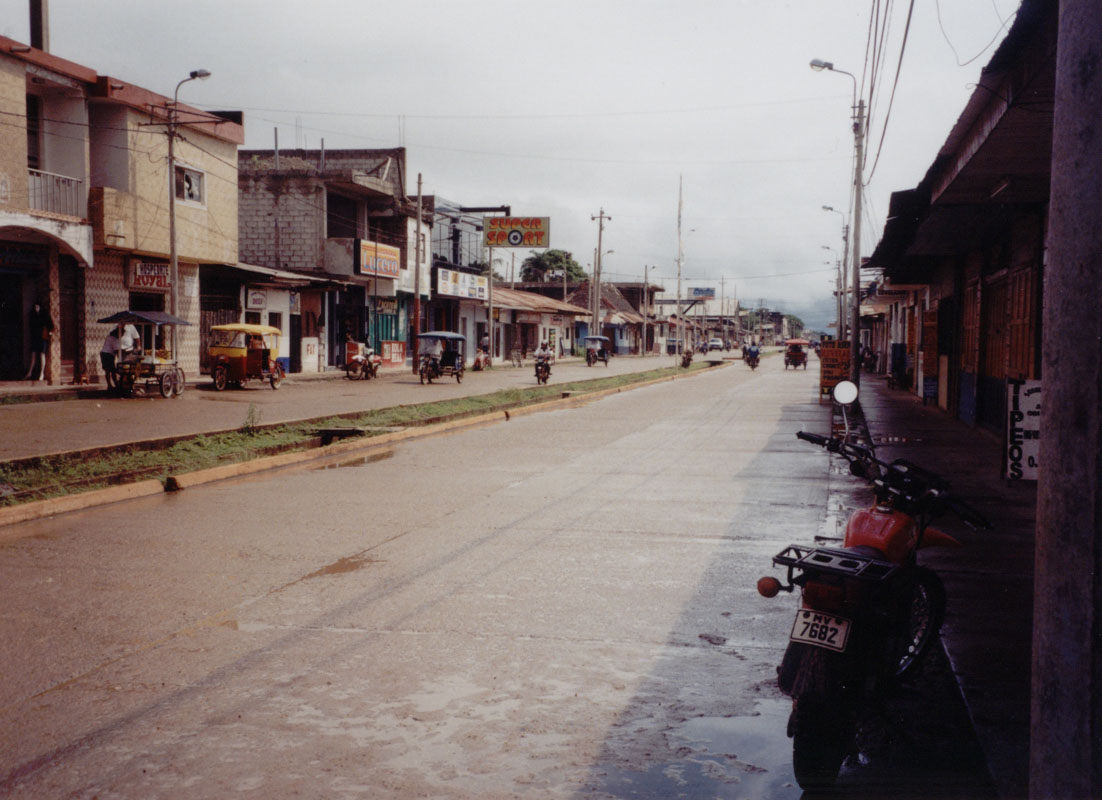


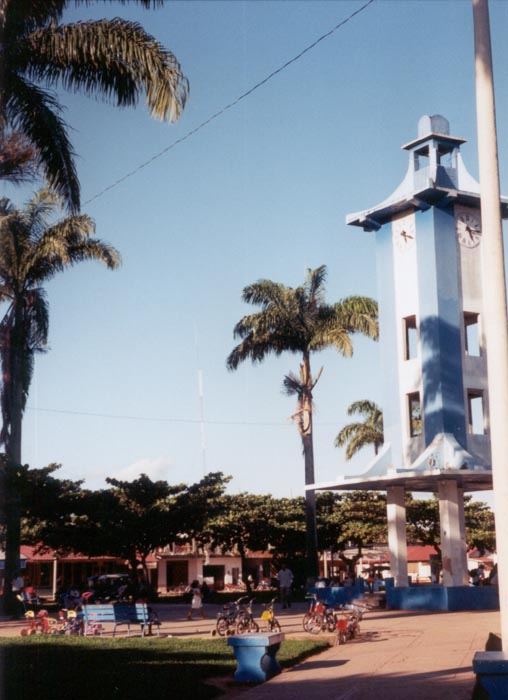

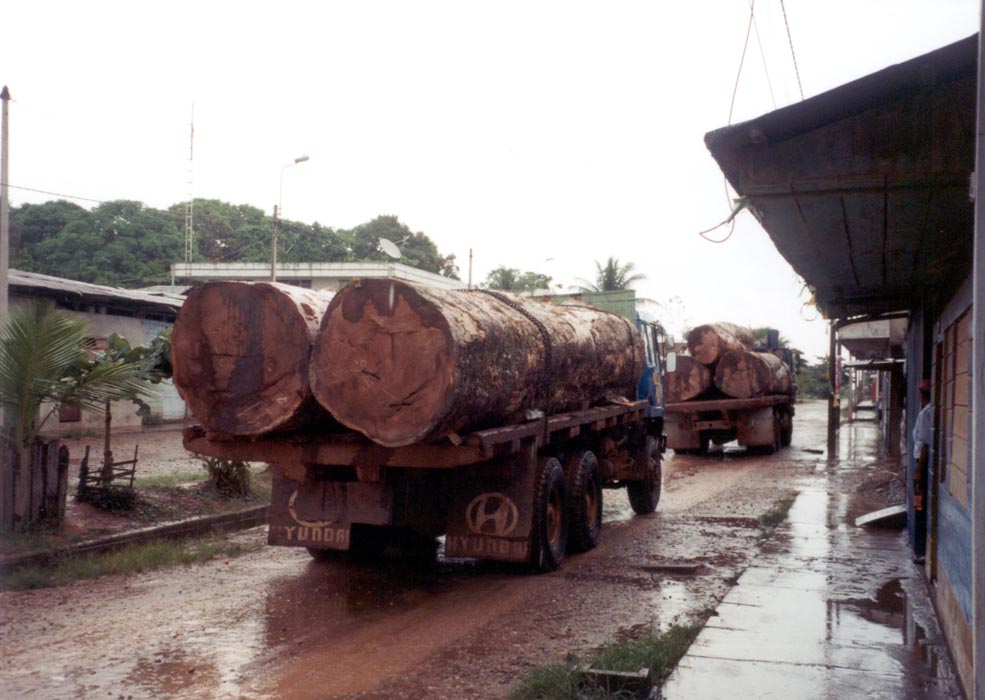

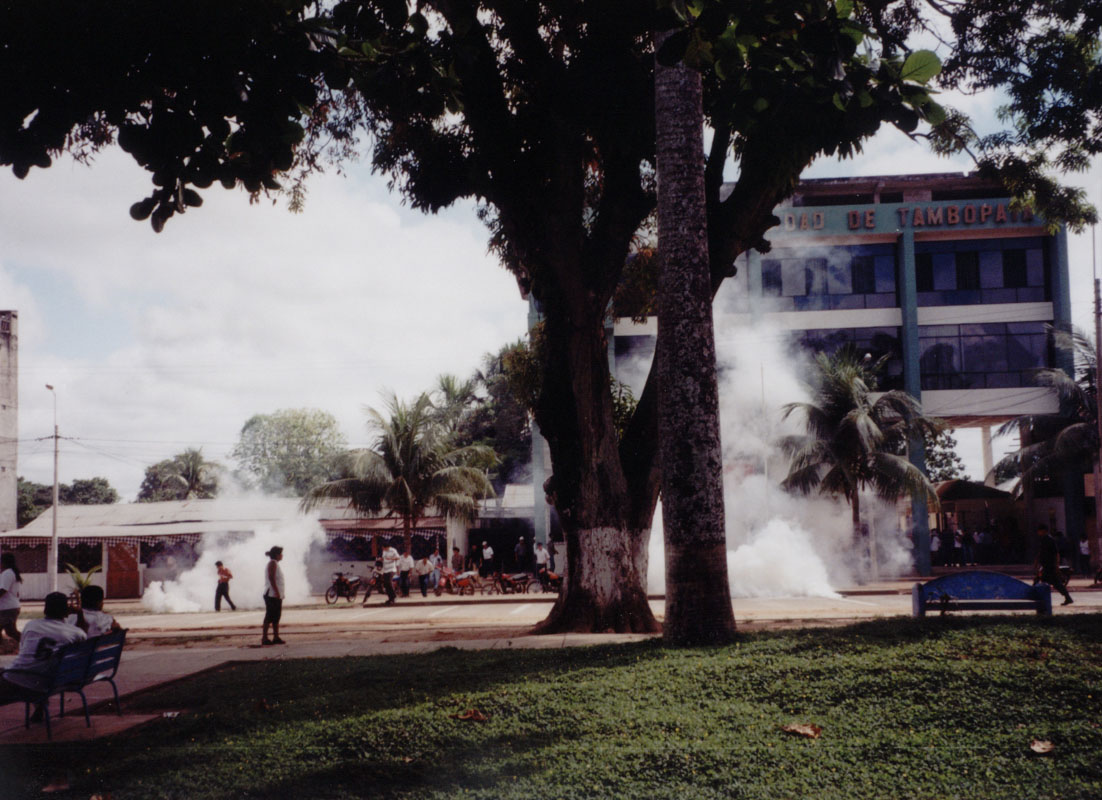



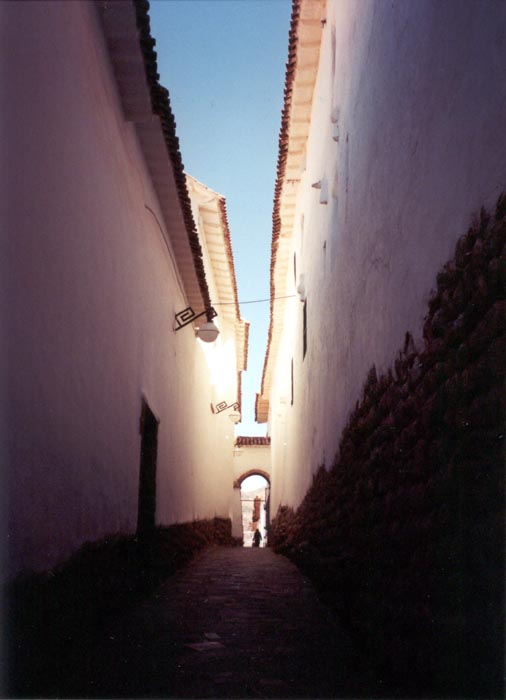


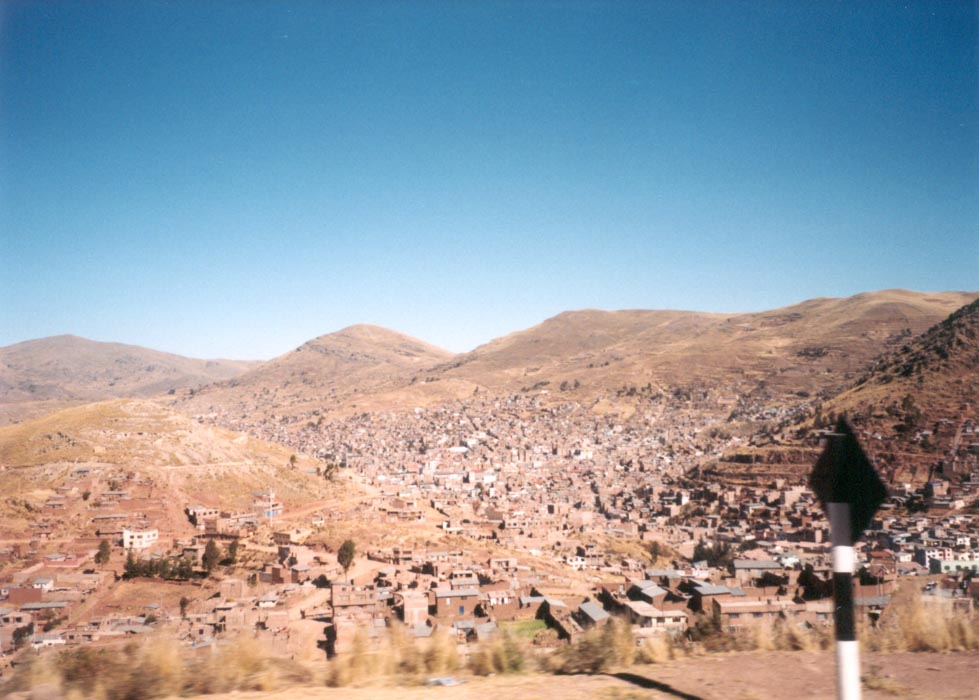
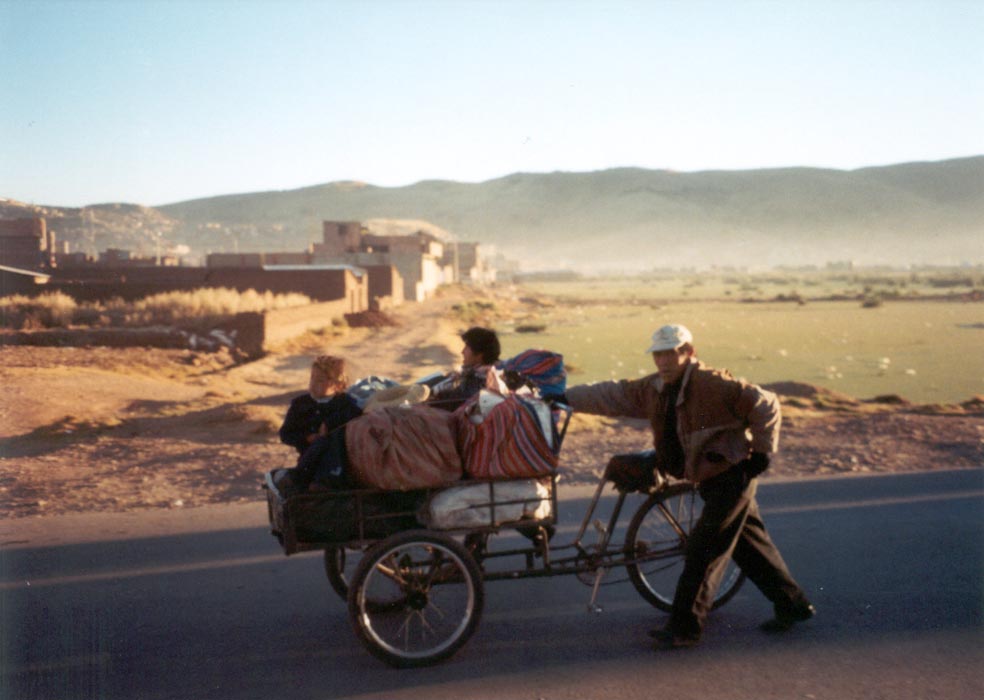
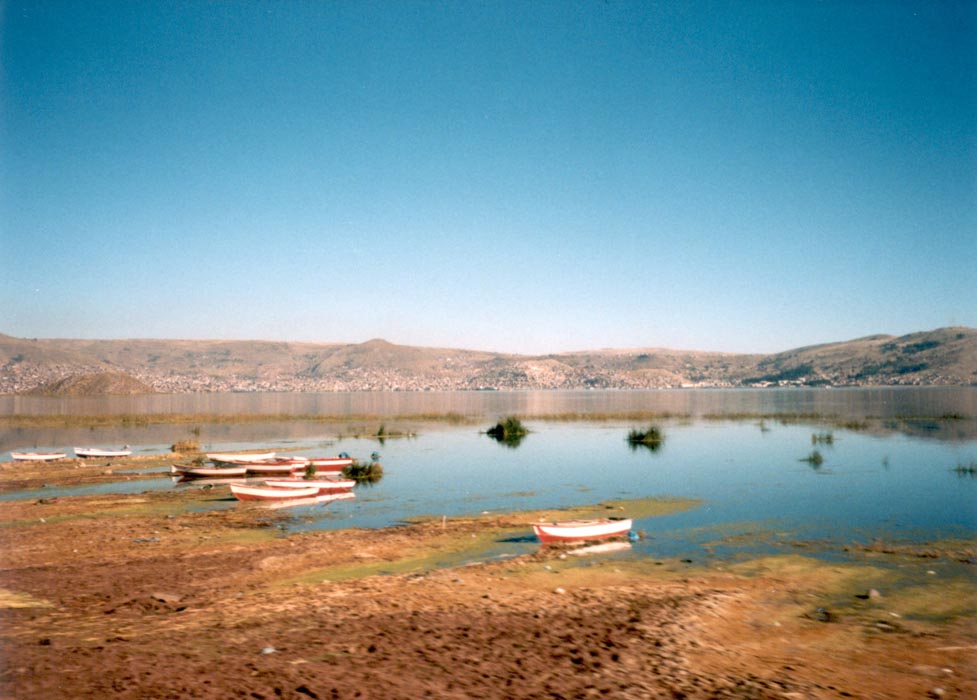

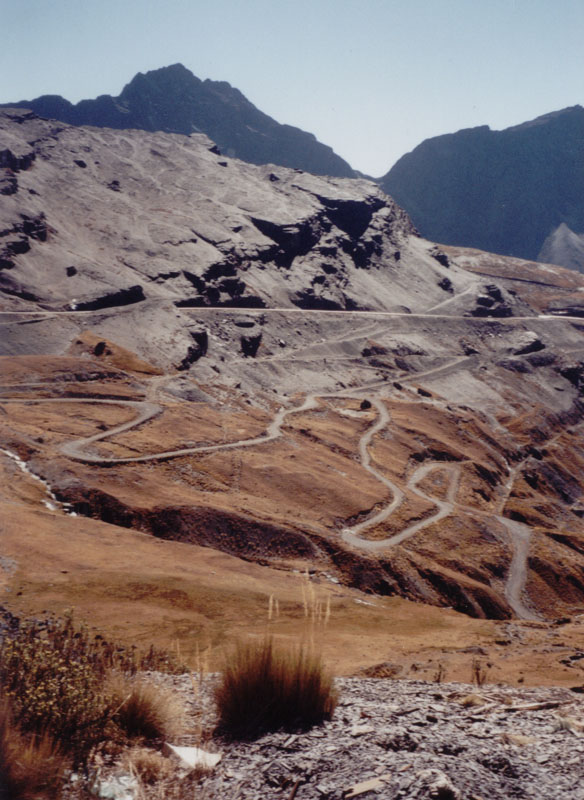
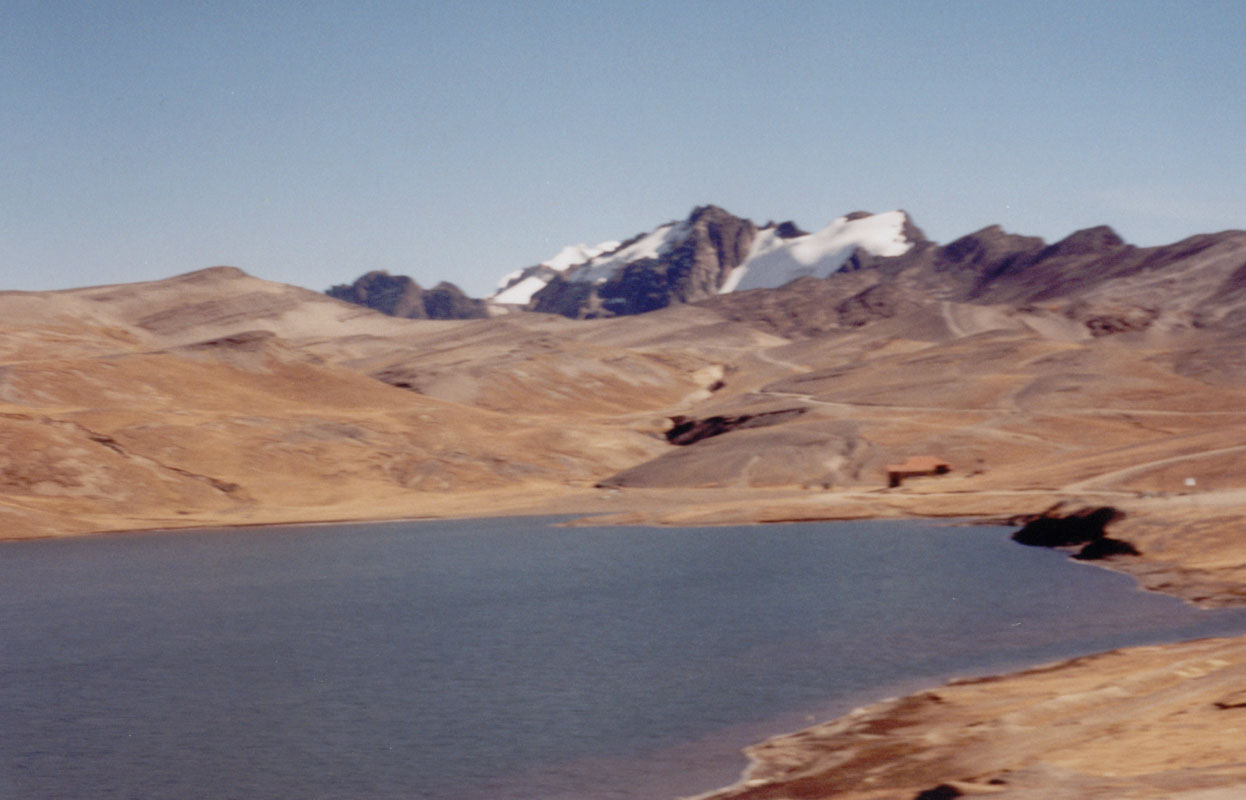
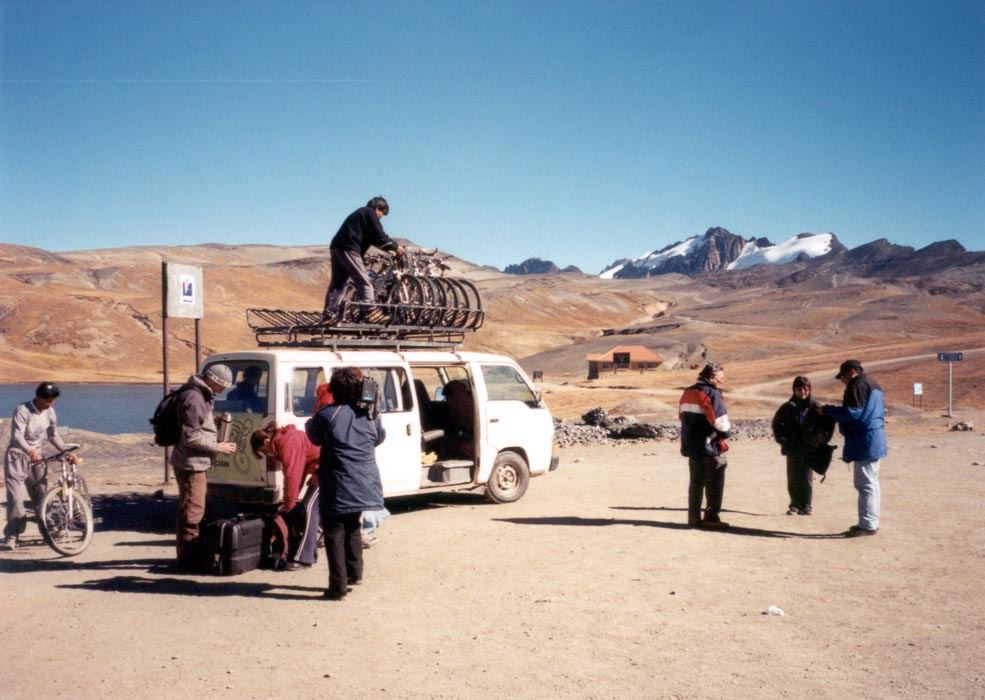
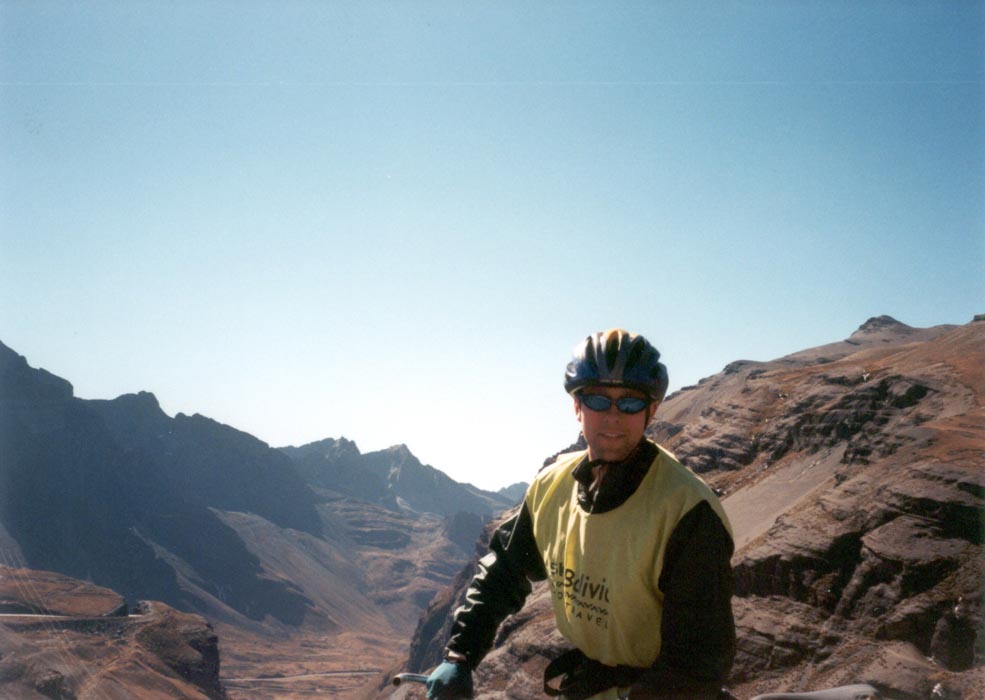

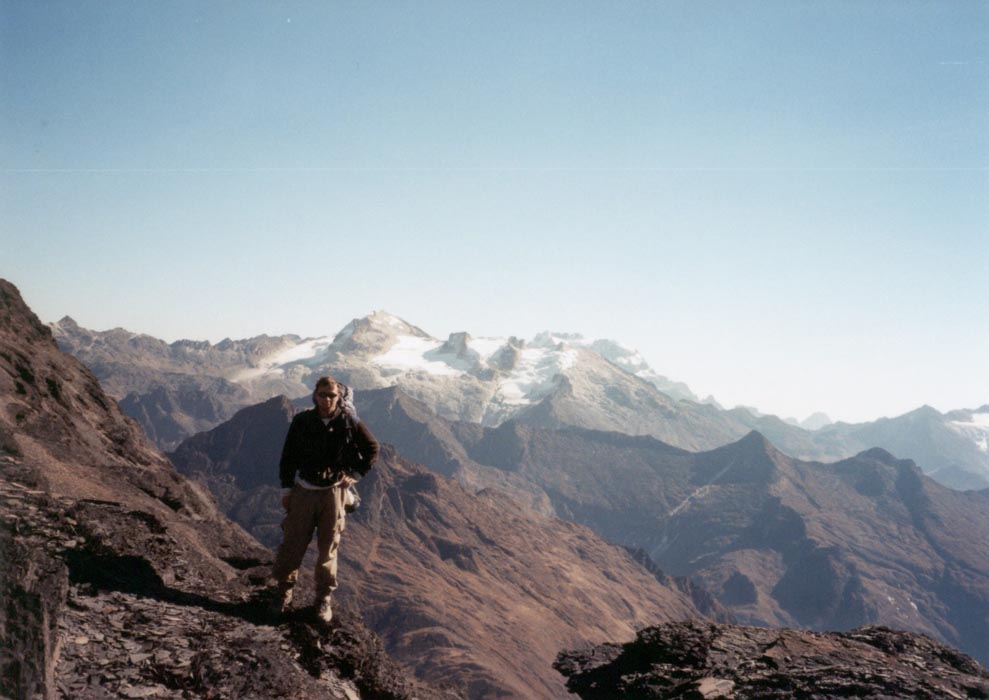
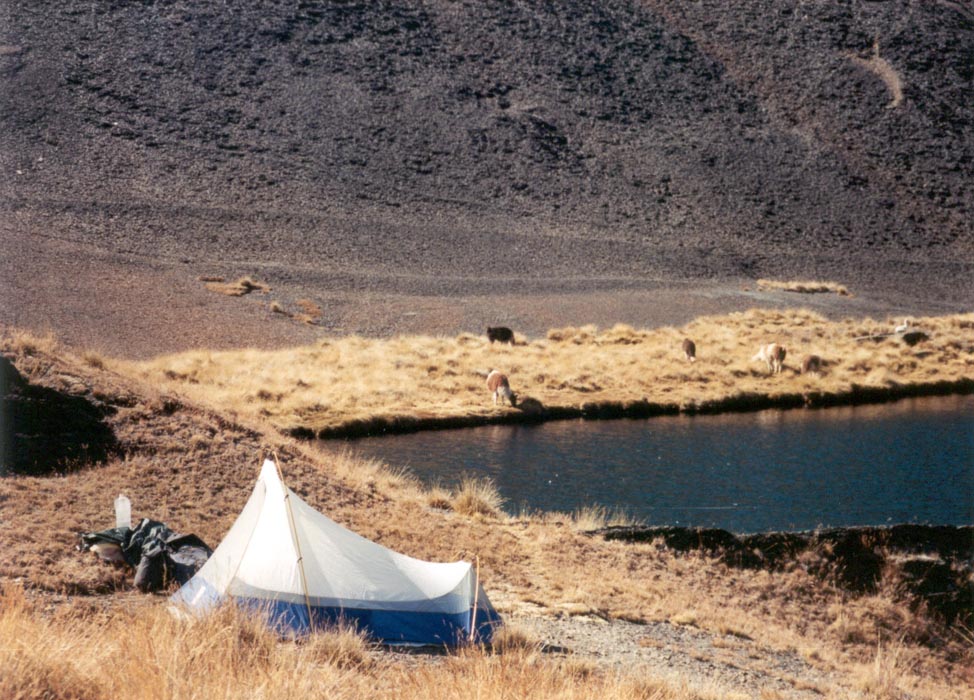
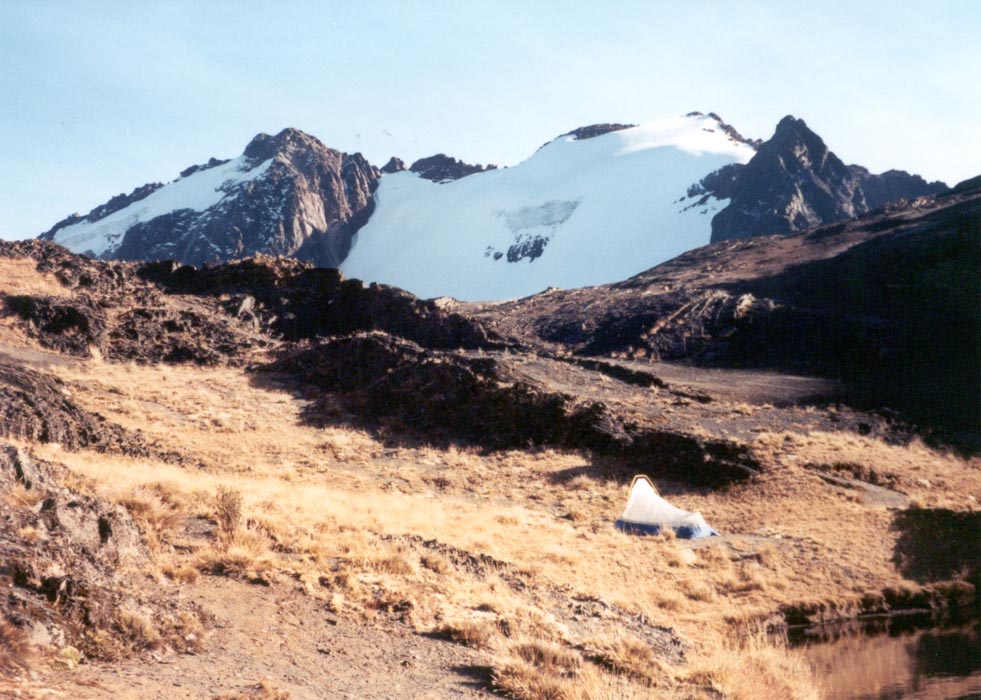
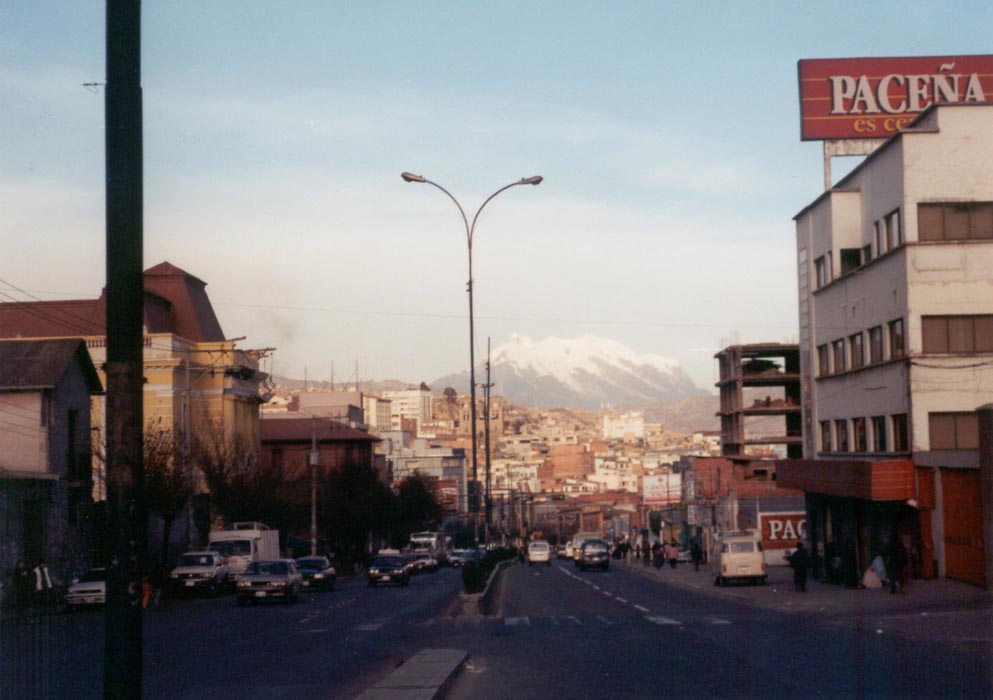
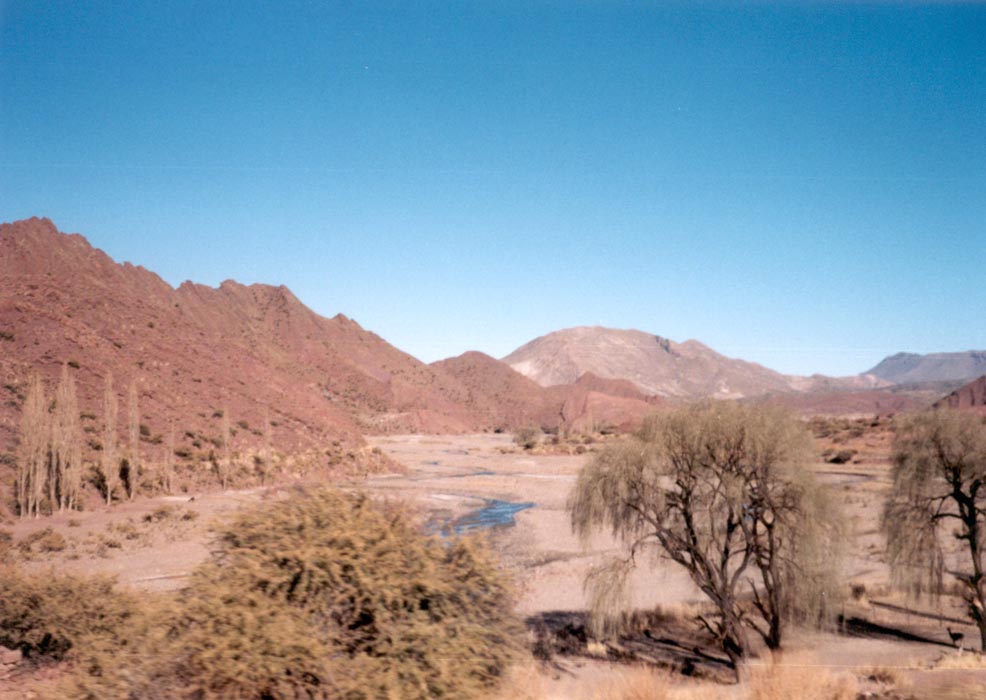

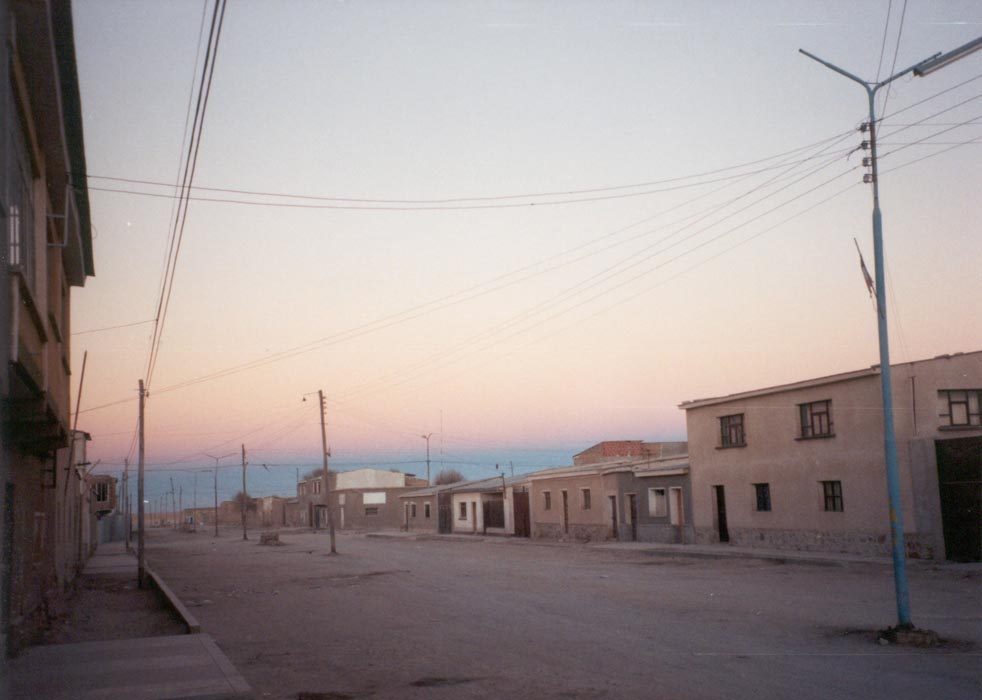
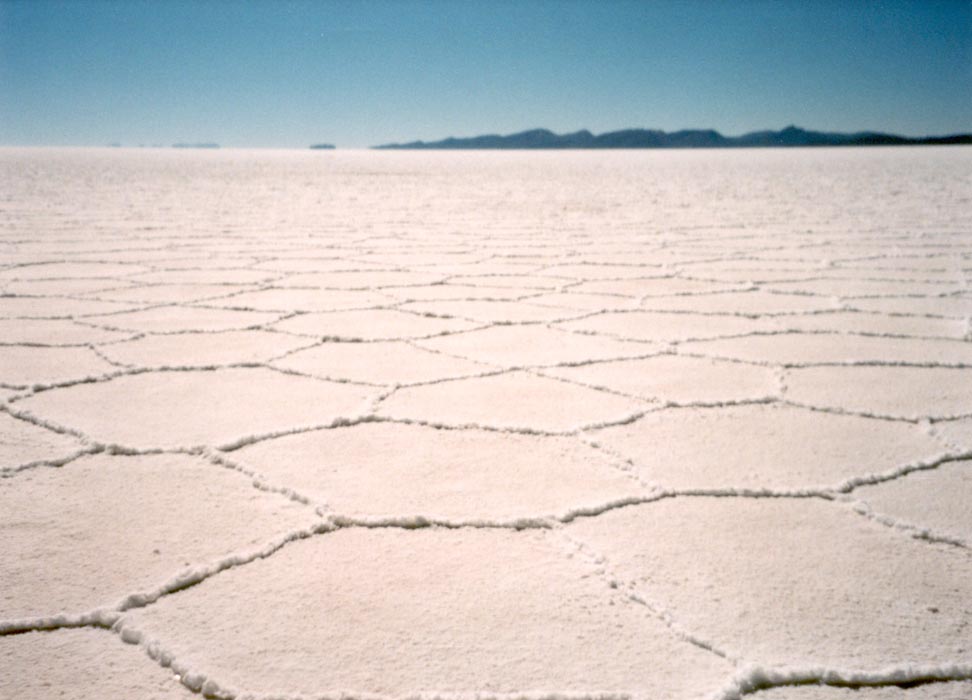
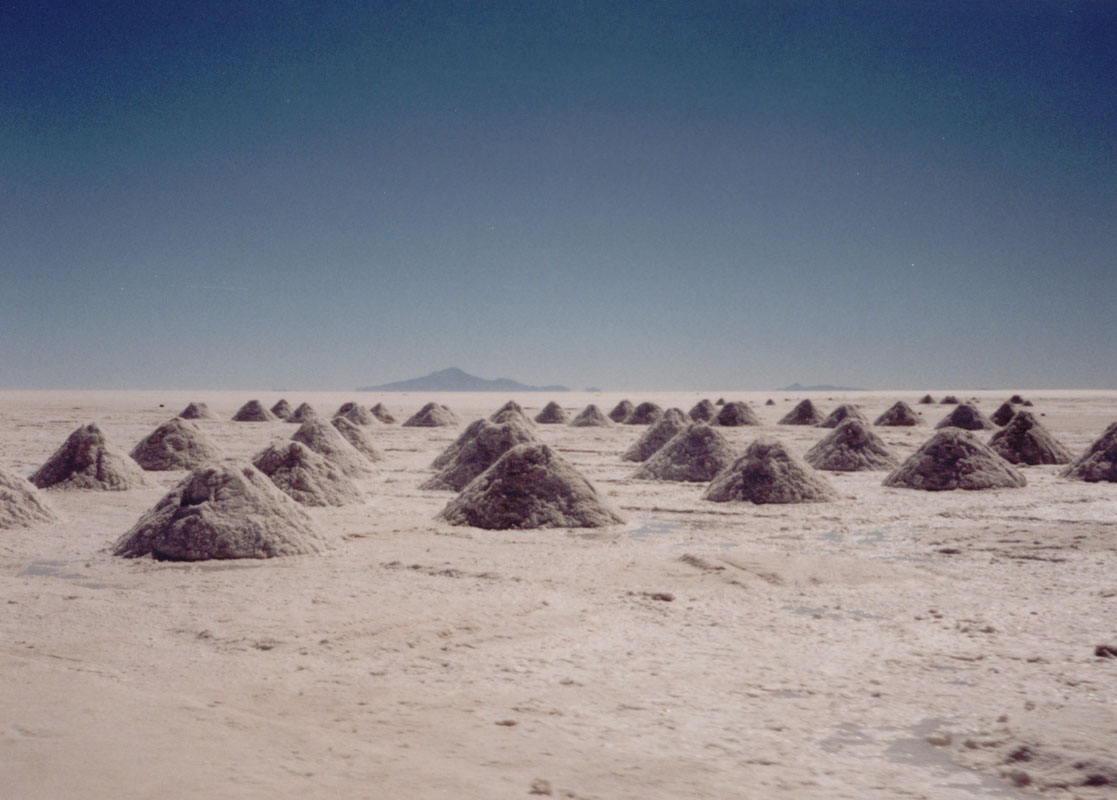




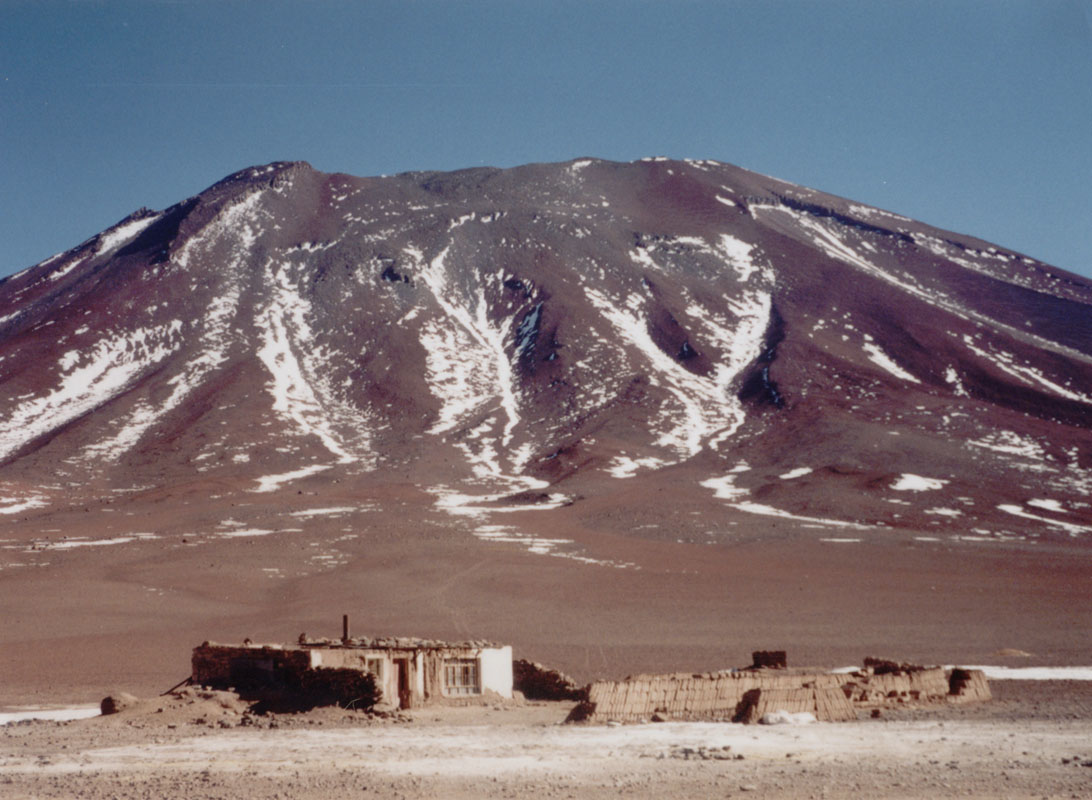
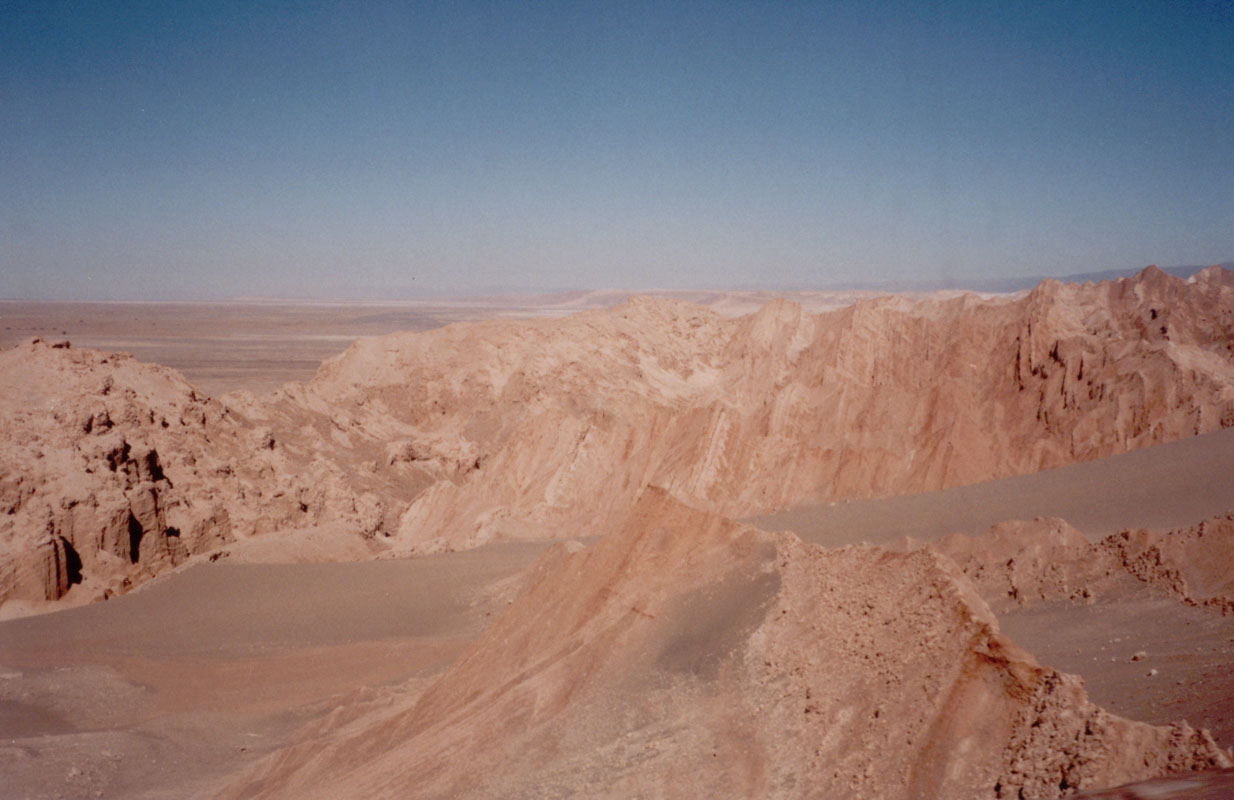
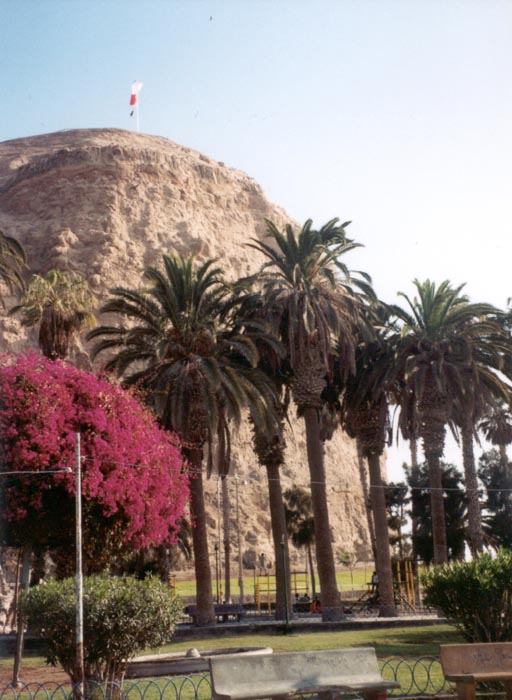
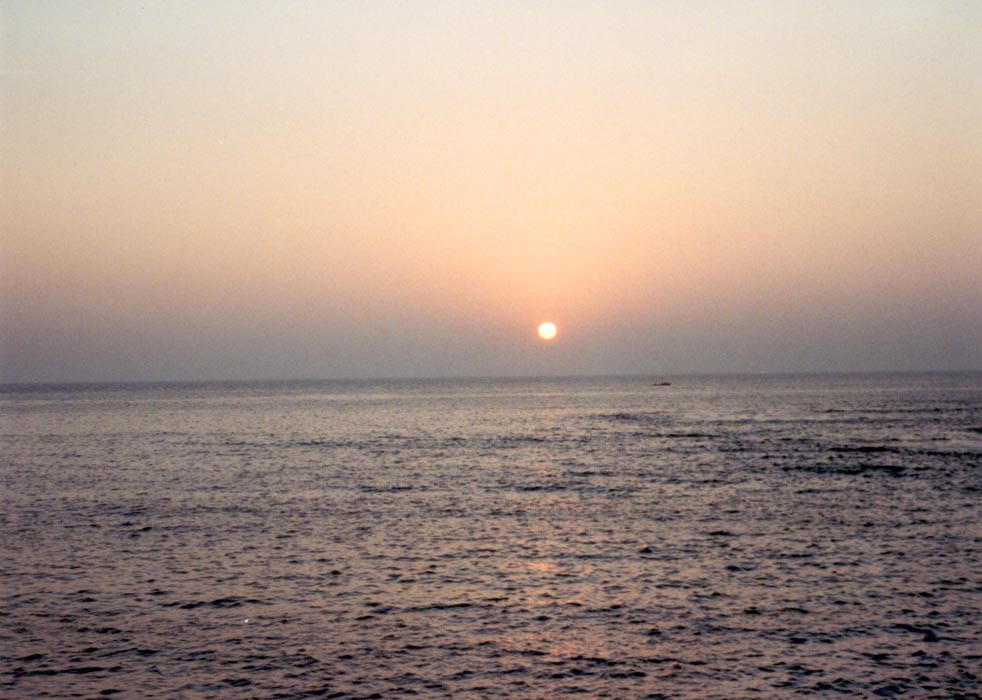





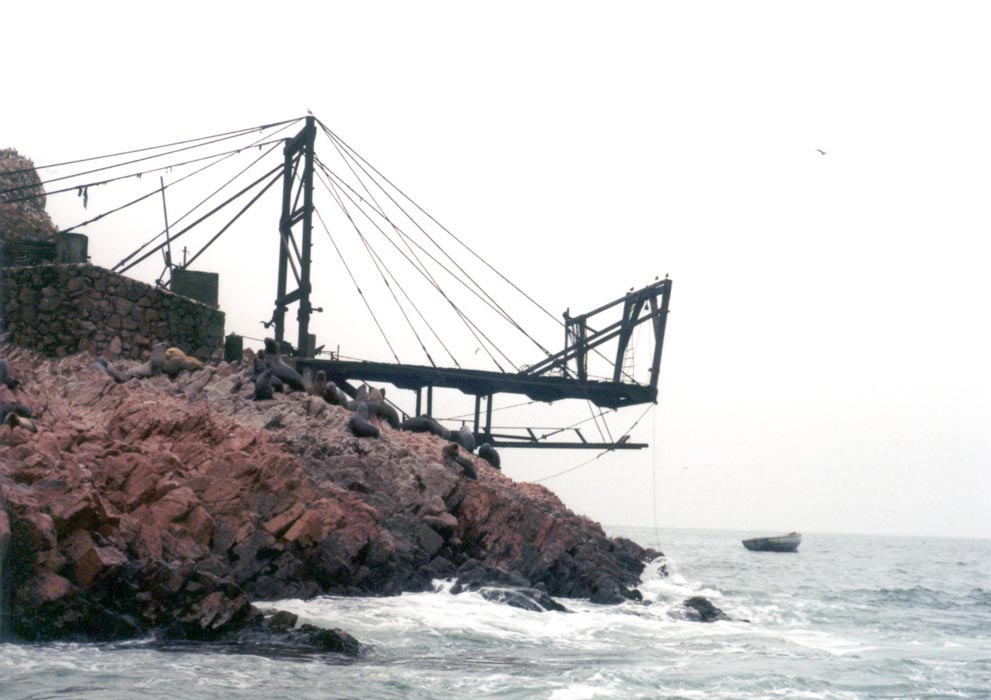
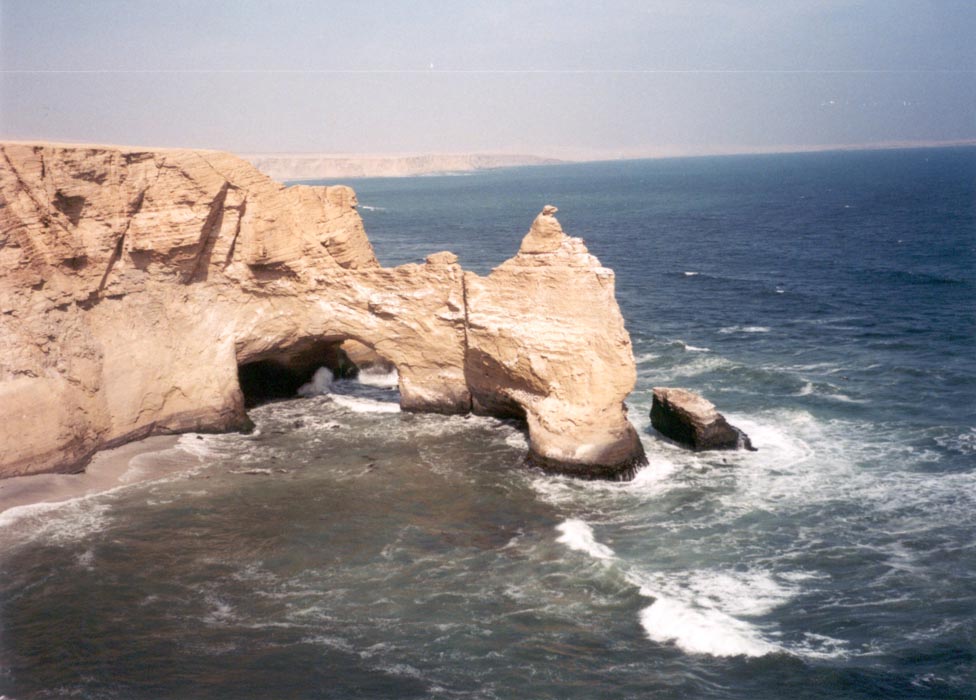
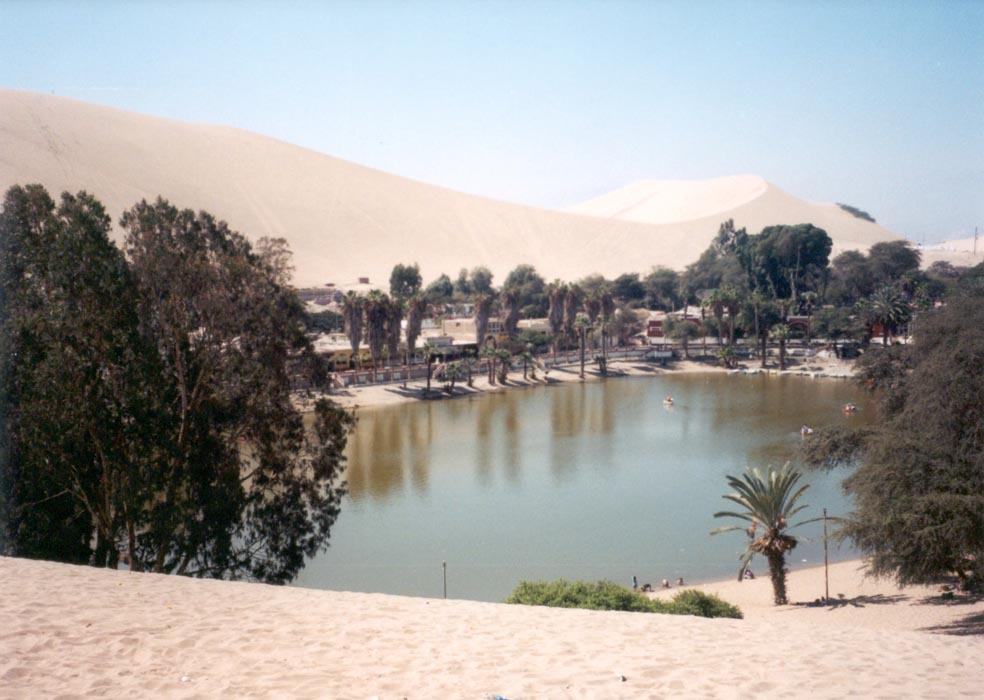
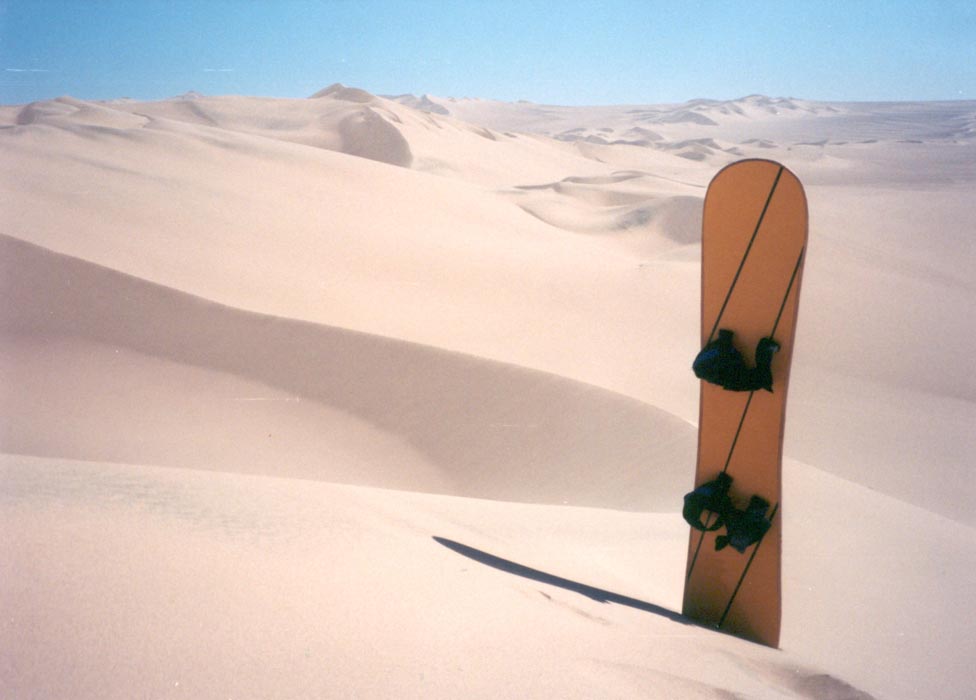


My flight to Lima had many empty seats and I had three together to stretch out in but no one to talk to. Flying down the meridian we had excellent views of the low sun casting shadows and shimmering off the Caribbean Sea below. The sun set as we crossed the Caribbean and it was completely dark when I looked out my window and saw the lights of Panama City below. I began to feel very far from home and increasingly nervous about what I would do upon arriving in Lima late at night. There was a time difference because the States was on Daylight Savings time, so it would be even later when I arrived in Peru. Fortunately customs and immigration did not delay me and my backpack arrived safely. I changed some money and was snagged at the Tourist Information desk, where a pretty girl who spoke English described all my accommodation options. I asked about the bus to Huancayo and was told that there was trouble there - striking teachers - and that I should not go. Also I was advised against going to the old city center, where there would be demonstrations every day. It was enough to convince me to accept a bus ride to a hostel in the financial district of Miraflores, affordable and safe. The bus drove through the dark city and I was surprised by how much it looked like Mexico City. The dirty streets were lit dimly by orange sodium lights and people wandered in and out of dilapidated brick shacks. I noted that many young people were out and they dressed in stylish clothes, in spite of the poverty they walked through. This is Peru, I thought. It didn't seem so foreign anymore for some reason and I slept well, content in my new home. I wasn't surprised the next morning when the girl from the airport counter stopped in at the hostel to chat with the manager.
After a light breakfast of dry bread with jam, juice, and tea I agreed to follow a woman from the hostel to a tour agency. Everyone has friends in the tourist business and they throw a wide net to catch our dollars. At the agency she took a sheet of paper and began planning out my entire trip! Once she learned that I was not going to buy a tour and only wanted a bus ticket, she crossly sent me to the corner for a taxi to the bus terminal. But, I'd gotten the bus departure times and learned a little more about the political situation: there was a presidential convention happening in Cuzco and strikes and protests had all but shut down Cuzco and some of the hill towns. An English woman headed home said she'd been caught in a cloud of tear gas, but it was a casual comment and she went on to tell me about how beautiful the city was and assured me that I'd find many affordable places to stay. I was disappointed about not getting to see Huancayo and Ayacucho but also there was also a warning by the US State Department, several months old, regarding Sendero Luminoso activity in that area. I'm no fool, I thought. I may be a bit overconfident marching in here all alone with no plans but I'm not going to walk into trouble on my first day in the country. Instead I made plans to go to Cuzco via Arequipa.
That meant riding a bus 26 hours south, east, and then north again. Departures were in the late afternoon. It was still early in the morning so I walked around the city for a while but I'd heard plenty of stories about bag-snatchers in Lima and was eager to leave town and get going with my travels without any mishaps. Miraflores was misty and wet and nothing was open early in the morning. I eyed the taxis carefully, trying to discern whether or not there was any reason not to hail a cab from the curb. All the guide books always say it isn't safe, but I saw dozens of hard-working young men driving around trying to earn enough money to support their families. In seven weeks I only had one driver who was dishonest and never did I feel unsafe. I'm not good prey though, at least appearing capable and confident and aggressive in my bargaining. I took a taxi to the Ormeno terminal and bought a ticket for a 4pm bus, then set out to find food. I was in a residential area so there were not many restaurants and of course no one else wandering around with a backpack. Seeing several cevicherias, I chose one and ordered myself a big plate of ceviche - raw fish marinated in lime juice with red onions, chiles, and sides of roasted and boiled corn, sweet potatoes, and fried bits of fish. It was acceptable, not amazing plus I knew I shouldn't make a habit of eating raw fish in Peru. I was just waiting to get sick! At the restaurant I saw a television news clip about protests in Huanuco showing tires burning in the streets and huge crowds of people. It made me wonder what I was getting myself into, so far from home with no way back until July. I walked nervously for the rest of the afternoon before returning to the bus station.
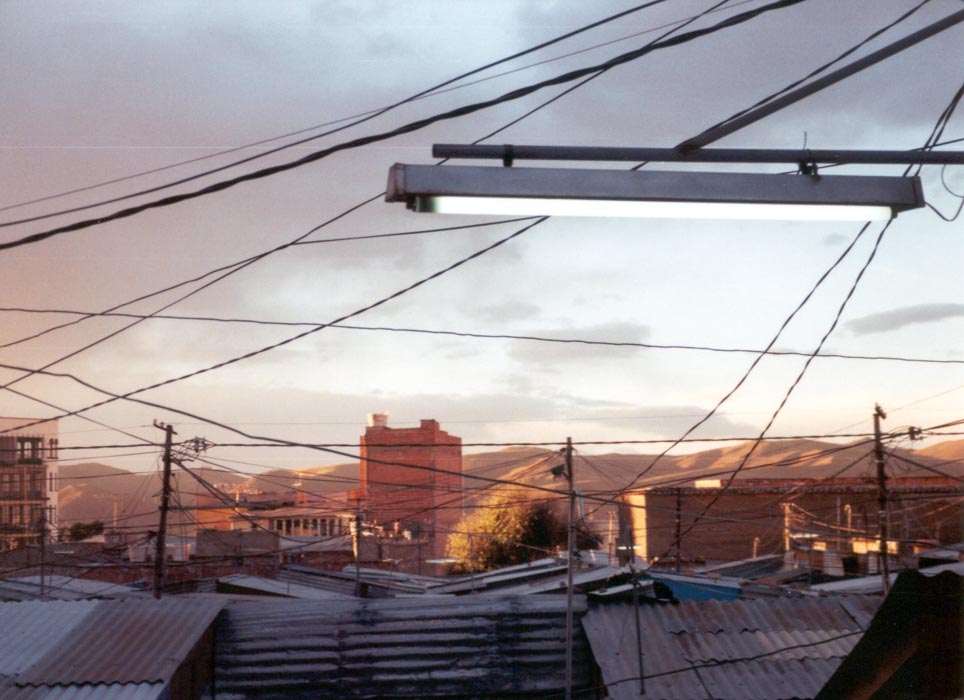
Again I found myself in the awkward situation of the traveling photographer: It's disrespectful to aim a camera at a stranger, for he or she is not a creature on display. I did my best to capture some discreet photos of daily life around me, but one really must experience the streets and cafes and markets first-hand. Besides, I reasoned, much of the world looks like this: muddy streets, corrugated metal and rough bricks, stucco, hazy sky, open-air markets, trash in the gutters, and well-dressed beautiful people walking the streets. The girls wore tight jeans and little shirts, temperatures were in the 70s, and I was quite content about both these things.
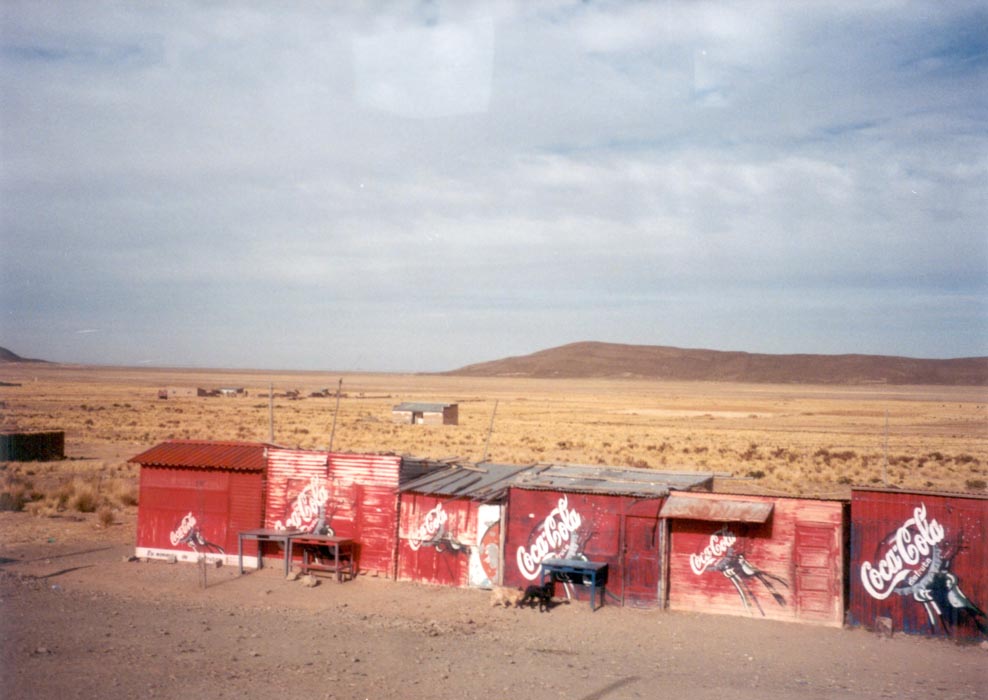
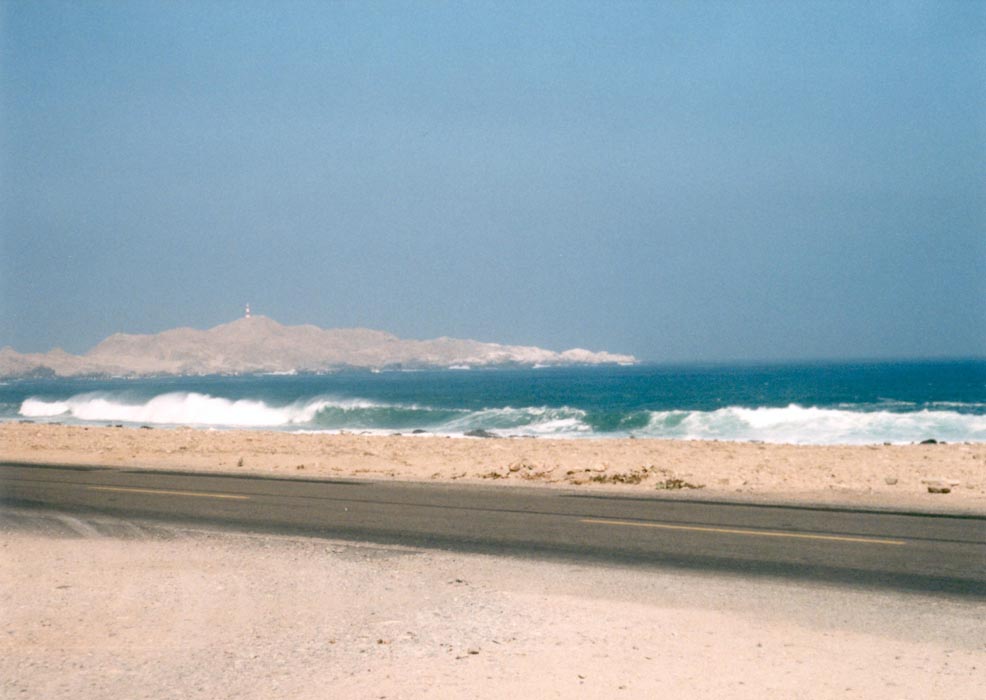
The bus was a comfortable double-deck vehicle with a toilet and televisions. There weren't many passengers and I managed to take my pack on and stow it beneath the seat. As we passed through towns we picked up more people, so I soon lost the empty seat beside me. Before darkness fell I peered out my window at incredibly poor shantytowns in the desert. On concrete water towers atop the sandy hills, \ was written in blue paint. Living conditions were better than those I'd seen in East Africa, but I was happy to stay on my bus. We passed soccer games in sandy arenas and hills so dry there were no washes, no eroded gullies, no plants; just dust and gravel. Waves crashed on the beach and both the sea and the sky were slate gray. The bus sped along the two-lane road into foggy hills and darkness. In towns along the highway the orange glow of streetlights illuminated crowds of people gathered about the markets and vendors who served passing buses and trucks.
"Seven-thirty in the evening somewhere along the Pan American", I wrote in my journal. "Stars overhead, mist has cleared. Passing trucks and buses honk a warning before blowing by in the night. We pass bicycles, sometimes motor trikes. The lanes are narrow but the traffic is fast. At villages people load and unload bags from the cargo hold and I'm very happy mine is under my seat. All's well. Stopped at a depot for a while. I'd have liked to get out and walk around, but I'm alone and shouldn't leave the bus or my bag at night. I struggle to understand the rapid announcements and watch other passengers for clues. Good thing it's a direct bus."
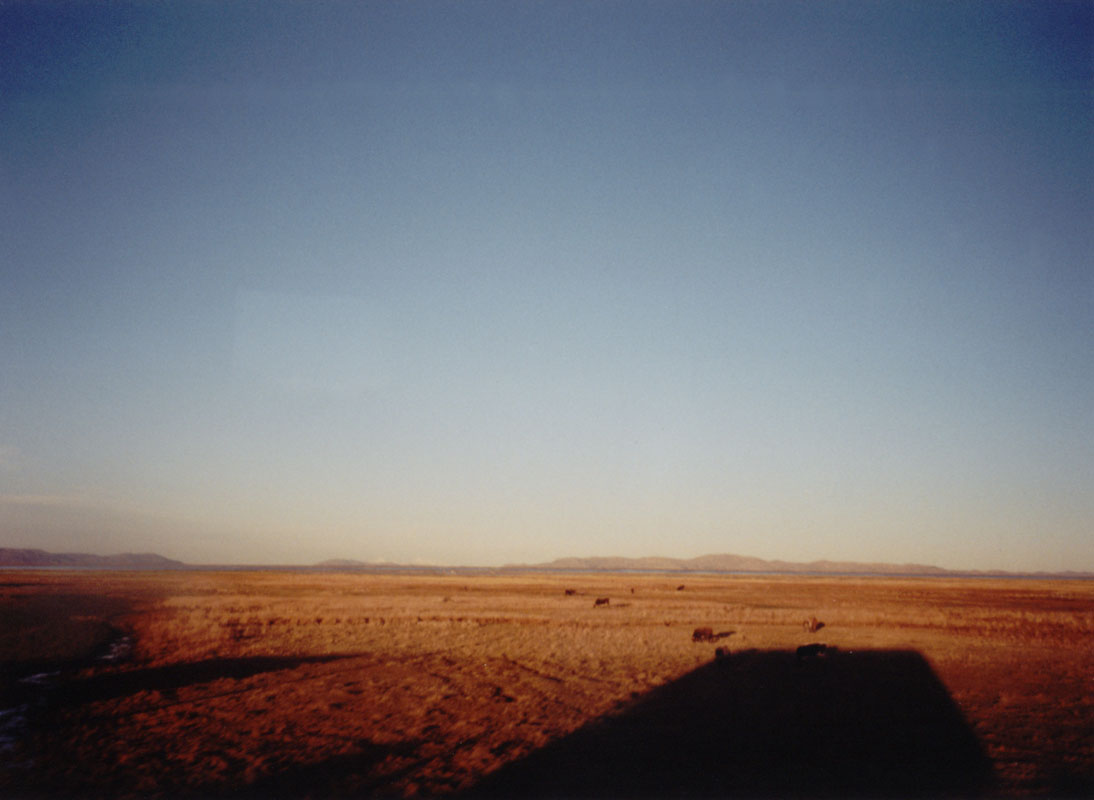
A couple hours later we stopped beside a restaurant, and a short time later styrofoam boxes of food were distributed. There was rice, potatoes, and some sort of meat that I couldn't identify. It could have been poultry or pork and was so bony and grisly that I had trouble eating it with the plastic fork they gave me. I ate every morsel, hungry and not knowing when I'd eat next. In Nazca at midnight many people got on, most of them tourists. The man who sat next to me spoke only Spanish though and so I rode on in sleepy silence. The lights were turned off and I dozed in short intervals as we rolled through misty desert and climbed over the hills on winding roads. Eventually I slept a little, and when I woke the sun was about to rise behind distant volcanoes. We were still in the desert though, the huge desert running all the way along the coast beside the Andes Mountains where the only moisture must come from the Atlantic, cross the great forests and steppes, and rise over the high cold mountains. Salt deposits shone in the gullies and only a few withered plants struggled to survive on the roadside. We roared along, trailing dust, passing blindly at corners and hillsides and, once, in a tunnel. People and cars darted out of our path at the last moment and it occurred to me that drivers from the States unaccustomed to this flow of traffic would instantly cause mayhem and destruction. I felt safer riding a bus than driving, enough so that the danger was thrilling. We passed scores of wooden crosses, each marking the site of a fatal accident on the narrow highway and a reminder that such things last a long time in the desert - or maybe they just happen all the time. It was a harsh place.
Traversing the same road seven weeks later I would be unimpressed by the desiccated landscape and the dusty towns struggling to stay alive along the highway, their only source of nourishment and the sole reason for their existence. Many places are truly beautiful, when a special combination of light and rain or snow or other natural elements reveals the character of the setting and the things that live there. It is for these moments that I travel. But also there is the attraction of new and exotic and exciting things one has never seen before, an infatuation born of ignorance that dies out quickly. It was with this attraction that I peered out my window until my neck was stiff from the awkward angle, succumbing myself to the ethnocentric fascination of the traveler just arrived.
For many kilometers at a time the road ran straight, then suddenly it twisted its way into hills and down sharply into deep trenches in the earth lined with velvety green fields and scattered trees and a lazy river. Just as suddenly we would climb the far side and resume our course through the dry flats. I marveled at the woven cane mats forming walls and fences around huts that had never felt rain. The split canes were bunched in sets of four or five, creating a checkerboard pattern that I found pleasing and sketched in my notebook. Maybe someday I'll have a screened porch of split canes like the ones I saw in the desert of Peru. The design was purely functional, and this made it very appealing to me because its pleasing appearance was not for show. The design speeded the weaving and was necessary because the stiff split canes and reeds could not be bent sharply for a tight weave.
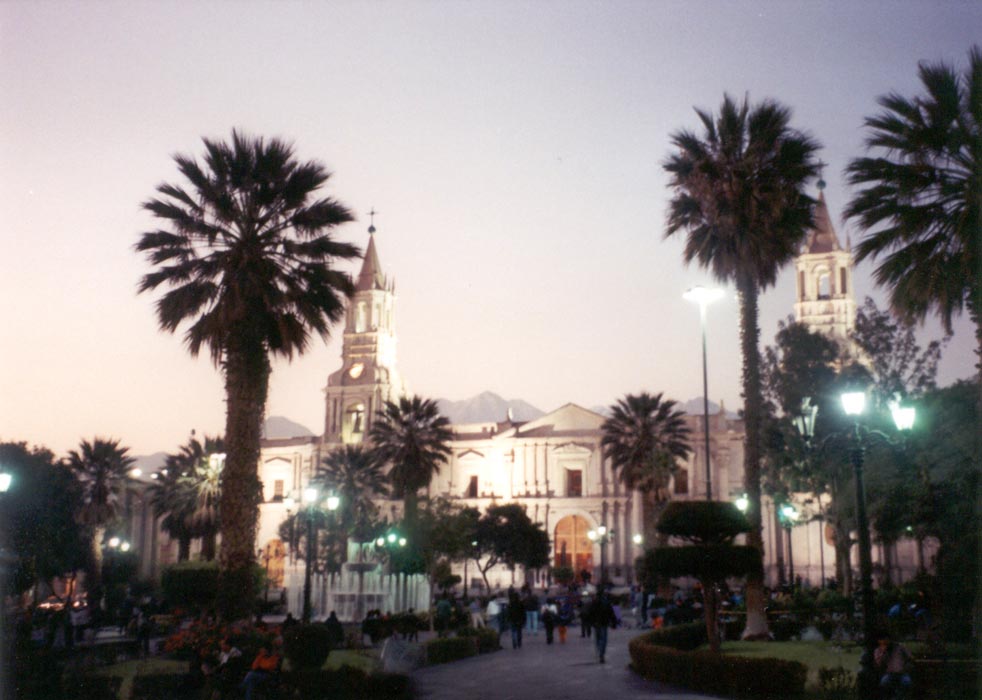
Before 8am we were in Arequipa; the bus was navigating slowly through narrow side streets to pass around a protest in the center of town. I could understand little of the rumors circulating through the bus as we bumped and jerked through alleyways where a double-deck bus should never go, but I could see distant crowds of people milling about in the streets and I assumed that, as in the previous days, they were gathering to protest low wages. Arequipa was a sprawling city of mud bricks overshadowed by craggy snow-covered mountains and it was surprisingly green. Fed by a river, emerald fields and streets of palms were a welcome change from hundreds of kilometers of dusty brown sand. Also there were constructions of white limestone blocks, rude walls with mud mortar and lovely churches built from carefully dressed stone. The "ciudad blanco" lay upon a bed of lovely limestone of a cream color with large gray inclusions that lent a rough texture to the cut blocks used throughout the city. At the bus terminal we stopped for 45 minutes. I was alarmed at first because we were all told to get off as the journey had ended, but upon questioning the stewards I learned that my continuing trip would resume from another gate. The terminal was packed full of travelers, many foreigners hauling large backpacks like myself. No one paid me any attention unless I lingered near an exit, where lurking taxi drivers solicited my business with admirable perseverance. Seeking food, I found little but packaged snacks and settled for stacks of dry crispy flatbreads cemented together with a sugar glaze. They crumbled instantly and created a mess and made me thirsty. I wanted fruit, or a sandwich, but none were to be found at the station. I bought water and passed the time in a departure lounge, where a group from Germany was excitedly reading passages from their guidebook. I thought how superficial it was to travel as if on a treasure hunt, darting from location to location as if the entire place were some sort of exhibit, and I was glad I'd never brought a guidebook.
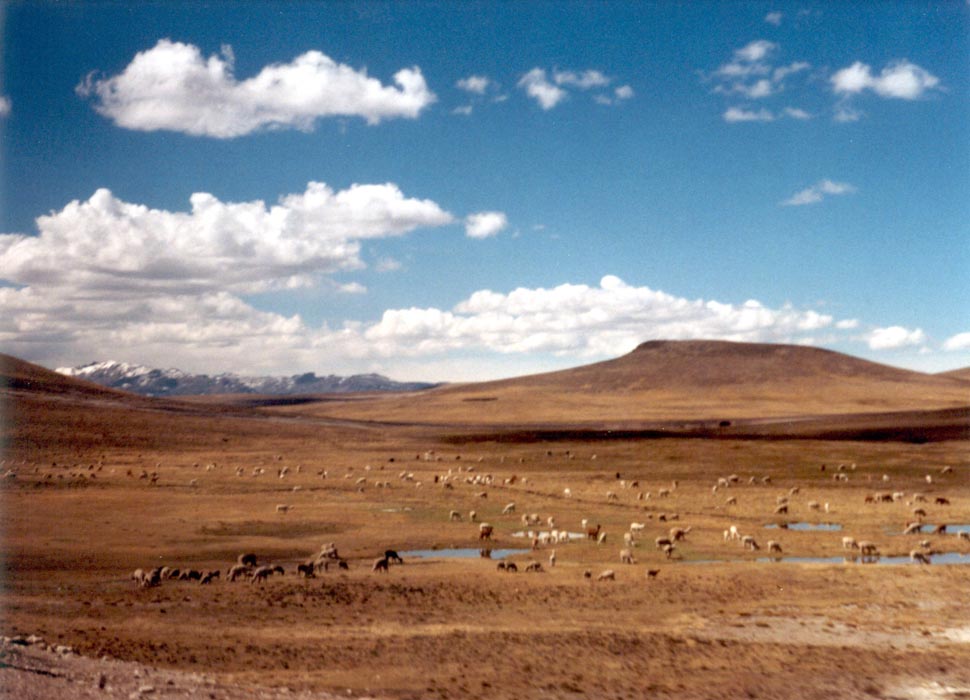
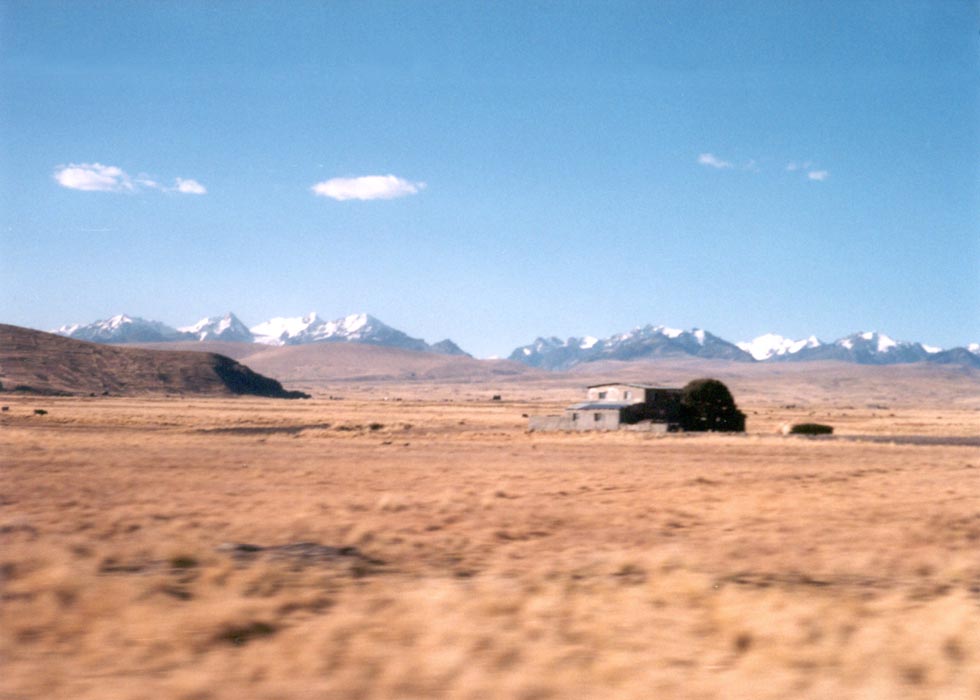
We boarded the bus and I again succeeded in stowing my pack safely under my seat. Once outside the terminal we stopped to take on fuel and I looked out the window at the tall snowy peaks to the West. I would have loved to linger and hike to their summits, but for some reason I felt hurried. I had two intentions to make good upon: visiting Machu Picchu and getting to Puerto Maldonado in time for my rainforest tour, and in this uncertain land I could not leave enough time to accommodate all possibly delays. The next 8 hours passed through the most beautiful scenery I saw during my entire trip. We climbed out of Arequipa past thinning mud brick and stone block shacks, rounding the shoulder of a mountain and climbing high over a pass. Trucks with excavating equipment crept slowly up the grade and we soon arrived at their destination: a rockslide had poured hundreds of cubic yards of rock and dirt onto the road. Our bus lurched onto a steep ramp compacted from the debris and clambered over the obstacle in a cloud of dust while heavy equipment labored to uncover the pavement far below. The road was narrow and winding but well-maintained. Stones lay on the roadside every 10 meters, painted with the number of kilometers to someplace. Beautiful rugged peaks rose from the golden grassy hills, fluffy white clouds scudded across a brilliant blue sky, and ice on the glaciers sparkled in the sunshine. The lakes were as blue as the sky and nowhere was there a speck of dust in the air. At a gurgling stream the bus halted and a man with a bucket fetched water, probably for the facilities on board. Birds wheeled and turned among the grasses and occasionally we passed scattered herds of cattle and llamas. We passed train-stop towns, herder villages, and people peeling back sod, pressing the dark wet soil into forms, and setting the bricks aside to dry. People dressed in brightly colored Andean textiles darted in and out of rough stone huts, their heads turning to see the bus go past, their faces gone in a flash but imprinted in my memory.
On curves the bus swayed and on the upper deck I feared it tipping. Eventually the land flattened and we sped on straight roads to Juliaca, where the brick industry was thriving outside of town. Shimmering columns of heat rose from kilns built from the same mud bricks they baked. Neat rows of rectangular blocks, stood on a short side to expose the maximum area to the air, lay beside trenches in the grass. The town was very colorful and full of smiling youths. Riot police with their helmets and shields held casually aside watched us pass. The late afternoon sun brought out rich colors in the market stalls and I looked out eagerly upon the great diversity of goods for sale. We stopped several times for passengers to come and go, then pulled onto the main street again and turned south towards Puno. The short winter day had sent the sun speeding to the horizon and as we skirted a marsh and climbed a hill overlooking the edge of Lake Titicaca the shadows of distant peaks were getting long. On the horizon, in Bolivia, I could see the snowy jagged peaks of the Cordillera Real. Pulled in two directions, to Bolivia and to Cuzco, I promised myself that I would return to this place and go see for myself the snows beyond the lake.
Rounding a bend in the road I suddenly saw all of Puno nestled in a bowl beside the Lake. The entire city seemed to be built of mud brick and only the deep shadows from the low sun saved it from blending invisibly with the brown hills. The bus descended to a terminal and everyone else got off. I was the only person going direct to Cuzco and I regretted it, preferring to catch some rest and find a safe place to spend the night before darkness fell. This I could have done, but being an unsure and conservative traveler I thought it best to save money and time and use the ticket I'd bought. After all, I would be back to Puno in a few weeks at most. The stewards shared their meal with me, another styrofoam box with an unknown meat and potato and rice which I ate hungrily. They said we would be in Cuzco in four hours, a figure I found hard to believe when looking at a map and knowing how long we had traveled from Lima to Puno. But the road was a more or less straight shot down the valleys to a lower, warmer climate and we made good time. Restless and impatient I became increasingly desperate in the dark bus, willing every approaching light to be the outskirts of Cuzco. Hours passed like this. It was very dark, with lightning flashing to the east but always stars above. I was hungry and exhausted and worn from so many new sights and so much time sitting still. Our arrival was rather anticlimactic after so many disappointments as we sped through each town I hoped to be Cuzco. It was late at night, I had no plans, and the terminal was nearly empty. Several taxi and hotel solicitors approached me and I agreed to one, sharing a taxi with another man just arrived. A private room for 20 soles was the right price, but the driver nearly tripled my taxi fare. I paid it unknowing. My room was small, paint was peeling from the walls and ceiling, and both chairs in the room were broken, but it had a bed and blankets and a bath. The shower was heated by a dangerous-looking apparatus consisting of a bare copper blade switch with a ceramic throw tab, 220-volt supply wires, and a shower head heater with a temperature adjust switch. One would presumably reach up and adjust the temperature while showering, but I certainly was not going near those wires while wet. I slid under the covers and was soon asleep.
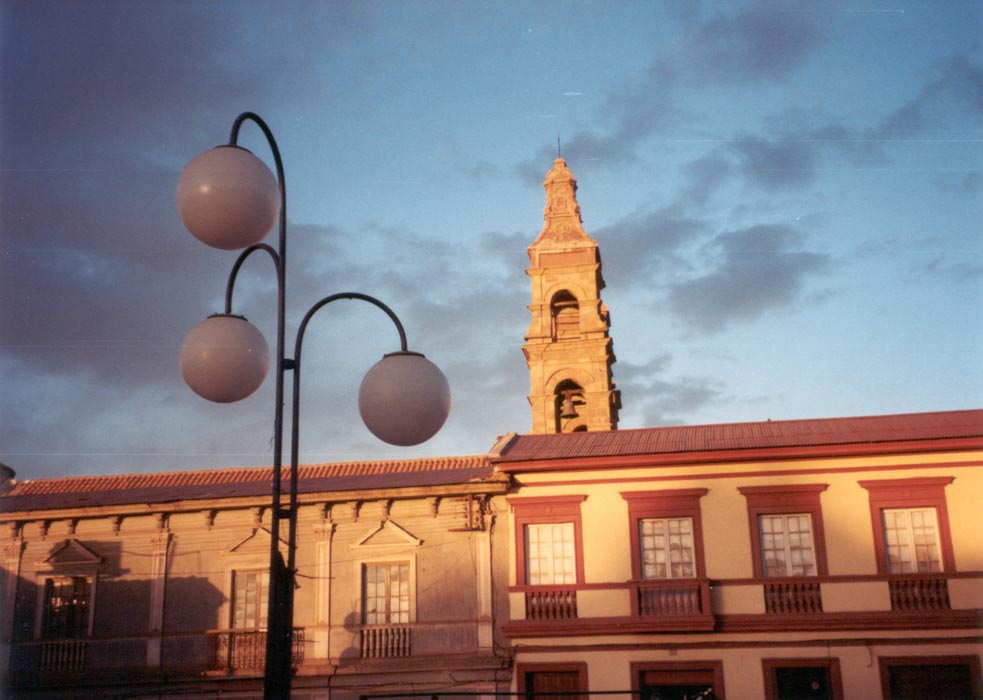
I was awakened at 6am by other tourists noisily exiting to catch the train to Machu Picchu, but having no ticket myself I was stuck in the city with time to rest and enjoy a warm shower. When the flow was set to trickle like a lawn sprinkler, the heaters added enough heat to be pleasant though the washing power was diminished. Refreshed, I went to the train station and bought a ticket to Aguas Calientes for the next morning, then wandered around trying to get my bearings. Hundreds of police manned the streets, carrying shields and sticks and gas canisters and guns, riding round in the backs of military trucks and drilling in the plaza. Soon after I walked through, they took positions at the corners of the plaza and prevented all pedestrians from entering the center area, restricting passage to the sidewalks beside the shops and restaurants. It was quite effective at preventing the assembly of protesters. I walked back and forth between the station and the plaza, exploring side streets and markets. The San Pedro Station is a meeting place for adventure tours, and 4WD vehicles came and went loaded with rafts and mountain bicycles. Vendors of cheap souvenirs also lurked outside the train station, hoping to catch the timid buyers who seldom left their hotels and buses for the duration of their fully-guided tours. I bought quinoa con manzana and some warm cakes from two girls on the street corner. The drink was thick and syrupy but not overwhelmingly sweet, though it left my thirst unquenched. The two girls were selling the same thing just yards apart and advertising sweetly to passers-by, and I was faced with the difficult decision of whom to buy from. It seemed improper to pass one and then buy from the next, even if I'd simply been debating whether or not I wanted food, but also to buy from only the first would leave the other girl looking on without a sale. I bought drink from one and food from the other and was on my way shortly, reminding myself to make such beverage purchases early in the morning before dirty glasses had clouded the wash buckets.
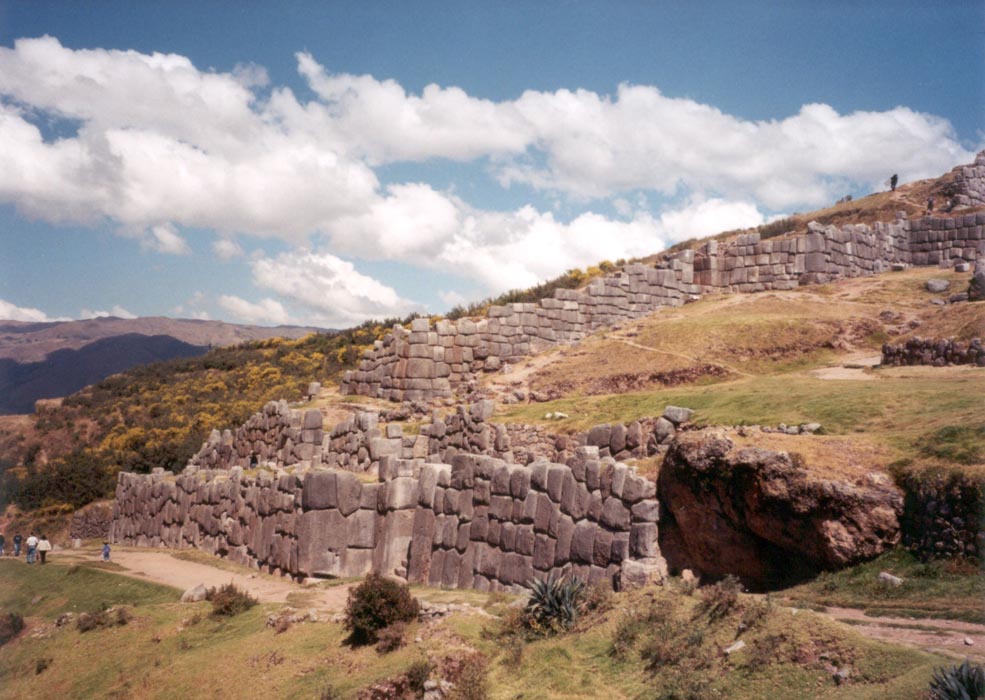
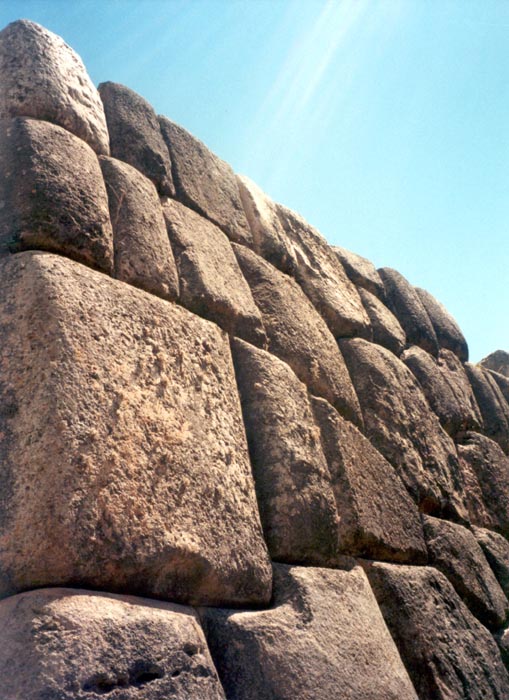
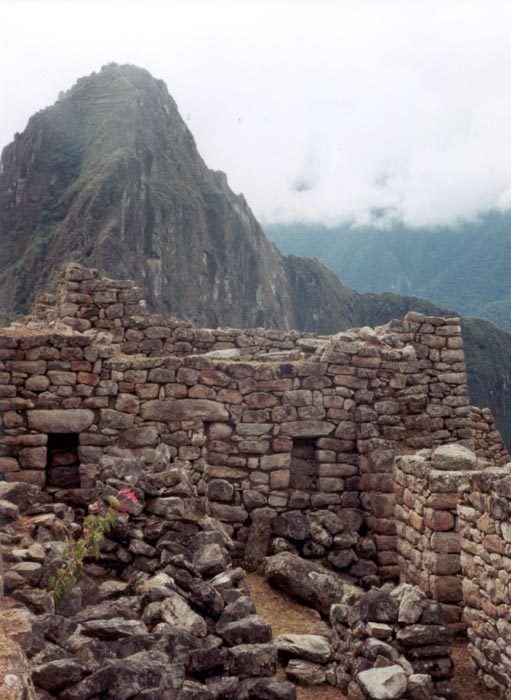
It was early and the shops and internet cafes were not yet open, so I walked up the hill toward the ruins of Sachsayhuaman. Or so I thought, but soon discovered that the ruins lay across a deep ravine. I continued on hoping that a path might go across without going down, but as I got farther from the city center I became entirely out of place. People started asking me where I was going, thinking I must be misdirected, and all eyed me suspiciously. Indeed, I was a stranger who didn't belong in these parts. I took off down a trail into the ravine intending to cross, and along the way a man told me how I could go on footpaths. Farther on I met two women and some children on the path; they advised that I watch for dogs. Finally I escaped from the ravine and walked through cropped pastureland and stands of eucalyptus, happy to be away from the press of people and traffic. I ate some oranges I'd bought from a vendor at a fraction of the cost they went for in the markets in town, realizing that my water was nearly gone. I climbed higher and reached a paved road, looked around, and saw a truck full of police beckoning me to their roadblock. There I learned that there was a presidential convention celebration at the ruins and I could not proceed yet. They were friendly, though, and I chatted with some as I sat in the shade and waited. Across the valley on an opposite hill I could see a gathering of perhaps 200 people making as loud a protest as possible. Fires smoked and occasionally noisemakers went off but the wind and distance muffled the disturbance. After half an hour or so they spoke with a descending photographer and said I could go on. At the ruins I threaded my way past a mass of press trucks and people, peering over a fence to see colorful flags in the amphitheater, uniformed officials, folk dancers, and a crowd watching. I could not approach, so said the guards, but I followed the path up and around to the highest point. What was left of the Inca construction was very impressive, an artistic form of fitted stone blended into the hillside. Like the woven cane panels, this work too was purely functional and all the more beautiful for it. Stones were fitted in their natural shapes to use the most material possible from each, rather than squaring the blocks wastefully. The work was exquisite and I wondered how it had been completed without iron tools. Great blocks, some the size of dining tables, were shaped to fit so closely that a knife blade could not be inserted at any part of the joint. This would not be difficult if the block was squared, but the stones were irregular and must have been shaved, filed, and painstakingly aligned one at a time. Even foundations of buildings were done in this style and indeed it is superior, for they still stand tight and strong after many centuries of earthquakes and weathering.
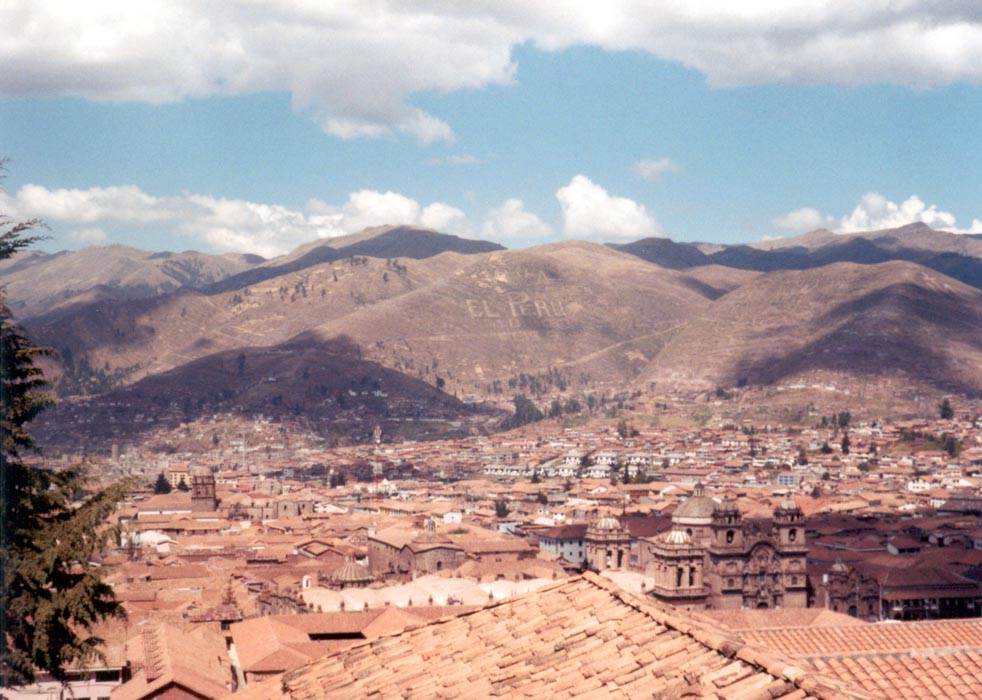
A little boy with a bird sitting on his head asked if I wanted to take a photo of him, but I declined. I shy away from such posed photography. There were no other tourists about. I sat on a rock for a bit, enjoying the view of the city and the brown hills beyond and the bold blue sky with white clouds. Continuing along a footpath I came upon a young boy about 10 years old wanting a dollar for his collection of currency. It was a tactic I was to hear often; there are of course plenty of dollars in circulation and if he got one, it would surely be converted to candy or ice cream immediately. Seeking water, I hurried down a path that would take me back to the city. At a gate station I inquired about the path down and after replying, the woman asked me if I had a tourist ticket. Obviously, I'd come in by a different way and so hadn't passed the gate. "What ticket?" I stalled, vaguely recalling that many sites about the city charged admission covered by a single ticket I could purchase at many locations in the city. I turned but did not stop walking, and mutually confused we parted. Farther down the path I climbed a few steps onto the ruins to take a photo and out of the corner of my eye saw a security guard notice and start my way. This side of the rocks sure was better guarded! I wondered what sort of permissions the throngs of people milling about above me on the ruins had been given. Continuing on down the tourist path I passed people from all over the world talking in their various languages and slowly making their way up the steep cobblestone path. At a road crossing we were held back by guards as vehicles sped past, lumbering sport vehicles with dark windows and pickup trucks with business-suited politicians waving from the back. People called "the president! did you see the president!" but I was unsure of whether they were affirming or asking whether Toledo had just passed us in a truck. I was shortly in the lovely alleys of the tourist district, where shops and hostels and restaurants abounded.
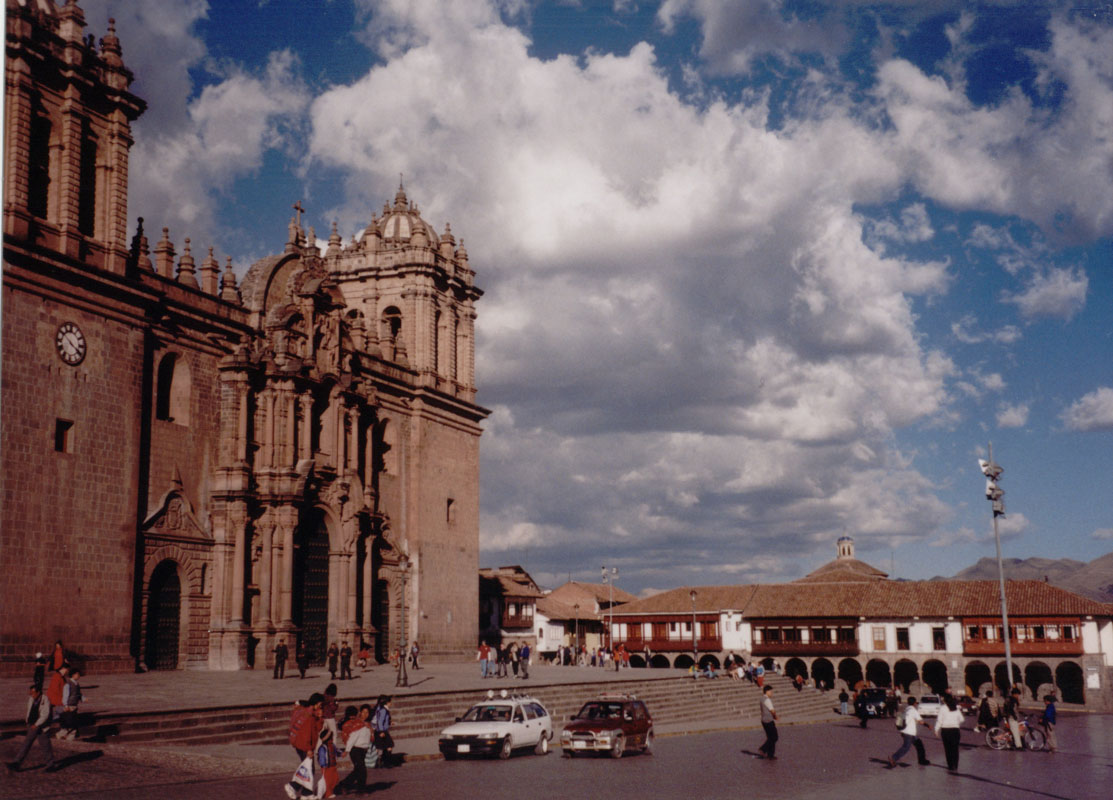
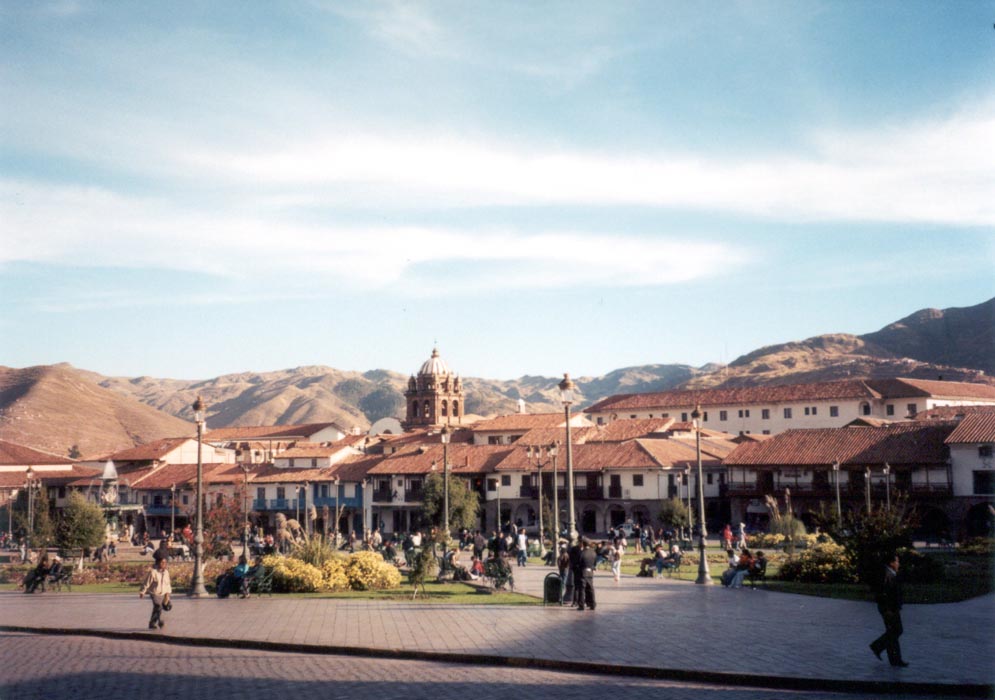
I was craving pizza. I am ashamed to admit it, but once in a city where I could buy a proper Peruano meal at a restaurant all I wanted was pizza and a lemonade. Apparently I was a typical tourist in that respect, for pizza joints abounded. I happened to pick one of the more expensive ones this first time, but the food and the lemonade were absolutely amazing at least to my starved tastes. And regarding Peruano cuisine: I spent the entire trip searching for the world-famous menus and finally concluded that the diverse combinations of seafood and mountain meats and potatoes and tropical fruits were for the enjoyment of the high classes only, not something I'd find on the streets. I ate my pizza and looked out at the plaza shining brightly in the afternoon sun. Tourists trudged past, tailed by shoeshine boys and postcard sellers and the occasional old woman in a bowler hat with a blanket shawl full of goods for sale. It felt good to be on the ground among the people. On the bus I had felt as if I was high upon a throne, peering down from the upholstered upper deck upon a land I could not hear nor smell nor touch nor stop to look closer at. Most visitors in the plaza did not carry packs, probably having left them at their hostels, and I decided I would do the same upon finishing my meal. I was traveling light but the tent and the sleeping bag took up so much space that I always had to carry a bulky bundle that screamed "rich gringo" wherever I took it. In Peru the people used the term "gringo" and it carried a negative connotation to me, dripping with envy and desire for all that I represented. I was reluctant to admit that though I was rather far from fulfilling the stereotype, I had much more than they did and could get almost anything I wanted back in the States. The feeling that I didn't belong was nearly enough to make me want to go home.
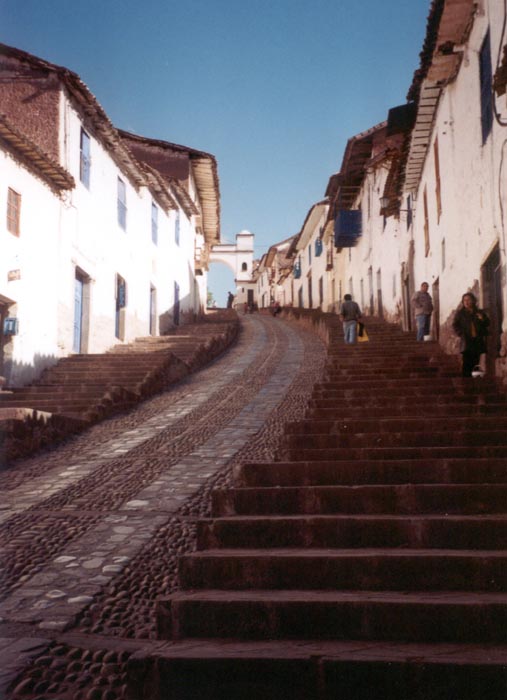
I didn't go home, but I moved on. I wasn't intending to blend in. My intent was to make a transect of sorts, watching and listening and hoping to come upon a handful of beautiful places before I winged my way home with a sketch book full of lessons to share. I paid for my meal and went searching for a hostel. Throughout the backpacker district, single room with a bath ran s/20, a double s/28, and without a private bath s/15. Other cities, I would find, charged per person so it was no more economical to travel in couples. I got a room next to the train station so I could easily catch the 6am train the next morning, left my pack in the room, and went out again to browse shops and watch people. For 1 sole (28 cents $US) I could buy 30 minutes of internet, a small ice cream cone, 5 big oranges, or most of a meal in the markets. I allowed myself some selfish satisfaction in my choice of destination; had I gone to Europe I would be living on bread and water for twice the cost. There were surprisingly few Americans in town but many English, a few Germans, and many Spanish-speaking tourists presumably from elsewhere on the continent. I located the artisans' market and looked at the crafts for sale. There were exquisite textiles, carved stone, gourds etched with beautiful designs, and painted pictures. Vendors pushed their goods with such urgency that it disgusted me. "Sweaters!" they whispered. "Mister, sweaters! Hats! Gloves! Ponchos!" They spoke while gesturing excitedly and thrusting the items toward me as if I was unaware of what lay under my nose. Outside a presidential convention meeting was spilling out of a building into ready vehicles at the curb. A band played and people looked on from behind a perimeter set by scores of kevlar-clad police. They stood in neat lines arm to arm and broke with an efficient sweep as the pickup trucks roared off through the narrow streets with irresponsible haste.
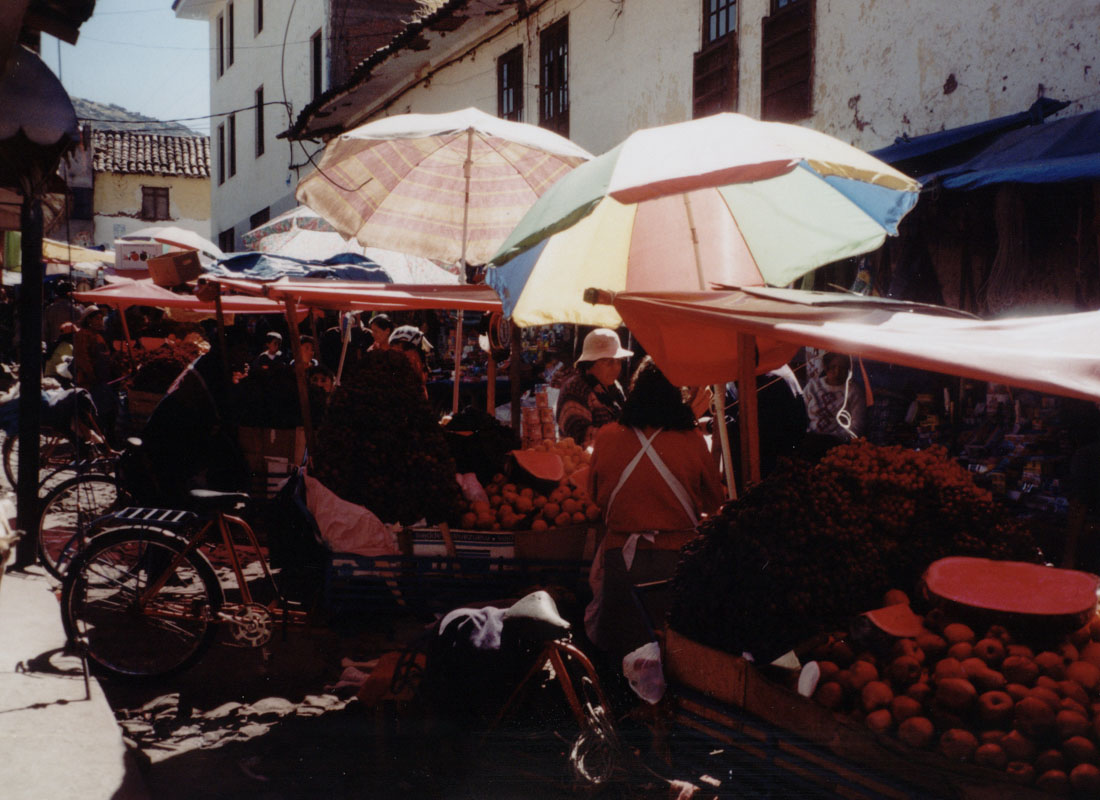
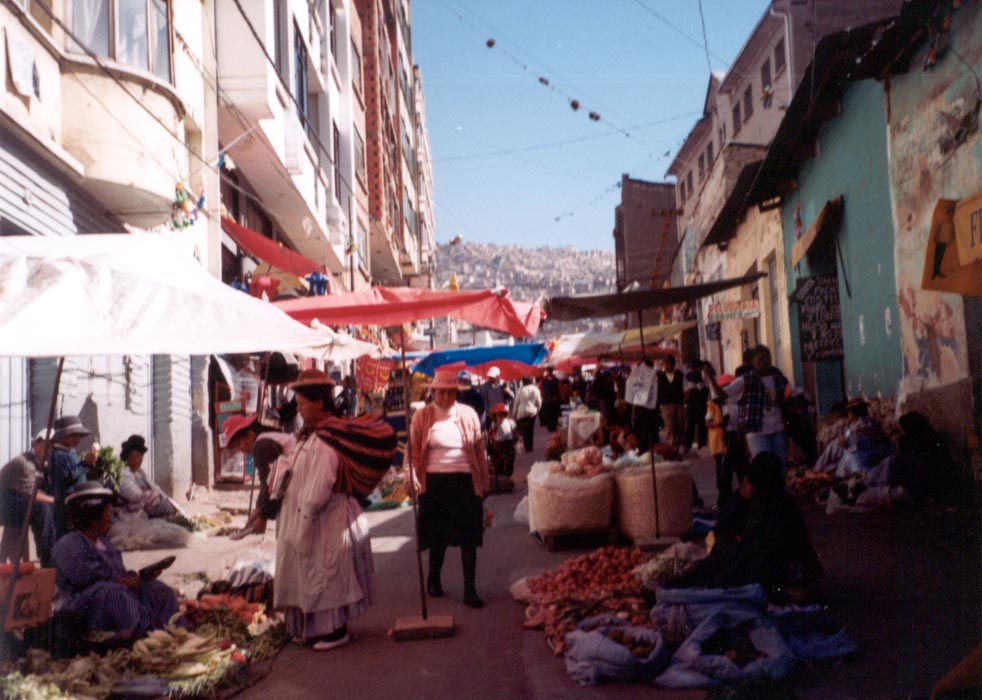
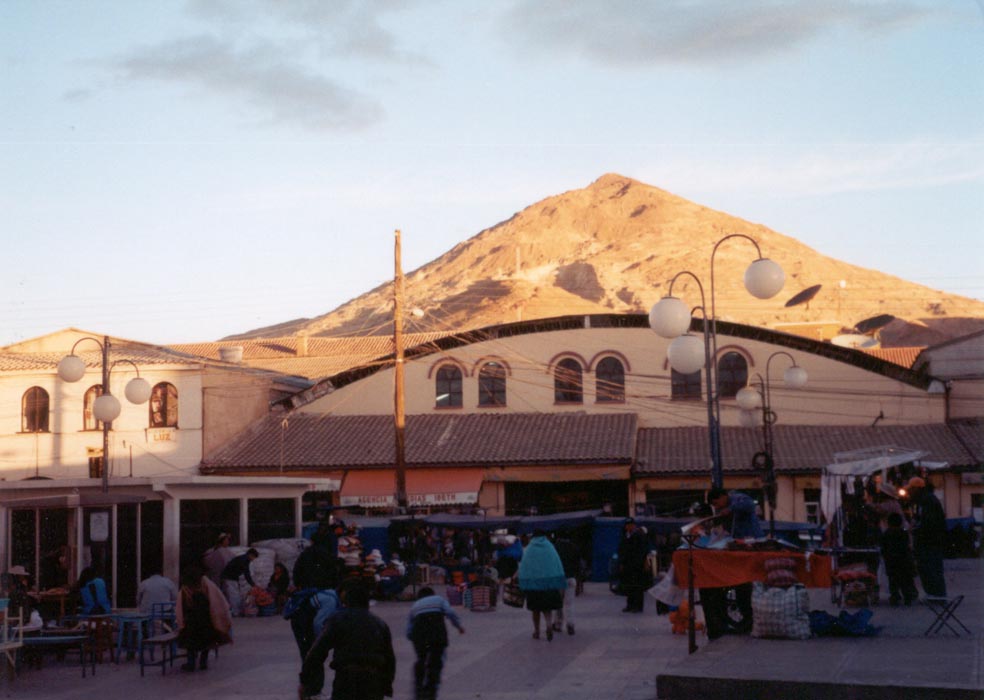
Traffic was different in every city I visited, uniquely suited to the geography and the streets and the road access to the city. In Cuzco the taxis were tiny, boxy Korean Daewoo Tico sedans with four doors where only two should fit. They buzzed over the cobblestone streets and squealed around corners with the fluid smoothness that only such tiny cars could have achieved. Also there were larger Toyota station wagons and an assortment of 4WD trucks and utility vehicles purchased by well-to-do businessmen for the rough roads of Peru. There were stoplights at intersections and though constantly stopping and going, traffic somehow managed to speed past more rapidly than I thought safe. Carefully I made my way to the city markets, surrounding the train station and nearly devoid of tourists. Prices there were much better than in the artisans' markets and also there were common goods for sale. One could buy shoes or shirts or soap or tools. The food markets were the best I saw anywhere in my travels. There were distinct class levels: The top tier sold from tiled counters under a corrugated roof enclosure that also housed the chocolate market, the fruit smoothie booths, the cafeteria section, and sellers of fashionable clothing and music cds and electronic devices. Then there were the street markets where people sold fruits and meats and fish and vegetables and coca leaves and cooked foods and breads from carts and tables under tarpaulin sunshades. Scattered among these booths were the lowest class vendors, women in bowler hats and braids who sat on the ground, their skirts drawn about them, a few goods laid on a sheet at their feet. Prices corresponded to these class levels and so I usually bought from the sidewalk sellers. The markets fascinated me. There were heaps of plucked chickens with heads and feet sticking up in the air at strange angles. Racks of sheep heads blackened in the cool air grinned devilishly. Potatoes of more shapes and colors than I ever imagined lay in heaps. There were eggs and chilis and olives and mountains of grapes. I saw bananas, papayas the size of basketballs, kiwifruit, clementine and navel oranges, apples, cheeses, corn. The corn was blue and red and yellow and white. The kernels of the white and yellow corn were each the size of lima beans, in irregular bulging rows on the ears. When popped they are sweet and soft and spherical. Tomatoes and spices and sauces were for sale. I particularly like walking through the spice markets wherever I travel, for they smell wonderful. It was growing dark and the vendors were packing up and trying to make some final sales. As I passed her stall, a woman seized a pasty white pork shoulder and thrust it at me, hoping that perhaps this neatly dressed visitor in a blue button-down shirt, khaki pants, and flip-flop sandals would have a use for a gnarly mass of raw pig.
There was so much food for sale in the markets. In the States, grocers put false bottoms in their barrels and make stepped shelves for their fruits to make it look as if there is a rich abundance for sale. In Peru, one of the poorest countries of South America, many vendors carried hundreds of pounds to and from the markets every day. There was so much for sale that each seller sold little and so lived in poverty if not in hunger, and most of that food must have gone to waste. It is unfortunate that most cannot be exported due to the lack of pest and disease controls, which would be prohibitively costly to develop. In the deepening evening shadows I peered into booths trying to discern the salesperson within. Nearly buried in a small hole among the shoes or the sweaters or the potatoes old women were eating from enamel bowls of potato soup with shreds of meat and crusty dry bread. I searched for places where the fruits and vegetables for sale might be prepared and served but always the menus were the same: fried meat, boiled rice, fried potatoes, fried fish, bread, sauce, soup. There were no marinara sauces or steamed vegetables over rice, no fruit bowls or mashed potatoes. The people of the central Andes quietly sold their great diversity of foods to those who would buy them and contented themselves with traditional fare.
Back at my room I took out my water purifier intending to pump some tap water and refill my water bottles, and as always after traveling or long storage I first tested it with dye. It was a new cartridge but an older model that has been on the shelf for a long time, and it didn't take out the dye. Maybe it was a different model of filter, I thought. Or maybe it was cracked, dropped at some point in the local sports outfitter where I bought it. I discarded the cartridge and wondered how I'd fare buying bottled water for the rest of the trip. It was certainly inexpensive to do so, but not convenient to fit the various sizes of bottles into my pack. I wondered how clean the tap water was in the mountains - it must be better than in the desert shantytowns outside Lima where cholera epidemics periodically run rampant, but so early in my trip I was not about to try my luck resisting new microbes. It was dark outside my window and I could think of no place I really wanted to go. With all the tourists the bars and discos were sure to be packed but I had a 6am train to catch and needed more rest to recover from my long bus journey. I washed up, drew back the coarse blankets covering the squeaking mattress, and gathered them around my feet to ward off the chill as I wrote in my journal.
Pondering the similarities and differences of the places I'd visited, I wondered about where I fit into it all. "There is so much I can learn here," I wrote, "but I am afraid that no matter how long I stay or how far I search for an understanding of the place, my conclusion will be that I do not belong and so cannot understand. I should not travel to find a place for myself and others should not model their own lives on my people and their Western culture. Quality of life cannot be compared on equal terms between different groups and one cannot gain what another has by dressing and singing and behaving like them. We each have special ways of life and we should refine them, not go elsewhere seeking something better." I liked my idyllic solution to all of man's woes, and it seemed for a moment to be a significant lesson. But I thought a moment more and remembered the faces on the street turning to watch me pass, the eyes bright with envy. I continued to write, "Greed and envy would never let the matter be as simple as that. Maybe I can find a middle path." There it was, an incredibly arrogant statement followed by an admission that it was unachievable and foolish. I was right back where I started, aware of the divisions of class and opportunity that my presence brought to attention but unable to think of a way to remedy the situation. All I could do was step carefully and listen closely and hope that answers would emerge from my experiences.
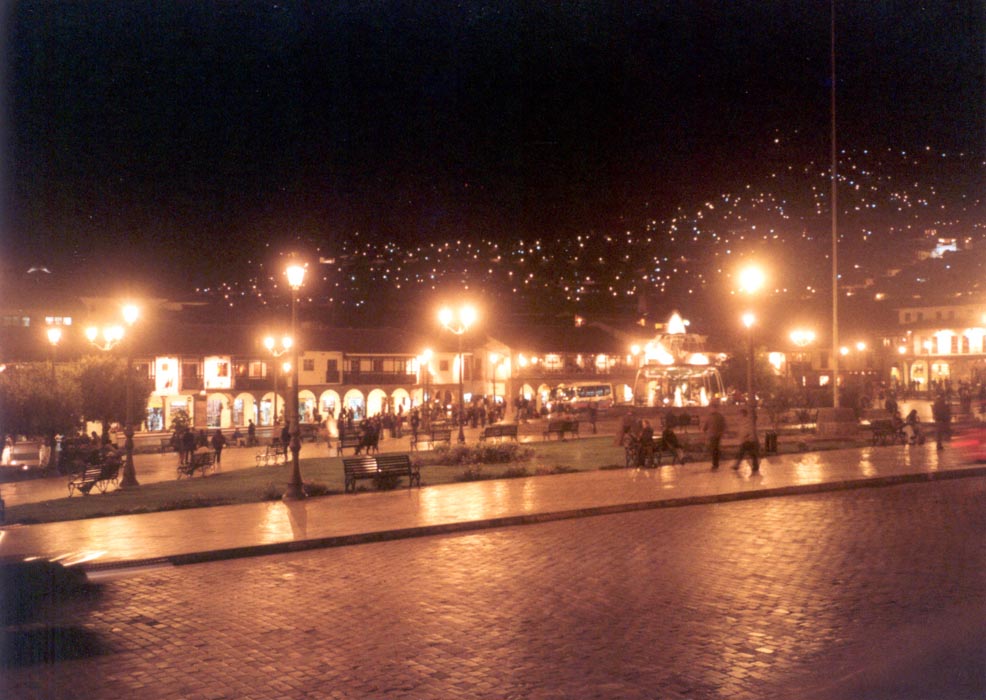
Since the winter solstice was approaching the daylight hours were few and it became dark early in the evening. It seemed too early to retire so I ventured out into the markets with the hope that I might see something special or memorable. There were no tourists at all in the back alleys of the street markets, down the hill a ways from the train station, and the sharp glances and suspicious looks of the people told me that this was usually the case. It takes some courage, I suppose, especially at dusk. Feeling somewhat unsafe myself I made my way back to the main street, but I made the mistake of passing though the meat market as they were hosing down the counters. Stepping carefully I tried to avoid the repulsive puddles but still my toes were splashed again and again. I reassured myself that it really couldn't hurt me and hurried on. Back in the well-lit plazas there were many people about but not feeling drawn to any of the social scenes that evening I decided to catch some rest before the next bout of traveling.
The hard mattress, flickering lights outside, and anxiety about waking in time for the train together ensured that I did not sleep well. My shower water was just a bit above cold so I splashed some water on my face and gathered my belongings together. It was still dark outside when I woke and very quiet. Like Lima, Cuzco slept at night. There were no horns, no barking dogs, and little traffic in the early hours of the morning. I was early at the station and chose a window seat on the plain backpacker train that would stop at many points along the way to drop off Inca Trail hikers. I had my pack with me so I could stay the night in Aguas Calientes if I so chose, but I would not be hiking in. Regulations required the purchase of a guide to place a limit on the number of people allowed on the trail and to help protect the natural environment. This was costly and I'd heard that the 600 people who walked the well-built path daily made it closer resemble a city sidewalk than a mountain trail. The train seats were in opposed rows that puts passengers gazing into the eyes of strangers for the duration of the trip. A large woman took the seat beside me, immediately making me wish I'd arrived later and chosen my own seat partner. Then a couple with a small child took the opposing pair of seats and for a moment I entertained the hope that the child would take the seat opposite me, giving me some leg room, but the kid migrated from parent to parent to the aisle and other friends in the car and I was trapped in my very small corner.
The couple lived in Stockholm; he was Peruano and she was Swedish and they'd met in Sweden. It was her first time in the country and she said she was enjoying very much the experience of seeing her husband's home and the places she had heard him talk about. The large woman next to me was a self-described cynic. "Lake Titicaca was awful," she said. "We took a boat out to the floating reed islands and they were wet and mushy and I really didn't find them enjoyable at all." Across the aisle, a group of English men took seats. A woman from Boston had arrived first and sat rigidly with her handbag on her lap, staring silently at the empty seat opposite her. The four men debated for a minute how to seat themselves; they proposed that if the woman from Boston moved up and across one row they could be seated together. Still staring blankly, she replied "won't you be close enough?" It could have ended there, but there was some muttering among the men as they settled into their seats and she retorted with a wisecrack, "Gosh, you act like children." A polite protest ensued, ending with raised words "Why do you have to act like that? I was beginning to like you!" in crisp British speech. It could be a very long trip, I thought. I didn't know how long it would be, so I asked the woman next to me. "Four hours," she said. "You sound like a pretty active guy. Do you think you can last four hours sitting still?" she asked. I casually brushed off the hardship and wondered to myself how she could overlook the fact that my traveling was almost entirely comprised of sitting still.
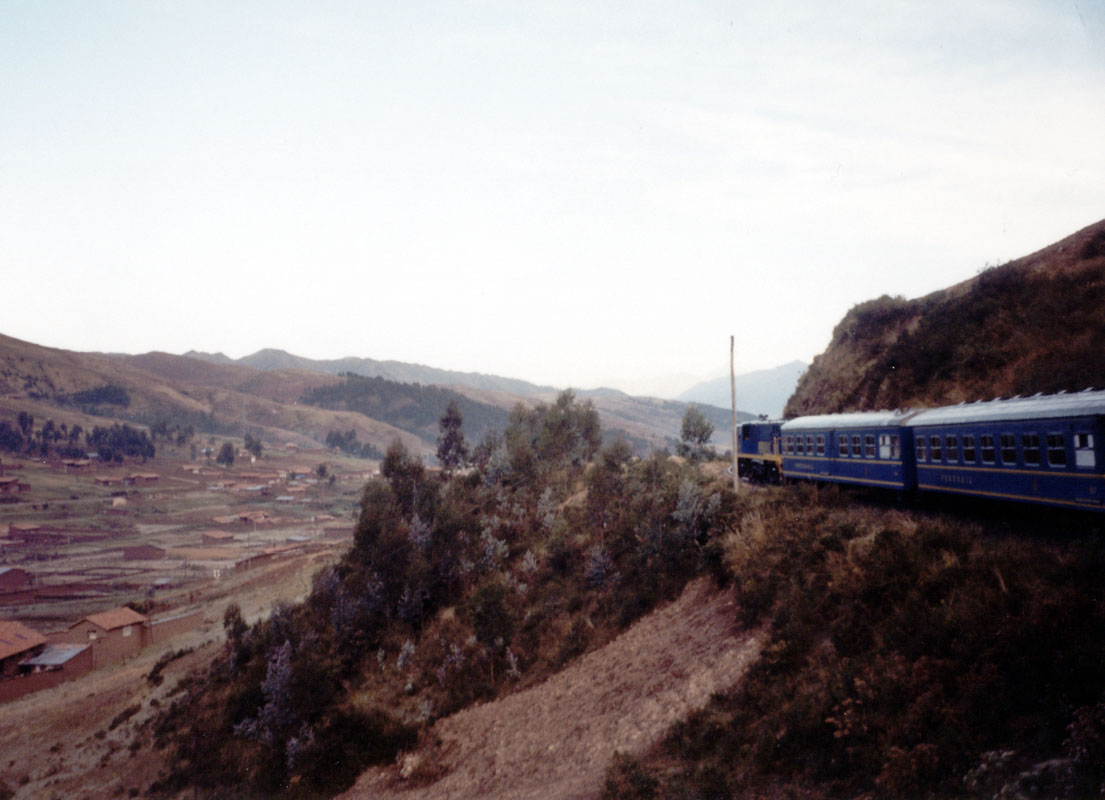
The conductors kept to rigid rules and at the appointed time the doors were closed. Latecomers pressed their faces to the glass and pleaded for admission, but none were allowed to pass. Bells were rung and we were shortly on our way, creeping out of the station and through frosty alleys. We stopped and then reversed direction, climbing a steep zigzag track. A switchman stood at each corner with a big iron wrench to shift the tracks so the short train could climb higher. Stray dogs scampered through the alleys beside the tracks and children stopped playing to look up at us, covering their ears with their hands to muffle the screeching of the wheels and smiling up at the strange faces flashing past. The cynic and the woman from Boston had struck up conversation. "I am thinking of going to Manu," said the Boston traveler. She was in her 40s, wore a worn green knot hat, and spoke slowly and hesitantly as if she was confused to be awake so early and not sure where she was going. "I hated Manu," said the cynic. "You shouldn't trust my opinion though. It was hot and sticky and there were bugs and we didn't see animals. I only wanted to see the giant otters - that's what I went for - and we didn't see any. You might like it though. A lot of people go there." I asked her about the weather, the forest, and the insects. It didn't sound bad at all. She thought my plan to take a truck to Puerto Maldonado sounded like quite an adventure but she made no comments against it. I'd passed that test!
The man took his little boy up and down the aisle or sat on the armrest of his chair, the little boy playing in the seat, and I felt sorry for him having the seat across from the large woman, which effectively meant that he could not sit. There was so little leg room. I watched high farming valleys slide past my windows, heavily frosted in the shadows. Tooth-like snowy peaks poked over distant hills. In courtyards and enclosures made of sod, corncobs lay drying in the sun, yellow and reddish purple ears carpeting the ground. The rainy season had recently ended and the season was the coldest of the year, so harvests had recently been gathered. Cattle cropped dry brown grass near villages and in the empty spaces herds of llamas grazed on coarse yellow tufts of grass. The train was descending, following a valley toward the great forest of the Amazon basin. La selva, the forest was called in Spanish, one word to describe the vast untamed wilderness that covered much of Peru and points east. In the States we have pine breaks and mature hardwood stands and birch forests and alpine conifers and mixed temperate woodlands, but in Peru there was only la selva. This simplicity had the flavor of a wild and exotic place not yet broken by the activities of man. I was soon to see myself how thoroughly men had slashed into the forests, but still the great expanse of wet green jungle eroded my confidence and left me feeling powerless and small.
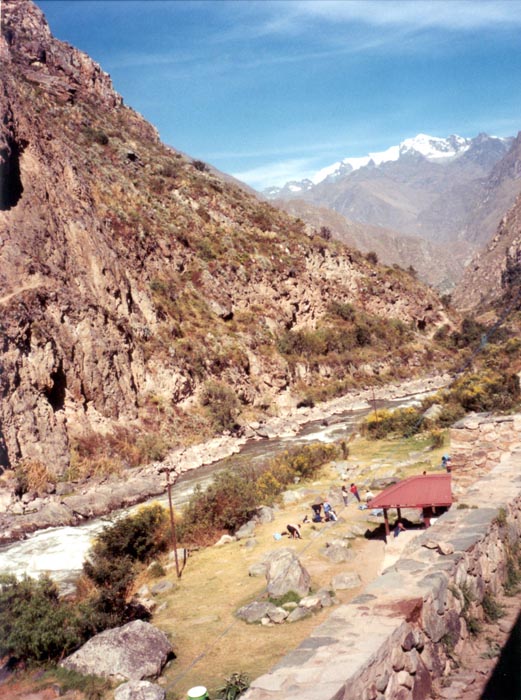
The train was passing beside a fast-flowing river, the Urubamba, running clear and swift over tumbled granite boulders. Enough rain fell at those altitudes to erode the Andean plateau into spectacularly steep ravines and canyons. Snow shimmered on glaciated peaks high above. We stopped at numerous junctions with the Inca trail, letting off young backpackers from all over the world. The pretty girls I'd never had a chance to talk to departed, but the large woman beside me stayed and so did the Swedish couple with their restless child. The Swedish woman was explaining, "I asked him what his favorite food was, what he would have if, say, for his birthday he could have something special here in Peru. Cuy, he said, and his eyes lit up. One all to myself." They were speaking of guinea pig, a delicacy of the mountains, cute chubby furry rodents that were scooped up from the kitchen floor, butchered, cleaned, fried in hot oil, and laid spread-eagled on a bed of rice garnished with steamed vegetables. People said the meat was passable but not fine and often I heard it described as "a greasy bag of bones." Since the meal was not an everyday dinner most places selling it were tourist dives with prices to match and I never did eat any. We were in the high rainforest now. It was hot and steamy and plants with large leaves and brilliant flowers crept close to the tracks. Vines hung from tall hardwoods that had a distinct tropical appearance so different from the hardy maples and oaks from home that shed their leaves every winter to wait out the snows. These tropical trees were softer, gentler, weaker, and more elegant, with smooth pale bark and few branches and large leaves. Colorful birds and butterflies flitted about in the sunshine. It was peaceful and I was content to wait out the journey.
Aguas Calientes arrived rather suddenly. The train went on but everyone got off, all on their way to Machu Picchu. The little town existed solely for tourism and both sides of the train tracks were lined with colorful shops selling everything that could be found in Cuzco but at prices two to four times higher. I walked to the end of the restaurant strip and then selected a sandwich shop, where I ate a disappointing meal. A very tough and stringy fillet of beef or similar meat had been dropped in oil, then laid on a stale roll with cheese and avocado and tomato and salt. I wondered, "Why couldn't these people grill their steaks?" There was so much potential for a good meal but when I bit into the sandwich the tough greasy meat slid out and I wolfed it down in one hungry unappetizing indestructible mouthful. Fed, though not satisfied, I paid for my food and wandered back across the tiny town to where buses left for the ruins high above. While I ate another train had arrived with mostly Latin-looking visitors who now formed a line hundreds of people long waiting for bus departures. Already disgusted with the cost of visiting this attraction compared with the cost of the rest of Peru, I turned around and began walking. The train tracks and footpaths were the only way into the valley, but here a road ran back up to higher villages and a hydroelectric plant serving the tourist area. I followed it in the opposite direction, cutting past a recent rockslide, through a cliff face blasted out to make room for a single lane, and across a rusted iron bridge over the river. The road continued downriver, a washboarded clay track running parallel to the railroad. A short way out of town I passes a group of men burning plastic bags of trash on the roadside beside the clear waters of the river, the filthy destination of hotel wastebaskets and municipal trash collection. Farther on men broke granite with heavy hammers, working from slabs recently tumbled down in rockslides and filling wheelbarrows. They wheeled loads of football-sized rocks up a ramp and dumped them into a rock crusher driven by a sputtering 2-cylinder engine. Crushed rock flowed onto a growing heap, destined for the road on which I walked. It is a constant battle against nature to keep a passage open there in the steep, wet, rainy forest.
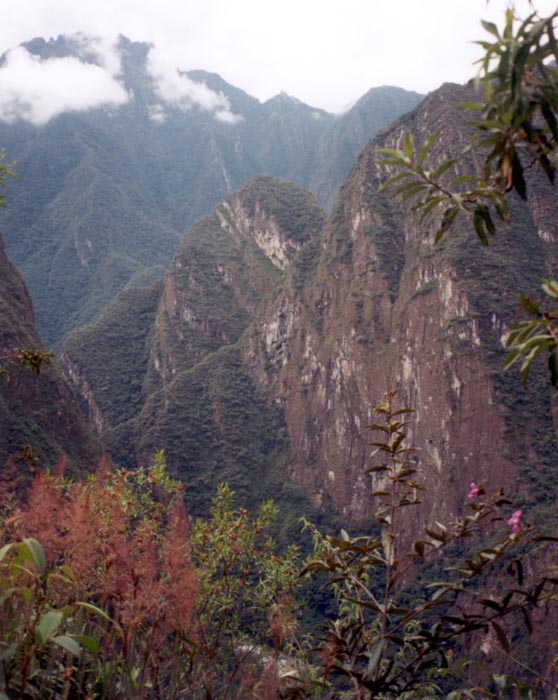
The temperature was in the 90s, I guessed, and I had not packed nearly enough water for the hike up and back. A dirt access road snaked its way up the steep mountainside through countless switchbacks, but the footpath went more directly. Not knowing the way, I was about to take the road when a man a hundred meters back across the river shouted and motioned with his arms that I should take the rocky rutted path to the right instead. I smiled and waved, surprised at his interest in me and grateful that I was not being called back for violating some rule. The path intersected the road many times and there were several wooden signs showing the distance completed and remaining. It was discouraging at first but then there were no signs for a while and the next showed great progress. Climbing quickly, I soon had a spectacular view of the rugged, forested spires of rock with sheer cliffs and unbelievable steep sides. Bees buzzed among flowers that cascaded down the slope. Sweat dripped off my body and I took off my shirt, not knowing when I could wash it again. A helicopter took off from a grassy pad below and sped off down the valley, ferrying well-to-do tourists from Peru's most famous attraction. It is not often that I see helicopters from above; always that happens when I am climbing in the mountains. My pack was very heavy and I wondered again why I was carrying a tent and sleeping bag when hostels were so numerous and affordable. Rounding final switchbacks, I glimpsed buildings and a parking lot and stopped to put on my shirt, not wanting to strut out sweaty and half-naked into a crowded lot of prim and proper tourists sipping drinks at the cafe and reserving their rooms at the $400 per night luxury hotel perched beside the ruins.
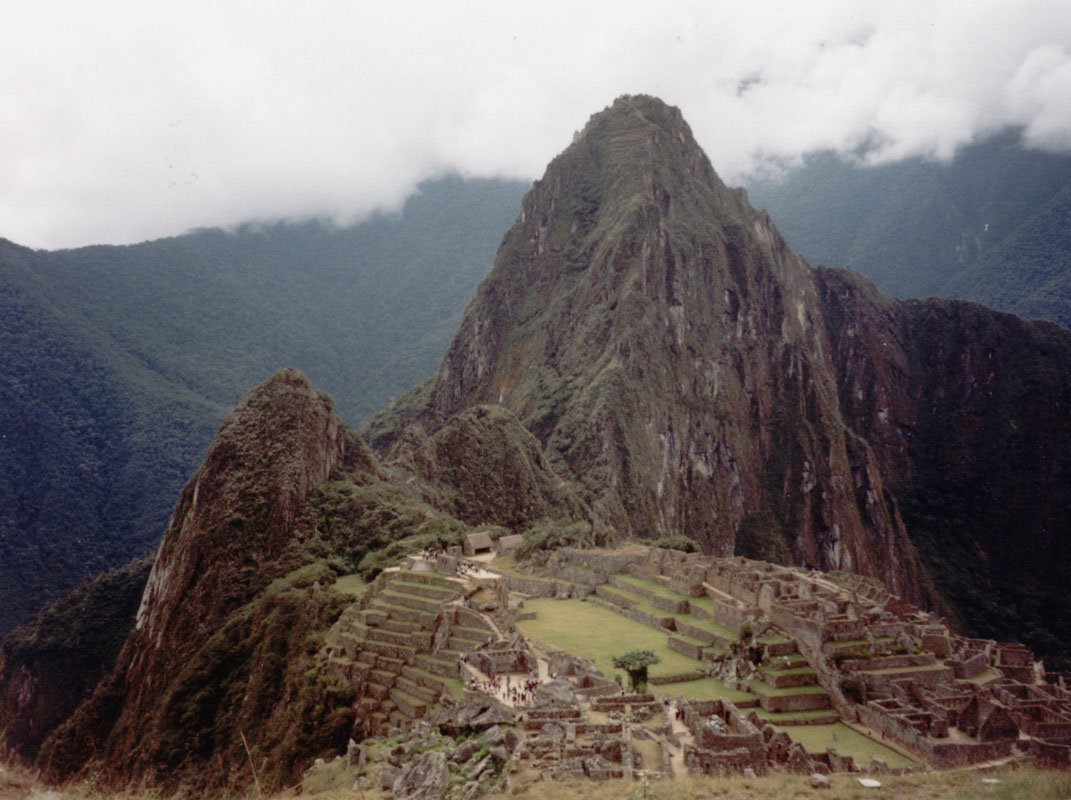
There was a $20 fee to enter and I had to check my pack. After carrying it about two thousand feet up the mountain this was a great disappointment to me, but the reason was clear though not listed: the park service did not want people camping among the ruins, or carrying in anything that could be left as trash. Food and beverages were not permitted. I had contemplated walking off into the forest and camping for the night, and I credited them for being one step ahead of me. Taking some film and my camera and drinking what little remained of my water, I apprehensively handed my pack to the sleepy guard at the check station and passed through the gate. People were coming out carrying day packs and I instantly wished I'd taken my pack hood with some food and water and my journal. There were signs guiding the approach but somehow I lost them while seeking a way that would give me the much-photographed overlook of Machu Picchu. I walked ever higher on an overgrown trail into the forest until I met a boy about my age coming down. "Do you have any idea where the Agricultural is?" he asked, looking for the terraced gardens that fed the mountain city. "No," I replied. "Does this trail go anywhere?" "It just keeps going up into the hills but there is a nice overlook not too far up," he said. He went down and I continued up, looking for the overlook but never finding it. I turned back and cut across a terrace to a footpath, feeling guilty that if everyone did that there would be ugly brown tracks crisscrossing the beautiful green terraces. After climbing down a few walls on the ingenious steps the Incas had built - long stones protruding from the walls to make diagonal stairs at just the right spacing, open and airy and exciting - I was at the high altar overlooking the ruined city. A great boulder had been flattened and carved with a high knob at one side and small steps leading up to the flat. I imagined goats being hauled up by ropes about their horns and slaughtered in sacrifice, the blood running down the stone in scarlet rivulets. But later, reading a brochure, I saw the stone described as an astronomical monument. I am still not convinced.
There were surprisingly few people on the grassy terraces below. The view was lovely, looking just like all the postcards and book spreads, but I was nervous about reclaiming my pack and eager to see the ruins up close so I scampered down the packed dirt paths, slowing to pick my way down stair-step stones where I could find a shorter way by doing so. I came upon several guided tours, the leaders speaking in Spanish, and threaded my way through the milling schoolchildren and camera-toting tourists. Actually I was one myself, but moving quickly. Curiously I explored every path I came to, once taking a narrow set of stone stairs straight down the slope to where they ended at a vertical drop many meters into a steep brush covered slope. Nearby there were tilt gauges set in concrete in the sod atop a terrace that appeared to be creeping and spilling into the valley. The gauges, short posts perhaps 30 centimeters tall each fitted with an angular scale against which a weighted wire hung plumb, were cocked at odd unnatural angles that showed just how rapidly the ancient city was going downhill. Some scientists speculated that a single slump of the hillside might soon occur and level most of Peru's most popular tourist attraction. Looking out across the stone walls that had stood more than six hundred years it was difficult to imagine them not lasting hundreds more, but I knew from looking closely that many walls had been restored. There were few loose stones lying about and every wall was topped off to the ridgelines. Other walls were so finely built of roughly squared blocks that I knew at first glance they had not shifted at all since an Inca stoneworker wrestled them into place.
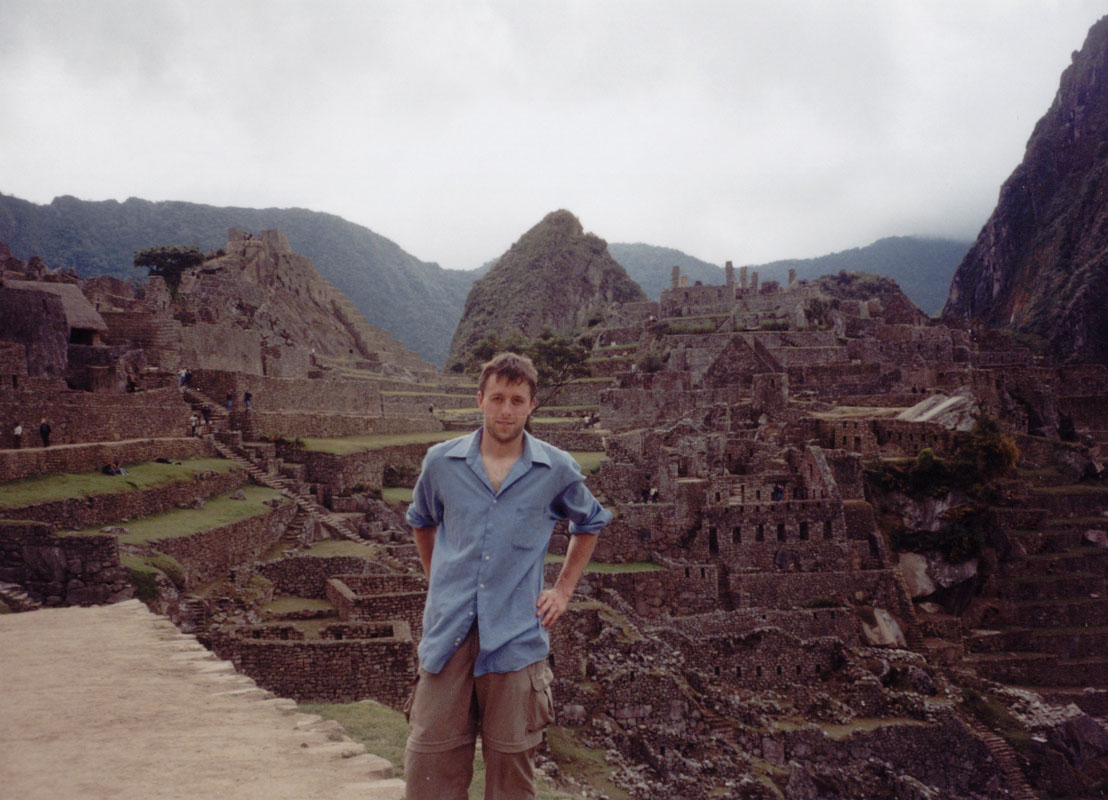
The sky was overcast with wispy clouds obscuring the taller peaks nearby. Enough sunlight penetrated the gray to brighten the landscape and make it very warm so that soon I was wishing I had brought water with me. I scampered around the cropped green terraces, noting that the turf was kept so neat by a herd of resident llamas munching indifferent to the camera-eyed tourists positioned around them like snipers. Seeing a ladder protruding from a hole in a boulder pile I hurried off the path to investigate, expecting at any moment to be called back by a park official, but the cavern was empty and shallow and I wondered why people were working there. The tumbled boulders were overgrown with vines and shrubs, covered in loam, and riddled with slippery holes where one might fall in among the ants and become stuck. I wondered how on earth the Inca builders had prepared such a site for this fine palace. Continuing on toward the distinctive peak that is the backdrop for the traveler's memory of Machu Picchu, I moved close enough to see people climbing up the steps that led to its summit. As I approached the base the peak looked closer and less lofty and in my thirsty haste I decided it wasn't worth clambering up, though now I wonder why I didn't take another hour to see all there was to see. I had seen eerie photos of the ruins perched atop misty mountains and read the fascinating history of the mountaintop retreat of the Incas, how the Spanish never sacked the remote and hidden city, and how the site was reclaimed from the jungle in 1911 after Hiram Bingham was led there by a local farmer. Standing there among the great stones I thought the place looked exactly like the photographs but that the romantic mystery surrounding it had eluded my visit. If one arrived in a rainstorm, coming by the mountain path with close companions who had shared the hardships and the anticipation, and saw with a blast of wind the ancient city freed from the mist and lit by a ray of sun slicing through the clouds, then one would have captured the essence of the place. I had failed to do so but had seen what I came for; those moments of perfectly balanced earth and water and light are very rare and are not to be expected. Turning around I took a different way back through the ruins.
A mountain stream had been channeled into the city and cascaded through a series of carved stone basins, each with finely built culverts and drains and troughs, abetting my curiosity of how such a remote place sustained itself. Every new view of the incredibly steep landscape and the enduring stone monument upon it caught my attention. I took more photos than I expected and when I developed them I found that all turned out well in the bright but muted sunlight, so my album has many pages of Machu Picchu. I took a long last look at one of the world's most famous archaeological sites and then ducked around a corner and followed the path back to the modern world urgently pressing at the gate with its buses and a fine hotel and a hamburger stand and well-dressed people chatting in many languages. The guard at the baggage check was sleeping; I could see his feet protruding from around a corner on one of the bunks where packs were stowed. I thought of simply taking my pack and leaving, but instead roused him with several loud greetings and exchanged my numbered paper ticket for my thankfully undisturbed pack. Most of it was replaceable, but my journal and films were not and I guarded them closely for the entire trip. Very thirsty, I bought a small bottle of water at 10 times the cost of the same in the Cuzco markets and hurried down the path, convinced that I must catch the train back to the city rather than pay the high prices of Aguas Calientes. In hindsight I would rather have lingered and mingled with the tourists, for I found few companions in my travels thereafter. The walk down was more pleasant and short, so soon I was back on the dusty road beside the river. Buses lumbered past and the rock crushers were still at work but the trash burners had departed and the stinking fire was out.
In town I raced about looking for a place to buy a ticket home. Among the disorderly shops there were many agents selling hotels and tours but all sent me elsewhere for a train ticket. At last I arrived at the correct ticket window and was quoted a fare four times the rate I'd paid to get in. A round trip ticket bought in Cuzco would be simply twice my low fare, but as the rail link was the only way out besides footpaths the operators were free to collect from trail hikers and unwitting travelers such as myself. It was no place to bargain nor was there time, so to complete my $70 day (the most expensive of the trip) I purchased a ticket to Cuzco on the Vistadonne, the upscale tourist train. There were no overhead racks, only lovely curved glass windows suitable for looking up at the snowy peaks nearly directly above the train, and though many backpackers were aboard who had, like myself, missed the backpacker train there were considerably more affluent tourists than there had been that morning. They were middle-aged couples and friends with pressed trousers and handbags and collared shirts, toting video cameras and guidebooks and in my opinion remaining aloof and unaware, perhaps intentionally, of so much that was happening around them. The lady across from me said I was lucky to be traveling alone as I had no one to impress and no one to wait for. I still looked great though, she said, no one to impress but I still impressed. In my wrinkled blue second-hand button-down shirt that was a size too big I felt undeserving but appreciative. I was just trying to look respectable since I was a guest in the country. Behind me a couple from England traded stories with the people sitting across from them. "We brought so much luggage," the lady in heavy looking glasses said. "The water suitcase was so heavy that we had to pay extra at the airport." They had brought 40 pounds of water from home, untrusting of the less costly and more convenient Peruano brands. I tucked my head into the space between seat and window and tried not to hear her drone on and on about the exotic wonders they'd seen. The shallowness of her understanding disgusted me, but knowing that I also was an ignorant visitor I kept quiet and watched the evening shadows swallow the hills outside.
At the Ollantayambo station, 45 minutes by train from Cuzco, the conductor announced that those who wished could depart and take the waiting buses to the Plaza in 10 minutes for 5 soles. Most people left, debating back and forth the equivalent costs. "We can all go back for six dollars," a girl said. "Only six dollars. Let's go!" And so they did, trooping out and leaving a handful of unhurried travelers behind. Those 5 soles, a dollar and a half, were for my dinner and I had no plans to go out afterward. We zigzagged our way down into the city, switchmen changing the tracks as we passed, and at last I was on familiar streets. I sent some emails home, noticing that the cafes were very crowded in the evenings. Young people emerged from dilapidated buildings wearing neat and stylish clothes fit for any city. Moving on I searched for affordable food to balance my expensive day. Later, I wrote: "I feel much redeemed, though not completely. I'm still learning about this country. Got a huge bowl of noodle soup and a big plate of spaghetti with a light tomato-meat sauce for s/3." It was at a hole-in-the-wall cafe, the menu smudged on a chalkboard, a few people inside. The manager shuffled over to me as I took a seat and took my order. The soup was good and the spaghetti, though the pasta was overcooked and the sauce was pale and oily, was passable. I silently lamented how so many fine tomatoes and peppers and onions and spices and good cuts of beef were spoiling in the markets because no one knew how to cook them properly. But recommending change to the food preferences of a culture is no business of anyone. Happily fed I set out to find myself a place to stay.
For s/20 I got 2 twin beds with a shared bath. The door had a flimsy latch and I was given a small padlock and key which I was sure would be a small deterrent but by no means secure. The beds seemed comfortable enough and the proprietor arrived shortly with a towel and a bar of soap, an unexpected luxury. It helps so much not to travel with a wet towel in one's pack. I sank into the bed thankfully, marveling at how lovely Peru was. On the train that morning people were talking about how clean the country was. People dressed well, restaurants were clean, and vendors on the street were very careful to use good hygiene. "I think it is wise to buy from vendors early in the day," I wrote, "rather than later when the dust and spills have accumulated, but I've not been sick at all yet." My luck had run out, and two hours later I was afflicted with the traveler's nightmare of food poisoning. It might have been from the meat sauce, lurking in its semi-warm pot for hours before my arrival. Miserable, I lost my affordable dinner and most of my water and huddled in my bed, hoping to catch some rest between waves of nausea and hurried retreats to the washroom. As in most mountain towns in Peru there were no toilet seats, perhaps to eliminate the need to clean them or because such an expense was deemed unnecessary, but adding to the misery of food poisoning. My nose started bleeding amid being sick, completing my new understanding of what six more lonely weeks were going to be like.
Dawn found me shivering under the thin blankets. The shower water was cold and I could only splash water on my face. I ate half an orange but it didn't stay down, and even water made me queasy. I would done anything for a travel companion to look after me then, but of course I'd arrived alone. Most young backpackers were traveling in couples, so being solo I was not wanted for more than a conversation in passing. Those who traveled in small groups seemed quite content with their small groups and wanted no newcomers, at least not a scruffy single guy with a big pack. Invariably we were going in different directions. I was going to Puerto Maldonado, by road, and no one else even knew that was possible. I had doubts myself, and so after resting a while longer I packed my belongings, paid for my stay, and took a taxi to the Plaza Tupac Amaru where I'd read in a guidebook that trucks left for Puerto Maldonado. I was looking for a camion grande, a large petrol truck, short and stocky like a construction dump truck but with a cylindrical tank on the back. The top third of the tank would be flattened and short railings would be installed to form a cargo area used to haul lumber or produce out of the rainforest on the return trip. People also rode atop the load in both directions. But there were none of these trucks in sight as I stood on the curbside in the hot sun. Across the plaza a crowd of youths was rallying, probably for the same cause of previous protests. I walked to several smaller trucks and asked the drivers where I could find a truck to Puerto Maldonado. It seemed that many had no idea where the place was; they knew their mountain home and no other. Finally one man sent me off to a place where I could find a truck, several blocks away. I soon became lost and unsure of where he meant, so I asked a pair of taxi drivers who hoped to secure my business. They did not immediately recognize the city name so I began naming intermediate towns. "You can take the bus to Urcos for 5 soles," one driver said. "There is a bus from there to Puerto Maldonado, 50 soles." I was surprised to hear this as every guidebook and internet reference I'd found said no buses ran the route, considered one of the worst roads in Peru between two locations of significant interest. "I can take you to Urcos for 50 soles," he said. For a little less than 15 dollars, I could be on my way. I was still sick and I'd seen the buses running to Urcos - little Toyota vans with sliding doors packed full of people. I wondered where my pack would go. I needed to get to Puerto Maldonado and I'd read that the trip could take as much as 10 days in bad weather. "Take me to Urcos," I said, "50 soles." I had just enough soles for the fare and a bus ticket.
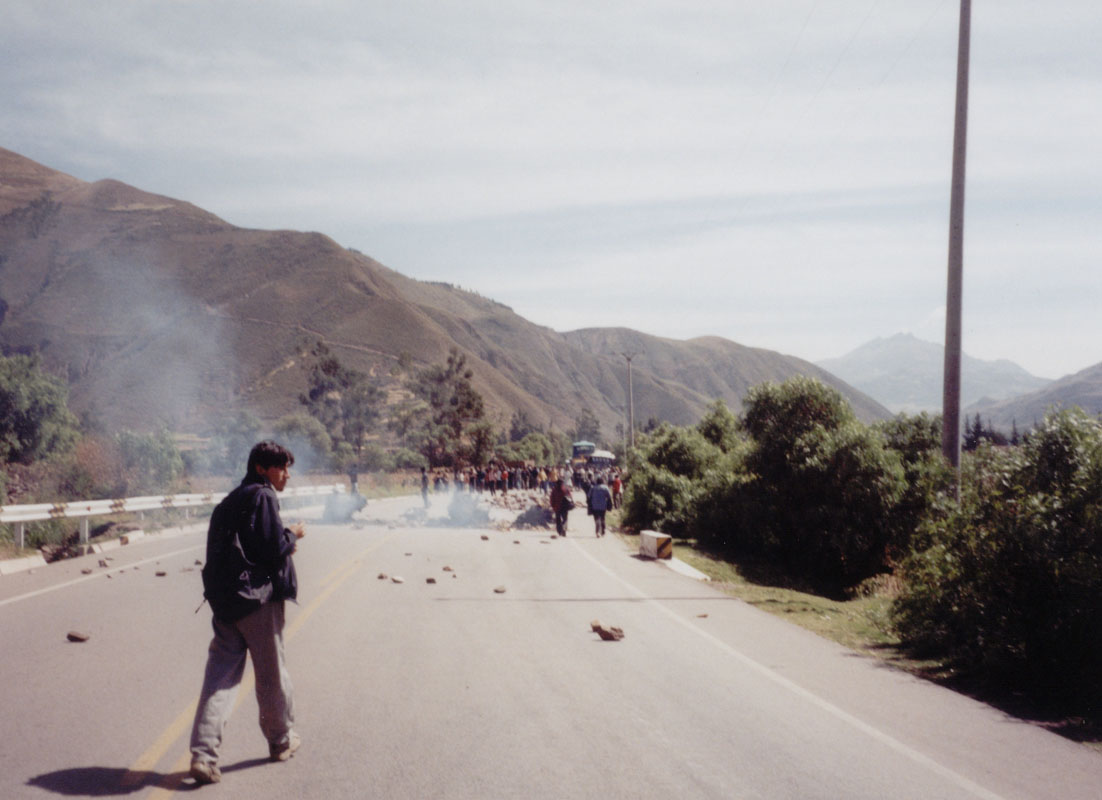
It was well that I took the taxi. I leaned forward from the back seat to hear the driver pointing out the penitentiary and pre-Inca ruins and various restaurants where certain local specialties were served. 30 minutes into the 40 minute ride we came upon stopped traffic and scattered rocks and cactus paddles in the road. "What happened?" I asked. "Was there an accident?" He didn't know, and sped through the confused knot of vehicles until we could go no farther. Vans loaded with rafts and full of tourists were mired beside the local buses and taxis and trucks and personal vehicles. The driver spoke with several people, then turned to me. "There is a problem. The strikers have blocked the road. It is like this all the way to Urcos." I asked how far, and he said "it is not far. Six, seven kilometers. Yes, you could walk." He accompanied me a short way ahead on foot, hoping that there might be some way to get his car around, but I took my pack expecting a change of plans at any moment. The scattered boulders became thicker and we approached a small crowd of protesters, perhaps a hundred people, holding a long pole across the road and waving a banner with a message I did not notice. Behind them palm stumps smoldered in the street and more stones, tons of them, covered the pavement as far as I could see. People were walking calmly past and the protesters milled about quietly. There were no police in sight. "It will be open later," my driver said. I asked how much I owed him and for 40 soles we parted, he returning to Cuzco and I walking ahead into an unknown place.
Feeling exhilarated by the faint hint of danger and the uncertainty ahead, I shouldered my pack and hurried past the roadblock. Farther on a crew was repairing asphalt where a fire had burned through it. They had an iron sheet set on blocks over a wood fire for heating asphalt. In places the rocks were very closely packed and there were so many that I wondered where they had come from. The farmers were also on strike and only they had the equipment to load and deliver these hundreds of tons of stones. I passed businessmen and women walking on the roadside, and others passed me. The sun was intense and I had little water. I put on my hat to keep from being burned, shifted my pack, and plodded onward. The road wound through a small valley of pastureland and harvested cornfields and scattered buildings and ahead beyond a hill I could see what must be the outskirts of Urcos. I took up conversation with a man who was carrying a bright red down jacket under his arm. His name was Juerge and he was going to Ccataca where, I gathered, he lived and was studying to become a mountain guide in the nearby high peaks. It was cold up there, hence the heavy jacket. He told me that the buildings ahead were indeed Urcos and that the bus would take me that day to Puerto Maldonado. Trucks also left frequently, but while the bus took one day the trucks took two to make the trip. Juerge flagged down a car, somehow, since everyone was soliciting rides from the few cars that had become trapped between thickly stoned sections of road and made their way back and forth, dodging boulders and often clattering over small stones.
We squeezed into the four door sedan, then stopped to take in more people. A man took my pack and put it in the trunk, where a boy of about nine also sat and held down the lid to keep it from bouncing and knocking him in the head. Though I tried to quiet my mistrustful suspicions, I kept peering back through the tiny crack at the trunk hinge imagining the boy rooting through my pack and stowing my valuable possessions in dark recesses of the trunk. The boy was in the trunk because there were nine people, including me and the driver, in the seats. We started driving back the way I had been walking and I, alarmed, asked Juerge why we were going back. We needed to drop the boy off at the school, he said, which made no sense to me since I thought the teachers were striking. Again I quieted my suspicions and presently we let off the boy and turned about to weave among the boulders in the other direction. Eventually the car could drive no further and we spilled out onto the road. I snatched my pack and Juerge indicated that I should pay the driver 50 cents, the same as he was going to. The driver lamented "Only 1 sole? but senor, there are many stones! It is bad for my car." One sole for the two of us, we stated, and went ahead on foot. We were closer to Urcos now and a bucked loader was on its way out to begin clearing the road. A small boy in his young teens was at the wheel of the giant machine, and he sped along over the rocks with the bucket high in the air. I wondered where he was going; by putting down the scoop he could have cleared a path in minutes.
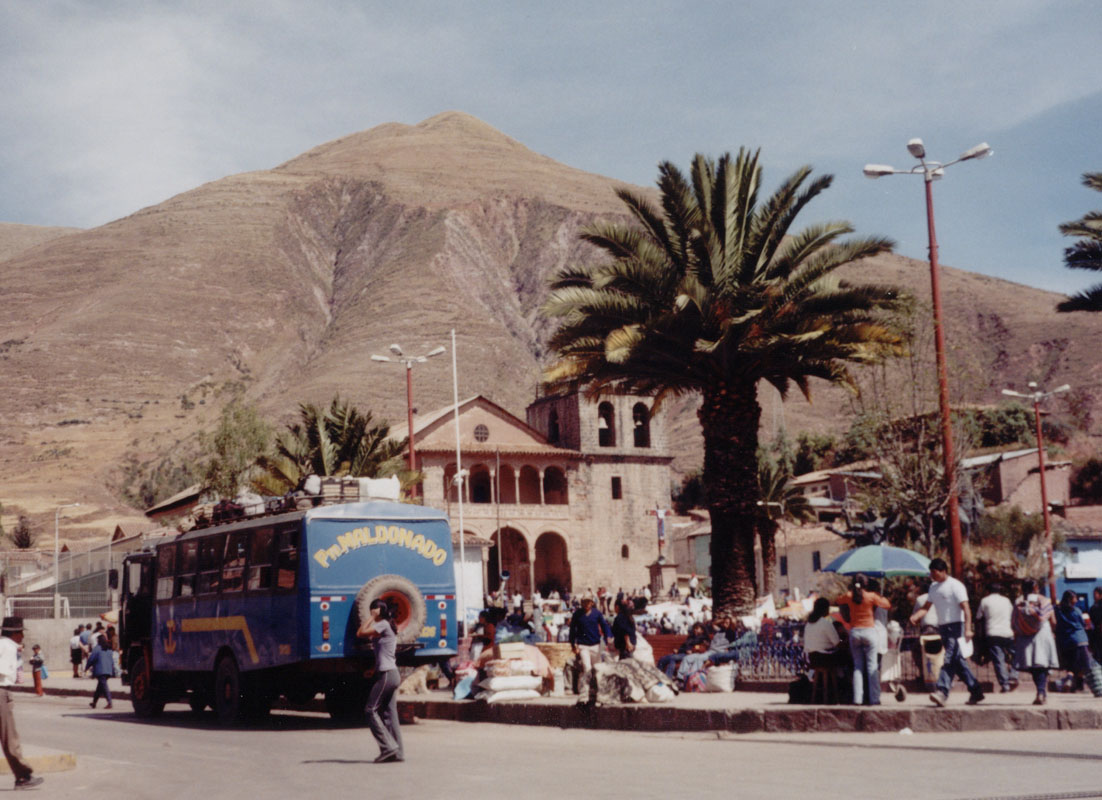
The debris in the road thinned out as we entered town and the last thing I saw in the street was a large overturned dumpster. Juerge and I took a shortcut on a side street and were presently at the central plaza where a demonstration was taking place. Pointing to the bus parked there, Juerge said he would be back in a moment and hurried off somewhere. He would be going the rest of the way by taxi. I glanced around the crowded square. The demonstrators had megaphones and were reading speeches. Vendors sold food, people lounged in the shade of storefronts, and nowhere were there any foreigners even though I was on the main road to Puno. Evidently nobody else stopped in Urcos. I found a restroom and then approached the bus. It was a rugged vehicle with big knobby tires, a high ground clearance, and a roof rack that was already filling with burlap bags and tied bundles. A man handed me a clipboard with a passenger sign-up sheet and I selected a window seat near the back of the bus. I had only 49 soles in my wallet but they accepted this and waved me on. Later I found 150 more in my document pouch and was very grateful, as otherwise I would have been unable to change money until two days later and unable to buy food en route. It was noon and the bus would not leave until 4pm but I had nowhere to go and wanted to stow my pack under my seat for peace of mind, before the bus became packed, so I clambered on. There were dented overhead racks and every single seat was faded and torn and dirty. The floor was stained and dusty and I reluctantly shoved my pack under the seat, where it barely fit. Behind me there was a rear door through which sacks of potatoes were being loaded and packed in place, neatly securing my bag. I was quite uneasy about a night journey after reading so many warnings of tourists having their bags riffled through on night buses. There was one row of seats behind me and it was raised so more cargo could be put below. A rough hardwood plank formed a footrest. Already there was a sour smell in the air from rotting vegetables of past journeys that had never been washed away.
I still felt sick and had eaten nothing yet but I tried to fend off serious dehydration knowing throughout that I was about to sit on a bus for a day and a half with few breaks and no buddy to make sure I didn't get left behind at stops, so I had better moderate my beverage intake. Outside I watched petrol trucks come and go and I wondered if I should have tried to catch a ride on one first. Maybe on the way back, I told myself. I needed to make my boat up the Tambopata River in 6 days. Now, arriving by bus, I would be four days early in Puerto Maldonado. I had wanted to see the mountain passes by day, and to spend time in villages along the road, but I was sick and worried about more protests and not confident enough that I could arrive on time. At about 1pm the crowd marched out of the plaza in a long parade, carrying banners but walking silently. Women and girls called to our open windows hoping to sell corn and potatoes and chicken and chicharron, greasy fried pork gristle that I never found very appealing. I had only 20 and 50 sole notes and I didn't trust enough to hand them out windows and hope for change. Finally a woman came onto the bus selling ice cream for 50 cents and she said she could get me change. Having made more personal contact, I was reassured and soon she returned with my change. The ice cream tasted so good - cold, creamy, and sweet - and I felt no sicker eating it. It cheered me up that I was able to eat and get some sugar into my blood. More people had gotten on and the bus was filling up. A very wrinkled elderly man in tattered clothes sat in the aisle beside me on a wooden crate of rabbits. I wondered what people thought of me, an uncommon sight on their bus. I wondered if perhaps I should have bought the old man an ice cream too and I regretted not thinking of it sooner. With the language and culture barrier it is hard to make a friend without some such gesture.
The petrol trucks coming into Urcos were covered in dried tan mud and dust, a preview of the road ahead. Some were towing a tanker trailer though so I supposed the way must be clear to let such a long and heavy vehicle pass. I nibbled on an orange section timidly, wondering of my stomach would accept it and knowing that I needed food. I wanted more ice cream and vendors came through often selling helados and gelatinas and chicha and other foods but few passengers were buying and I did not want to appear any more rich and stuck-up than I did already, by looking different and carrying a pack. A little girl of about four years was clambering around the bus restlessly. She climbed onto the empty eat next to me and smiled. I smiled back, and she extended a finger and touched my arm. I could see the curiosity in her eyes - Why was I so light-skinned? Why had I more hair than the people she knew? She was probably returning home after a rare trip into the mountains and may never have seen a foreigner so close before. Angel was her name, she said. Later the seat was taken by a boy about my age wearing a white soccer jersey and carrying a small black book bag. Neither he nor anyone else nearby said much and we settled silently in our seats like passengers on an elevator, patiently waiting to arrive. At that point, actually, we were waiting to depart and the appointed hour had passed. Shadows were getting long in the plaza and the sunlight had taken on the rich colors of evening. Passengers began stomping loudly on the floor, slapping the side of the bus with a hand hanging out a window, and shouting "Vamos!" and "Hora!" No one seemed to care though. There was no business to nurture; the people had to get to Puerto Maldonado and there weren't many options for getting there. If the bus waited just a little longer they might gain another passenger and his fare, and so we lingered for more than an hour more.
Finally the engine started, we waited, we rolled a few yards and waited more. Men were on the roof lashing down the cargo. At 5pm we departed and one of the crew stood at the front of the bus and began a very long speech. I couldn't hear him well since I was in back but again and again he shouted "Amigos!..." with forced enthusiasm. He spoke of the long trip ahead, advised us to stay hydrated when we climbed to high altitude to avoid headaches, and warned that pop bottles would foam over if opened because the rough road would shake them. I later saw that this was very true - the foaming, and the intense shaking. Next he launched into what I soon decided was a sales pitch for a particular herbal supplement. I thought it very was odd and looked at the packets of powder that he was passing around. They had graphics that indicated aid to the kidneys and reproductive glands and heart and some people were visibly excited about buying several packets. At last the man sat down. We left town and immediately began climbing a very dusty but recently graded road into the hills. Beside me the rabbits were contentedly munching lettuce and carrots that people had slipped into their crate. A heated argument arose over a couple who apparently hadn't bought tickets or signed up for seats. I wondered if they would be sent off, causing yet another delay, but eventually calm returned with several people sitting on crates and bags in the aisle. The bus was packed full. The overhead racks were stuffed, bags and boxes filled the aisle, and I felt both trapped and secure in my corner. The windows slid open such that I could only open mine a small bit if the man in the seat ahead of me had opened his too. But I soon discovered that it was far too dusty to have even a small crack open for air and I was thankful not to be in the open back of a gasoline truck.
Darkness fell and there were beautiful colors in the sky to the west. Lights twinkled in the valleys below and ragged hills towered overhead. In the distance to the west a column of smoke balanced itself on a burning hillside, burnishing the red horizon with hazy shadows. We climbed ever higher, passing lumbering trucks going in both directions. I became concerned how the delicate maneuver of passing on the narrow road would be done in full darkness. The recently graded road appeared to be carved out of loose gravelly soil and in places it seemed that the outward edge could slump and tumble the bus into the valley below as our heavy tires thundered past. My anxiety was abated by the soothing mask of darkness, but still I pressed my face to the window hoping to see all that I could of the place I traveled through. We climbed to ridge tops, then dropped into steep valleys, then climbed again as the road became rougher and narrower. I noticed with some alarm that at the sharpest corners the driver slid to a crawl and crept ahead, turning on bright lights over the rear wheels so he could be sure not to drop one over the edge. Throughout the night as I dozed I would suddenly awake in fear as the bus shuddered and rocked and delicately picked its way past a treacherous curve. Sometimes we met a truck also negotiating the curve in the opposite direction and then the fear was deeper, as one vehicle would have to roll out of the safety of the inner shoulder and cling to the edge of the hillside while the other passed in a dusty flash of headlights and the rumble of a diesel engine.
We passed occasional mountain villages and crossed a pass over 15,000 feet high. Once we stopped in a dim plaza where many people loitered. It was a truck stop and some passengers got off to buy food. Still sick and not wanting to become lost and left behind without my bag, I stayed on the bus. Several people told me we would eat now but were not bothered that I declined. It had become very cold and I put on a thin fleece sweater, the only insulating layer I carried. I had known I would encounter cold weather in the mountains especially visiting during the colder part of the year, but I only carried nylon pants and a t-shirt, button-down shirt, long-sleeved poly top, thin fleece sweater, and a nylon water-resistant jacket. It was just enough to survive on. Wearing the fleece, however, I had no pillow for my head and could not get any rest because the ride was so rough. There was constant noise, a terrible crashing thunder from the wheels and the muffled sputtering of the engine. Packages rattled in the aisles and on the racks overhead, children squealed, and people murmured quietly. The boy next to me had reclined his seat and I wondered if doing the same might help me rest but I was aware of the closeness of the seats behind me and also appreciated the new separation of his seat from my own. It is so awkward to have a strange person sitting next to me falling asleep and toppling over onto my shoulder. I leaned against the window and peered out the narrow opening I was able to maintain against the man one row ahead. He preferred having his end as widely opened as possible and I could do little but be accommodating.
We were descending and in the darkness I could make out the silhouettes of thicker vegetation along the road. The terrain became very steep and rugged, evident by the angle of the visible slope and the much narrower swath of stars in the sky above. I vividly remember several ghostly vistas that drifted by: far below, wisps of fog lit by a few electric lights in a roadside outpost gave depth to the dark void. Our perch on the hillside was terrifying, for the lights seemed not far in the distance but were sometimes thousands of feet below. Looking through the opposite windows of the bus I could only see a rock face barely a meter away from the bus, strewn with vines and creepers and shattered edges of rock. At switchbacks there we slid to a halt, then nosed over the edge of a steep turn that reversed our direction of travel with hissing brakes and the grumbling engine tearing ahead to the relative safety of straighter road. Some day I'd like to cycle the same road to Puerto Maldonado, then catch a truck back up, stopping wherever I like and camping in the snowy mountains and beside the clear rushing rivers, but when I think of that night journey I wonder what risk of traveling is worth the rewards one finds. The road had become rougher, washed into braided gullies in many places where streams crossed. It was so rough that at least once a minute the shocks would bottom out with a clang of steel hitting steel, jarring my neck in whatever position I sought to rest it. Nearly as frequently a jolt would throw passengers and cargo into the air. I was bounced out of my seat and slammed back into it again and again so that soon my back began to ache. I am strong, fit, and tough but still it took several months to heal the damage to my body done by that bus journey. I wondered how the other passengers did it but concluded that such a trip would not be made frequently. I also wondered if it could be worse riding in the back of a gasoline truck; surely it must be.
Several times we stopped during the night for food and toilet stops but I always remained in the safety of the bus. In the faint light of early dawn I cold see towering green mountains like those surrounding Machu Picchu, with wispy waterfalls cascading down moss-covered cliffs to a raging white river full of granite boulders and lined by the tall, large-leafed trees one finds in the tropics. Trees speak so much about a climate. In the Northeastern United States, my home, trees have rough ragged bark that protects against frigid winters and summer drought. Most surrender their leaves for more than half the year, the bare twisted trunks waiting for temperate weather and casting skeletal fingers skyward as if begging for mercy. On mountaintops they are tormented by wind and grow into the strangest of shapes as they struggle to survive. More mild southern forests such as the river bottoms of Arkansas and Mississippi and the pine stands of the Carolinas grow fuller, more stately trees. In the sunny Southwest the lack of water keeps away all but the hardiest trees and even those grow stocky and short. Tropical isles sport wispy palms that sway in the ocean winds and bend forgivingly in storms. And the tropical forests grow thick, lush, soft trees with smooth trunks, graceful curves, few branches, and large leaves. There is something very feminine and delicate about the slender trunk of a mahogany compared to the rustic strength of a Michigan oak. Gazing upon the high rainforest from my uncomfortable seat I marveled at the proof once again that the most beautiful places are the most difficult to get to.
At a collection of rough wood shacks we stopped and one of the crew got off the bus to hand several bags of large flat loaves of bread to a man waiting in the dark shadows of a hut beside the muddy road. It was easy to see that the road was a lifeline for the people who were trying to eke out an existence along it. Beyond the road there was no human mark on the landscape and it appeared to me that this strip of rugged land between the flats of the Amazon basin and the open hills of the altiplano would remain safe from destruction for quite some time. Soon after, we reached the river that had previously been racing on downward as fast as we descended. At a bend, on a gravel bar, a flame licked out of a tiny shelter of sticks and fronds. In the early wet morning a figure hidden in the darkness of its hovel was tending a smoky fire, coaxing it to life. Several cows were bedded down nearby on the rocks among wisps of grass. The scene became fixed in my mind because it showed the hard simple struggle of life in these parts. No pastures were nearby and the only place dry enough to lay out a bedroll was on the gravel in the middle of a braided river channel, so there the herder slept with only dead leaves to shield him from the rain. Mist obscured the sky and distant hills but the landscape brightened slowly. The river had escaped from us again, gleefully frolicking over rocks and frothing down cascades and leaving my bus crashing through mud wallows on an eroding bank a hundred feet higher. The merciful darkness was gone and now I could see the recent slides chewing away at the road cut, the sharp edge in the clay riddled with creeping cracks that would widen with every rainstorm and stress of passing wheels. Dozens of streams and countless rivulets crossed our path and had washed away the silt, leaving rocks and boulders the size of footballs. The knobby tires of the bus clambered over these and slammed down the other side into water-filled holes, splashing water and mud and making hole a little deeper for the next vehicle to pass.
The road there was exactly what I had expected, rough beyond belief and nearly impossible to maintain, about to crumble into the river below such that a new passage would not be open for weeks. My racing mind imagined a wheel run too close to the edge suddenly floating in air as the dirt fell away, the bus hesitating on the edge, then with a scream plummeting down to the rocks below. I wondered at each precipice if the drop was survivable and cursed the river for getting so far below us as if it was to blame for the danger of the road. The passage was dangerous, but the land was not at all threatening. It was light now and behind us I could see craggy jungle hills wreathed in clouds. We rounded a corner and there, ahead to the east, the mist had thinned and golden rays of sun had set aflame treetops and clouds alike. Tall mahogany trees and other hardwoods were silhouetted against a misty, mountainous landscape more beautiful than anything I had ever seen. I reached for my camera but the moment was gone in an instant. The bus dove into another puddle, a tunnel of dark leaves obscured the view, and a bend in the river closed the channel through which I'd glimpsed that idyllic landscape beyond the edge of the forest. I would return some day, I thought to myself, and go no farther than this remote paradise of clear streams and tall trees and steep hills and waterfalls.
The morning brightness became a sullen gray blanket as we descended further into the forest and the land began to flatten. Presently we arrived in a village that was everything I thought a rainforest road stop ought to be. Behind us, the road looked like a seldom-used trail. Green grass grew between two brown tire tracks that wavered casually through a straight slot cut from the forest. Young trees had sprung up among the hacked remnants of their predecessors on the roadside and were well on their way to reclaiming the strip. The village had about fifty yards of dark wood buildings with corrugated roofs. A tire repair shop advertised its services with a large truck tire painted with "Vulcanizado" in white letters several stores were open and wrinkled women and wiry brown men shuffled up and the muddy street. The bus emptied quickly and all the passengers rushed to a courtyard past one of the storefronts where water spigots filled barrels and troughs. Each brushed his or her teeth with hurried attention, splashed water on his face and smoothed his hair, and drank cupped handfuls of the cold clear water. In a matter of minutes the travelers, many of whom were still neatly dressed, were looking fresh and sleek. The women had pulled back their glistening black hair and the children were freshly clean. I felt invisible among them, puzzled by their routines, anxious about what lay ahead, and still a little sick. I would have been much more social at mealtimes had I been healthy, but my bout of food poisoning had made me very withdrawn and cautious and unhappy especially with a day's bus ride still ahead.
Everyone dispersed to several restaurants and sat in groups around wooden tables and ate bowls of rice and boiled potatoes. I wandered down the street looking for more oranges, having eaten my remaining half orange and wanting another. There were dry goods - rice and potatoes and canned or plastic-wrapped foods - and bananas. Thinking that a banana would taste wonderful for breakfast, I bought a bunch, sat on the concrete slab of the storefront, and peeled the green fruit. It was a plantain, an unfamiliar and not quite ripe plantain with a firm salmon-orange colored flesh and an odd taste. I ate half a plantain and then returned the rest to the plastic shopping bag, looking around for someplace I might dispose of the displeasing and cumbersome bundle. Of course there were no trash bins and so I toted my bag on down the street and found tangerines for sale at another store. They were absolutely delicious and very cheap and I bought a large bag of the green-skinned leathery fruit. The peel separated from the fruit in a single piece and the sections were sweet and juicy. My stomach agreed and the added sugar and water made me feel more alert and energetic. People were returning to the bus, which I had never let out of my sight for long since I had no idea how long we would be stopped for, and I climbed aboard and settled back into my seat again. I had no place to put my large bag of plantains but didn't want to toss them out the window especially not in town. Everyone else had no such issues, and plastic cups, bottles, wrappers, bags, and unwanted food was flung out as soon as it was finished with. Some people visibly admired Western culture and rich material possessions and stylish clothes and neat homes and cities, but none that I met appeared to understand the connection between caring for the land and developing it in such beautiful and prosperous ways. Peruanos live in trashy cities and seemed readily accepting of that.
The bus went on and on. The soil turned red, the rivers turned brown, the hills became flat, and the road had fewer rocks but more mud holes instead. Many people got off the bus at Mazuko, a large town. We passed stacks of freshly cut mahogany beside the road, red planks squared by chainsaw and sometimes concealed partially with green branches. I hoped the harvesting was legal. Farther on, cattle pastures pushed back the forest even further and fences crisscrossed the roadsides. The sun sank to the Western horizon and slipped into the forest in a brief show of colors, and still we drove along the muddy dirt road going east. After dark we encountered a particularly poor stretch of road and stopped for nearly a half-hour. Ahead it looked like a truck had become stuck, blocking the road. Personal 4WD vehicles that came upon us tried to pass on the shoulder and their tires promptly sank into the grassy much, spitting up red dirt as they blasted through fishtailing and spinning but eventually making it past. When the bus moved on it was for no apparent reason, and I could not tell if the truck was stuck or broken down as we passed it. Finally, at 9pm we stopped in a dark town with scattered orange sodium lights fending off the black wet night. There was no terminal, no station of any sort, only a deserted looking street with no friendly shops or restaurants within sight. I asked someone if we were really at Puerto Maldonado. "Yes," was the reply. So I took my pack, got off the bus, checked that I had all my possessions, and started walking.
I had read in guidebooks that Puerto Maldonado has many motorcycles and few cars but even so I slowed to a stop after a few steps and watched in amazement as purring motorcycles and bikes sped back and forth and bunched up at intersections and stoplights. It was the strangest thing to step off the bus after 31 hours and find myself in such a very different place. The air was warm and heavy with moisture, the road was dirt, and the orange glow of the street lamps was reflected in many puddles. I thought it best to keep moving and appear as if I knew where I was going for certainly it was bad to appear disoriented and confused and foreign in a muddy back alley after dark. I returned to the main street, which was paved, and looked both ways. Neither direction was particularly well lit or populated but one had some large illuminated signs that could be hostels so I set off in that direction. Men on motorcycles approached me and asked if I needed a taxi (every motorcycle was of course a taxi since every driver was hopeful of a few extra soles). There were also motor-trikes, most of which were dedicated taxis. There were no tourists, no foreigners, and no hostels within sight. I wondered where the central plaza was. Had the bus stopped a mile outside the city center? What would I do? There were many young people about, standing outside bars and stores that were still open. I never did find the plaza that night, but I did find a horrible little hostel. The shared bath was very muddy and blood was smeared on the wall above the sink, which was quite rusted. The shower did not have any sort of curtain and would fill the small room with splashing water, and of course there was no hot water. The sink and shower had only one knob. I took a bed in what would typically be a shared room, with 4 beds, confident that I would have it to myself since it was late and no one else was staying there. The beds, at least, were clean and I was able to sleep comfortably.
I woke to noisy people and heavy rain. Drops of water thudded in the flooded street and hammered on the corrugated metal roof above me. It was 4am and I could not get back to sleep so I showered in the cold filthy bathroom and then, refreshed, went back to sleep. At 6am I was again awakened by loud voices and footsteps and large objects being dragged past my door. It was still raining. Motorcycles still drove about on the streets, but there were fewer than before and most drivers wore plastic ponchos. I was curious to see how the people stayed dry with such frequent rain. Also I wondered if it would stop, or if I would have to venture out in the water. I felt rather trapped, and ashamed that something as simple as rain could stymie my otherwise courageous and determined travels. But it was no New York rainstorm, no Massachusetts drizzle. It was a summer thunderstorm without the thunder, a heavy downpour that went on and on without tiring. I repacked my clothing and sleeping bag in plastic I'd brought for that purpose, lay in bed trying to convince myself that I really did feel better and that things were looking up for me now that I'd arrived, and that the rain would soon stop. The rain did stop, or slow to a drizzle, so I paid for my room and went out into the puddle-strewn street.
I was seeking food and luck brought me to the markets, where I bought a huge plate of rice with chicken and boiled yucca for s/3. Undeterred by my previous cheap food experience, I was determined to see, hear, smell, and taste the Peru everyone else lived in. This time the meal was good, not finely seasoned or presented but filling and satisfying. Other people were eating bowls of potato soup and rice and chunks of grisly meat. I sat in the hot foods section of the markets, where women prepared meals in large, battered aluminum pots set on propane burners. It appeared that some of the foods they cooked at home and reheated at the market. They filled basins of water at a common spigot and rinsed the dishes at their stalls. It looked to be a difficult enterprise with only a wooden table, a bench, a sputtering burner, and tubs of food and water to work with, and I was not surprised by the simplicity of the meals offered. This was the true flavor of life in Puerto Maldonado. Beyond the benches and the clusters of dark-skinned Peruanos was the produce market with its colorful mounds of fruits and vegetables, and the meat markets with the animals strung up and carved, the fish sellers with their catch on ice, so much good food that I wished again I had a way to cook my own meals.
The city seemed free and unrestrained compared to the towns of the mountains and the desert coast. People weren't wrapped in shawls or shut in cars or huddled in alleyways. Young women with toddlers in tow hurried about wearing sports bras and small shorts, riding motorcycles and carrying stylish handbags. It was as if the town was too wild to tolerate cars and pavement, too recently arisen from the wilderness to accept city clothes and concrete. I was in adventure heaven, and surrounded by beautiful women dressed for steamy hot weather. The girls of Puerto Maldonado are lovely, dark and slender. There are far more women than men in the city because, I was told, the men work heavy industries such as logging and mining that take them far from home where the dangers are so great that many never return. And there I was, a rich young white boy new in a town where I fit every qualification for a desirable friend. There were hardly any other tourists. For better or worse, I was bound to get involved with the locals.
At an Internet cafe I battled the Spanish keyboard to put punctuation in the right places and wrote some letters home. Outside the rain clouds had lifted and the sun was getting hot, especially since I was hiking across town with my pack. I came to a plaza and wondered if it was the Plaza de Armas. If so, my rainforest tour operator would be not far away overlooking the Madre de Dios River. I was still trying to get my bearings and it was difficult with the sun high overhead and no visible topography. I sat on a bench and looked around. At my feet large black ants each the size of my fingernail were hauling inch-long green twigs into a gaping hole the size of a quarter. They wrestled their bits of leaf with admirable determination and prodigious strength. I was happy that they were vegetarian. I hung a wet shirt and towel on the bench to dry and wrote in my journal. It was already noon and though the austral winter solstice was fast approaching, the sun seemed to rise around 6am and set around 6pm. So it is just 10 degrees from the equator! Stray dogs scampered about, street-smart and seeking food rather than attention. Knowing the gutters where they foraged I refrained from petting any. The animals of urban Peru were tough, survivors in a place where few people could provide dedicated food and shelter for pets. Even the chickens showed signs of adaptation. The roosters stood 16 inches tall or more, muscular and fast. Even the baby chicks, though adorable fuzzy yellow balls, balanced atop strong thick legs that looked like ungainly stilts. In my experience running around chasing bugs made the birds tough eating, but at least they looked happy scratching about in the grass.
Not far from the plaza I found the Wasai lodge and a maritime monument overlooking the river. The Marde de Dios is quite wide at Puerto Maldonado, perhaps 400 yards across. Barges shuttled trucks across the smooth but swiftly flowing gray-brown river one at a time. Puttering canoes with the common "peque peque" engine also cut lines through the current. The peque peque is the third world's first version of an outboard motor. A light 2-cycle gasoline engine like those powering generators and lawnmowers is mounted at the stern of a wooden canoe with a 12-foot long propeller shaft angled down into the water. The engine sputters at low speed and the boat moves slowly ahead, the passengers slowly becoming deaf from the noise and lightheaded from the fumes. I was becoming hot in the sunshine even though thin clouds still covered the sky so I moved on. A bus of tourists passed, obvious for its tacky appearance with neat benches and paintings of rainforest animals on the sides. I saw a few foreigners on the streets but overall there were very few outsiders about.
Trying to get my bearings, I walked in circles but had difficulty because with no high landmarks or distinctive weather in the sky I easily became disoriented. I finally found the markets again but it was 3:00 and many booths were starting to pack up. The smell of rotting vegetables and wash water was too much to bear so I did not linger but I did snap one photo before I left. Markets fascinate me and I wanted to show people at home the wonderful variety of produce, the simple sales with no plastic wrapping, no price controls, no dull monocultures and no expectations to be met. It is never polite to photograph these places though. I'll paint with words instead: The potato sellers had familiar red and white potatoes, and purple ones, and elongated thumb-sized yellow and orange and brown potatoes, and pink potatoes, and small round rough black potatoes the size of marbles and golf balls, and small chalky white potatoes that had been freeze-dried in the mountains. Papa seca, the dry potato, takes on a distinct flavor when cooked. Dozens of different types of rice were lined up in woven white bags with the tops rolled down and signs on wooden stakes sunk into the grains to identify them. More bags held dry corn - yellow and white, purple, crushed or as whole kernels - and dry beans of many types. The bags were all nearly overflowing. Tons of food was for sale. Much of the fruit looked delicious; much of the meat did not. There was no refrigeration in the markets yet the meat hung out all day, yellow feet thrust at the sky, eyeballs staring without expression at the alley. If only I had a grill and fire I could cook a good meal, but I did not and the restaurant food had no great distinction. Rice and meat and potatoes, cooked in oil, were neither colorful nor savory.
It was nice not having to dodge cars. Traffic was lighter than in the mountain towns and it flowed well in that way we never see in the United States. Maneuverable motorcycles did not become snarled at intersections. People, knowing that no pedestrian laws are well enforced or obeyed, cross between cars and drivers allow them to do so. The two coexist without either affecting the other and no one feels delayed. I was becoming irritated at the honking bikes and taxi cars hoping for a fare though, staring them down more often than saying no. Few people seemed to be walking far though, with so many easy rides available, and I seemed especially odd hiking up and down the streets with a large pack. If I'd known of a place to go I could have hailed a ride, but where would I go? The riders were mostly men but there were a fair number of women on motorcycles as well. I surmised much about the character of the city each time I saw a pretty girl walk out of a shop, swing her leg over a bike, kick the start, toss her handbag over her shoulder, don a helmet and buzz on down the street. Finding this attractive was more a reflection of the affluence in my middle-class culture than an indication of anything unusual in Peru - these riders were choosing a bike out of necessity, not for thrills - but to me it still carried the exciting flavor of a free frontier.
Motorcycle shops abound in Puerto Maldonado. Machinists labor over welders, forges, lathes, and mills; sparks fly. Sewing shops purr with well worn machines. There are beauty salons, pharmacies, camera shops, convenience stores, and clothing vendors selling the latest hip styles. Men typically wore jeans, slacks, t-shirts or button-downs, soccer jerseys, gym shorts, and flip-flops or running shoes. Women wore tight tops, fitted pants flared at the ankles, sun dresses, and sandals. Some older women dressed in traditional skirts and blouses. Compared to the cost of room and board, clothing was expensive but people in the city seemed able to afford it. The young people were schooled in computers and they filled the Internet Cafes in the afternoon and evening. Through the Internet and radio and television they could see all that could be had in the world outside their isolated rainforest city; many of those things could be acquired in Cuzco or Lima if not in Puerto Maldonado itself. Peru is poor because of its infrastructure and lack of profitable jobs, not for its lack of food and resources.
Speaking of infrastructure, I believe I could make a fortune selling toilet seats in rural Peru. My previous three hotels had none and at most public places there was no cover or seat adorning the porcelain bowl. I didn't mind; I wasn't going to sit on one anyway. In Juliaca I saw many blue plastic outhouses that looked as if they must have been installed by a government project. Maybe the same can be done with toilet seats - at the very least it would boost morale and bring a feeling of progress to the people! Another problem I found was with trash disposal: there were so few trash cans in Peru that I had trouble discarding wrappers and napkins. The plaza had metal cans stenciled with the words "keep your city clean" but the bottoms had fallen out of many. People still tried to be neat and I'm sure that with enough capital there could be neat brick sidewalks and paved streets and flower beds and commercial growth. On the other hand there isn't anything terribly wrong with what exists now. Buildings in the city were built of concrete and hardwood, strong enough but simple and utilitarian. Everything was roughly made but the materials are abundant and of fine quality; perhaps people are simply too preoccupied with survival to be attentive architects or artists or city planners.
People around the world decry deforestation and chant "save the rainforest." They buy rainforest cereal and rainforest ice cream and dine at rainforest restaurants, lamenting the loss of plants and animals to thoughtless slash-and-burn farmers. I must applaud their intent but I criticize their direction. I saw where the wild tracts of forest have fallen back mile after mile beyond subdued cattle pastures. People are always dreaming of a better life more like the Western way they see in the media. I saw how unfair it would be to ask the Peruano living in the rainforest not to sell a tree to support his family. No eco-protester would be satisfied living in a wet plank shack with corrugated steel roofing and no windows to keep out the mosquitoes and no bread for weeks when the road washed out every year. There is a way that preserves wildlife and people alike but it doesn't start with sidewalk protests. You in the affluent places, be responsible consumers and set good examples because the undeveloped world is watching and following.
For 25 soles I got a room with a private bath. The lady showing me to me my room giggled as she opened the door - there were five twin beds neatly laid out. I had asked for a private room so they were all mine, a thought that we both found quite amusing. None of the hostels in town were very busy. During my week's stay I never did meet anyone at the hostels who was not from South America; virtually all tourists stay in the rainforest lodges through which they booked their tours and seldom venture out into the city. Consequently there were no postcard sellers, no shoeshine boys, no hagglers, and no beggars. There were only two small curio shops, both on the main plaza, selling hanging string curtains of shells, carved wooden animals, stuffed piranhas, handbags, hats, t-shirts, and postcards. All other businesses sold imported goods from Asia - clothing, shoes, and toys to supply the families living a huge swath of rainforest in southeastern Peru and nearby Bolivia and Brazil. Though it seemed to be an outpost on the fringe of the wilderness, Puerto Maldonado is the only major city in the region and the source of all things from the outside world.
I was still feeling a little sick late in the afternoon, probably from dehydration and too much sun. I lay down for a bit in my room and then washed some clothes in the sink, hoping they would dry overnight. Later I saw a sign asking guests not to wash clothing in the rooms but I didn't feel particularly guilty. I only brought one pair of pants and no shorts so I had to wear them wet when I went out in the evening to buy food and check email. At the Internet Cafe my browser had a menu bar with links. The buttons read "Shopping," "News," and "Sex," and a few other common options - Peru, you see, is a land of few qualms. Every garage I passed had a girl in a bikini on a poster advertising motorcycle parts. Photography labs advertise with scantily clad beach bunnies promoting film. Hair salons have paintings and posters of beautiful women hung across the walls. A restaurant I ate at had murals of nudes on the cinder block walls and a large poster of Marilyn Monroe less clothing. Nearly all these images were white women, most were blonde, and that puzzled me. Certainly the paintings are locally done but still they subscribed to foreign standards of beauty. Sex sold bottled water, beer, clothes, and many other ordinary commodities. Television was not censored. At the movie houses, after the last film was done and the regular moviegoers had departed, they showed porn.
My ninth sunrise in Peru was beautiful. The broken clouds glowed gold at the edges, ribbons of gold in the East that turned to orange as the brilliant red ball of the sun rose above the trees and made the whole horizon glow. The colors quickly faded when the sun reached the gaps in the clouds and the sky turned a blinding white. I'd seen much but done little, having been on the move nearly every day, and I was enjoying my rest in Puerto Maldonado. At 7:30 I packed and checked out of my hostel, taking my pack and walking out in search of food. I was getting to know my way around the city and I went directly to the plaza and sat for a while on a bench. The first food I encountered was a delicious coconut-covered cake roll filled with dulce de leche. Pastries in Puerto Maldonado were a hit-or-miss because they went stale fast and weren't always as good as they looked but this one was very good. I though I'd buy more if they weren't so expensive, but later when I finally reconsidered how foolish I was to think a 30-cent snack was expensive I could not find more for sale. However, 90 cents or a dollar would buy a big plate of rice and potatoes and meat so in comparison, sweets were still a treat.
As long as I was sitting down I was not bothered by moto-taxis. I sat across from the STIHL chainsaw shop. They did brisk business in Puerto Maldonado, sawing down the rainforest, but the people need to feed themselves somehow! I bought a glass of orange juice from a juice cart on the corner. The juice was better than any I'd had elsewhere, superior even to the street-squeezed juice from Mexico. The fruit they used was yellow and thick-skinned; they peeled each orange quickly with a knife before squeezing it. The juice was not at all pulpy and very sweet. I think most Americans don't even know what real orange juice tastes like; the juice from concentrate or even the fresh cartons of juice just don't taste like the real thing. In fact, they're terrible. I walked around for a while but quickly lost interest in any kind of exertion. Because of either the heat or remnants of my sickness it took very little activity to tire me. I bought oranges and some sugar-coated brazil nuts, came to the plaza, spread out my still-damp shirt and socks to dry on the back of a bench, and lay down for a bit with my head on my pack. It was very peaceful with sunlight filtering down through the leaves but when I looked up after a while I saw about 20 officers with helmets and lexan shields gathered in the corner of the plaza behind me. I had seen them earlier in a truck and after the massive security force in Cuzco and the protest I'd passed I was not at all alarmed to see them, so I lay down again to rest and watch people walking through the park. I didn't notice how many were lingering until sporadic clapping began. It was an assessment of numbers that had a menacing sound like the early rumbles of a summer thunderstorm. Time to pack up my laundry! I thought. A man with a television camera filmed about 30 people who walked purposefully to the center of the plaza, right in front of my bench, to chant for a minute before returning to the sidelines. The police looked on casually; I figured it must have been a planned gathering - but why on a Thursday morning? The sun came out from behind clouds and made my bench rather hot and uncomfortable but I stayed, curious about what would happen next. The crowd grew slowly and massed at the corner opposite the police, finally reaching a critical mass and beginning to chant. There were men and women, mostly younger working class folks judging by their dress. I could not understand what they said so I dug out my dictionary and thumbed through it looking up words I didn't know. The gist of the protest was that they were going to fight until the president did something.
As I sat with my nose in a dictionary trying to understand the protesters the police fired tear gas shells over my head into the thickest group of protesters. I was alarmed at the first boom but since I was not downwind and nobody seemed too concerned about it I stayed to watch. The crowd hurried to another corner and regrouped, the police tossed in more gas canisters, boys tried to throw the canisters back and were whacked with batons, and then everyone left. I left too. Most of the shops near the plaza had locked their doors and pulled metal gates down over their storefronts. People peered apprehensively out from doorways, unsure if the situation would blow up or not. Seeing this I realized how serious the demonstrations were; in other cities mobs had caused a fair amount of damage and mayhem. But the tension faded as people dispersed and the police got in their truck and left.
I bought some ice cream and sat at an overlook above the river. Green lizards, some 10 inches long, rustled around in the grass and debris at my feet. It was very hot so I decided to walk down to the water to get some fresh air. Arriving at the port, though, I found it gated and inaccessible by the roadway. It was hot, dusty, and controlled by police who wanted to check my passport. I must have looked a little suspicious lingering outside the gate looking for a way around it, carrying my pack and looking out of place. I had yet to reach the riverbank. I would have plenty of time on the river during my 12 days with Wasai though.
Mid-way through the afternoon I began looking for a room. I had just stepped out the doorway of one hostel that was asking s/25 for the night when a man spoke to me in English and offered a room at his hostel for s/10. The price was incredible (about $3) so I bought 2 nights right away. I sat on my thin mattress and looked around. It was unbelievably hot and there was an obnoxious parrot making hideous sounds in someone's room. There were several other guests at Hostal Manuripe but none spoke English. We all shared two showers and two baths but they were reasonably clean. As with most hostels in Puerto Maldonado there was no hot water and no toilet seat. It was my second night in the city and already I had nothing to do. I wished I could have stopped in the mountains for a few days; instead I was in a remote rainforest city with no place to go. I was sitting dejectedly on my bed with the door ajar when one of the girls in a room across the hallway caught my eye. She and her friends were from Brazil and I had trouble understanding their Spanish. They came tumbling into my room with shy smiles to eye this shirtless foreigner and invite him out. But then the manager called me back as we walked out, motioning as if writing and saying I needed to sign something. I stepped into the office, out of earshot of the girls, and he said clearly with an urgent tone: "Watch your money." He offered his safe, but I declined, preferring to trust my own wits rather than his honesty. I thanked him and went back outside much less pleased with the prospect of friends for the evening. They, like most people I met, were hoping for meals, drinks, and new clothes, all to be paid for by me. They had recently arrived and didn't know the town. They wanted me to get a taxi or rent motos. They wanted to go shopping. I didn't know of any place we might go without me buying things and the communication situation was getting nowhere, so before long I left them.
At an Internet Cafe I read a news report about the strikes in Peru. The country had declared a state of emergency for only the second time in its history, permitting searches and arrests without warrants. Teachers, Farmers, and laborers were striking for pay increases and the country was largely immobilized by roadblocks on the few road links through the mountains. One person had been shot in Puno, there were tanks in Lima, and tear gas and water cannons in many cities. In my haven in the rainforest these things seemed distant but the morning's events showed this not to be entirely true. I bought another bottle of water and turned in for the night. The hot upstairs where we all slept cooled to a comfortable temperature by midnight and I was able to get some rest.
I decided to eat a real meal in the morning. After a short shower I sat down at a restaurant a few doors down the street and bought tea, juice, scrambled eggs with bacon, and toast for about $2. I was happy to find my appetite returning after the illness I picked up in Cuzco. At a table beside me was a young couple - he from South Africa, she from Canada - who were both working on wildlife surveys and had been living in Puerto Maldonado for some time. They said the road to Cobija in Brazil was 6-7 hours by car and that from there it was possible to get to La Paz through treacherous jungle roads dubbed the "most dangerous in the world." I had thought I might be able to fly direct to La Paz but all flights go via Lima so I was looking for alternatives. Deciding not to risk being stranded in the jungle for the rest of my trip, I figured I'd either fly or bus out the way I came in. After breakfast I went to Wasai and spoke with the receptionist to see if I could get an earlier boat. There would be no earlier boats, I was told, but I was happy to have confirmed my reservations. It's always a little unsettling for me making plans months in advance via the Internet for an activity in a distant country. I would much rather just show up and figure things out from there.
The receptionist at Wasai was visibly pleased that my background was in engineering and carpentry. She said there was a tower being built that I could help with for my 4-hour per day service obligation. I was offered a room for the rest of the week until the boat would take me upriver but I declined. Hot water, clean towels, and a peaceful setting were not enough to justify doubling my cost of living. I bought some ice cream, then two large glasses of grapefruit juice. They called the fruit a pommelo, a type of Chinese grapefruit that can grow to prodigious size. Those on the street appeared to be common yellow grapefruit but they sure were sweet! I knew I would be hard to please with citrus juice after that week in Puerto Maldonado. At a store doorway I stopped to pet a lethargic cat that was very appreciative. It yawned, rolled over, stretched all four paws in the air, and wriggled. Browsing shops I thought about buying food but I wasn't hungry so I came back to the hotel. It was nice to have a place to leave my bag and I felt it was fairly safe, even though the locks on the doorways were tiny and the latches could be easily disassembled with a screwdriver.
More police in riot gear had been trucked in and loitered on the street corner outside my hotel, looking hot in their uniforms. I hoped there would be no clouds of tear gas drifting into my sleeping quarters. I pondered the cost of living in Puerto Maldonado: Ice cream sold for s/1 a double scoop cone, s/3 for commercially produced ice cream bars. Nice clothing sold for what I'd pay for the cheapest clothing in the States: $5 t-shirts, $15 pants. Fresh orange juice was nearly cheaper per volume than bottles of water at the 2-liter rate. I'm doing well, I wrote, but for the lack of things to do. Rested, fed, and pretty much healthy. What could be missing?
Most shops remained closed until after dark. I eyed the burger joint at the plaza every time I passed, hoping for a chicken sandwich, but they weren't serving food until later. I ended up at the same place I'd eaten the night before, again lured in by the cakes and desserts they had on display. Once again my stomach was too small to finish the light meal though. Without really knowing it until my meal arrived, I got that delicious Peruano specialty of a potato filled with meat, vegetables, olives, and raisins and fried golden brown in oil. Rice filled the rest of the plate, seasoned and heaped with bits of carrot and leek. It was quite tasty, with fruit juice, and I was disappointed that I couldn't eat much at all. The digestive malady that had afflicted me must have been more severe than it seemed; that would not be surprising since most bugs never make me really feel sick.
There were movies showing somewhere, advertised by playbills on utility poles. One appeared to be a soft porn flick and I wondered what the standards of public advertising were, if there were any. The city was lovely at low sun and cooler, quite pleasant especially with shops opening up and scores of beautiful young people dressed nicely for the evening. The town needs a pizza shop. I could have fun running one, I thought, except that I didn't really want to live in Puerto Maldonado. Three more days in town and probably one on the flip side of my river trip would be more than enough for me. I would enjoy being busy again. The recurring dilemma of being either broke and busy or financially secure and bored was upon me again and so I spent my $10 a day on ice cream and sandwiches and sat in the park and watched the world go by at the best hourly rate on the planet. I couldn’t feel too bad about being idle at that price. Besides, I was learning. It takes time to absorb the true nature of a place.
In spite of its rustic atmosphere in my perception, Puerto Maldonado is the sole commercial center of a vast area of rainforest spanning Peru, Bolivia, and Brazil. The Brazilian girls I'd met the previous evening were in town to shop and enjoy the city. Scientists, Ecologists, and tourists come from around the world to see and study the natural habitats nearby. But it's hard to get to, stunted by its isolation, and in the warm wet summers it must be miserable. Washouts close the road for weeks at a time and airplanes cannot land if there are any clouds at all because the Andes lie not far to the West and also, I presume, because locating the airport relies largely on visual references.
Friday night I made a point of washing up, shaving, putting on my other shirt and long pants, and going out in the evening to partake in what nightlife I could find. The Anaconda disco was very inactive but it was early still - after all, it got dark around 6:30pm! There were just a few people inside playing cards and sitting at the bar but I sat down for a drink. After a while people began drifting in, nearing the critical mass that would keep folks from ducking back out through the bead curtain upon seeing how empty it was. Ilea, her mom Felixa, and mom's boyfriend Mickey sat down next to me and soon we figured out that we all spoke English. They were from Phoenix and were staying in Wasai; it was their last night of a week-long Peru trip that included the Lake Sandoval tour. They'd been a little surprised by how meager the "luxurious lake cruise" had been but were generally pleased with the Wasai lodge. Mickey was an environmental engineer and Felixa was a nurse, if I understood correctly above the din of salsa and Spanish rock. Ilea was about to start school at the Air Force Academy in Colorado Springs. Her contact lenses glowed purple in the blacklight. We talked for quite a while and then she tried to teach me salsa, which failed. I really must try to learn someday. It felt so good to speak in English, in whole sentences, to someone. The tourism season had not yet become busy and it might never be busy - such was the business, with too many lodges and too few tourists - and I hadn't encountered any English speakers in nearly a week. I hadn't realized how lonely I was.
Later that night after we'd retreated to our rooms I wrote notes about the day in my journal. "Funny story earlier today involving a gay hairdresser and me being lost. I was walking out at dusk and started out in the wrong direction, not realizing it for quite a ways. It is easy to get disoriented with no big landmarks especially after dark. I peek into every shop and restaurant, like always, especially the hair salons which are full of beautiful girls with new curls tossed over their shoulders. But this time one hairdresser thought I was looking at him, twice around because I'd turned back and eyed the salon in passing a second time. He came rushing out and called for me and persisted as I kept walking. Puzzled, I shuffled back. Who would want to talk to me? Maybe he was going to introduce me to a lovely lady customer? It was soon apparent that the guy with yellow barrettes in his hair was interested in me himself though. With much hand waving he suggested I sit with him and tell him about myself and where I was from and how long I would be in town. I opted to remain standing and tried to understand his rapid Spanish, finally wishing him well and continuing on my way. It's an odd feeling to be hit on by a man. Fortunately my self-confidence was balanced by groups of young women smooching, clicking, and hissing after me as I passed.
The morning of May 31 was foggy. I was settling into a routine and starting to see all the different faces of the city, an advantage of staying a while. I changed $40 at a motorcycle shop (the banks have long lines!) and, feeling rich, went to a health spa I'd seen on the plaza to inquire about their advertised massages. For about ten dollars I got 45 minutes of massage but the woman wasn't as skilled as I'd hoped. My back was still a little sore from the awful ride down from Cuzco and I hoped the massage might have helped a little. Next I bought a big piece of cake, a fresh grapefruit juice, and an ice cream. I lounged in the park feeling very content. I'd moved to a bigger room with better ventilation in the hospedaje, I was living a life or relative luxury, and still I'd only managed to spend $12. At the Internet cafe on the plaza, s/0.5 an hour cheaper than all the others, I spent an hour writing to friends and updating my webpage. Most computers I used were not administrator protected so I could install a trial FTP program, upload my html pages, uninstall the program, clear my page history, and be gone unnoticed to most ordinary users. Covering my tracks became important to me for some reason - always before I left I'd remove shortcuts to pages I'd visited. I wanted anonymity and I stood out in the crowd far too much already.
There is a concrete observation tower monument beside the city markets that opens in the evening. It is 60 or 70 feet tall and I really should have made a point of walking there at dusk to gain a viewpoint over the city but I tried to stay on familiar streets after dark. Even during the day I often got disoriented going to and from the markets about a half mile away through muddy side streets. The tower was closed when I passed in the afternoon so I walked through the markets again and bought some carambola fruits - starfruits - 5 for 50 cents. They were more acidic than I expected and had seeds, unlike the sweet and expensive fruits I'd bought in the grocery store at home. I eyed the grapes longingly but was wary of both insecticides and tap water; apples presented the same problem. I mulled over the idea of buying rice, pasta, meat, tomatoes, bell peppers, and spices and cooking a familiar meal but that would be a lot of work and I'd have to find a hostel with a kitchen.
I was sitting on a bench in the plaza enjoying the colors of the low sun and sipping a soft drink when a boy my age sat beside me to talk. I thought he might be selling something, like many people who struck up conversations and then revealed some trinket for me to buy. But no, he wanted what was left of my drink and swallowed it in what looked like one gulp. We talked while the sun set about work, women, and Peru. His name was Fernando and he invited me to a hostel to meet his friends. Branco spoke English - he'd lived in Los Angeles, among other places - so we were able to communicate quite well.
Branco was 31 years old, Peruvian born, part Italian, and divorced. His former wife still lived in Los Angeles and had remarried 8 years earlier, taking their children with her. His mother also lived in the States and was married to a wealthy businessman. She wired Branco money from time to time and this supported him. Branco had returned to Peru and was trying to become a missionary, inspired in part because his little boy had developmental problems ("he's a vegetable") and Branco wanted to understand how God could permit such a thing and to do what he could to help other children like his son. The whole thing smelled to me a bit like a man running from unwanted responsibility but it was too soon for me to be making such a judgment. Branco had traveled from Lima and his friends had joined him along the way to travel and learn about God, he said. Fernando was from La Victoria, one of Lima's roughest districts. He and Jonathan worked in a textile factory in Lima. Shelly was from Ayacucho and she and Jonathan were a couple now. Jasmine and Fernando appeared to be a couple but it seemed to be an uncertain relationship. I had seen the boys earlier collecting money on the streets to "help the children." They showed me a flyer from the church organization that they were serving. They had been traveling for many weeks and planned to continue to Iquitos and on to Brazil. They had very little to live on - mostly supported by Branco's money it seemed - and they described themselves as a family. They were well dressed but very hungry. We talked for a bit in their room, they very excited that I was a foreigner who didn't turn his back and ignore them and how wonderful that was. They said they had been planning a night out in the city for a long time, after their long travels, and that I should come with them. Even now I'm not sure how much it was a plot to extort money from me but I think that at heart they were really more interested in what I represented than what I could provide.
First we rented three motorbikes at s/4 an hour and buzzed around town for an hour and a half losing and finding each other, bouncing through potholes, zooming down alleys, and cruising around the plaza. Fernando and Jonathan had just learned to drive the day before so sometimes we were in some slight danger. Next we went to the roast chicken restaurant I'd been eyeing for a while. The wait staff were well-dressed and it looked like it could be expensive (though that means little to me in Puerto Maldonado) but the common menu - soup, a quarter chicken, fries, and shredded lettuce with tomatoes called salad ran s/6 a plate. I have never seen such hungry people. They devoured the meal in an instant, even gulping the hot soup. I grabbed the bill and paid for everyone. $8 US bought me sainthood and I am certain they hadn't expected me to pay. The whole situation was very puzzling to me. I was a catalyst for excitement. They thought I was the greatest thing ever and wanted me to decide what to do next. I suggested ice cream so we went to the plaza and ordered beers and ice cream cones and sat in the Burger shop and talked. The guys smoked and the girls disapproved. Branco was delighted to show off his English language skills and be the intermediary between this foreign celebrity and his friends. He hung on every word and the others followed intently, listening to everything I said. Tell Mike this, they would say. Ask him this, Fernando wants to know that, and so forth. To them my advice, knowledge, and perceptions were wonders never dreamed of. I'd really broken though to a different world and it was making me very aware of differences from my home in the States.
Earlier, in the park, Fernando had given me a hammered steel ring off his finger. He wanted me to have it as a token of thanks, nothing more. I didn't know what to make of that. In the cafe Shelly untied a knotted bracelet from her wrist and fixed it to mine, wanting me to have something from her home in Ayacucho. They each told me about their families, showed me photographs from their wallets, and told me about customs and traditions in their towns. We talked about the United States and how hard it is for Peruanos to immigrate there. It costs many thousands of dollars to get an under-the-table visa and the legal lottery system odds are hardly worth trying for. Their perception was that in the States every job was respectable in contrast to Peru where class divisions in employment are well defined. There is a caste system in Peru with much discontent among the castes - hence the electric fences around homes, the sharp steel and glass barriers that one would only see around prisons in most parts of the States. People in Peru see America as a castle in the sky, a place to where they might escape their difficulties.
Amid the sharing of thoughts and ideas they said how it was thought that many Americans resented Hispanics moving to the States from other countries. They were very grateful when I assured them that neither I nor my family felt that way but it made me think about how true it was that immigrants are resented by many people. Complacent North Americans become afraid when harder-working people arrive and begin to usurp jobs and bring their own cultures. American pride has a second face hidden behind the romance of being able to reach one's dreams. It says, "I worked hard and achieved this lifestyle and now I don't want anyone less affluent to dilute my way of life. Go away and let me bask in my success." I find the flavor of these words present in many places so I felt I could relate to what the five Peruvians were telling me that evening. Pleased with the answers I was giving to their questions, they became my servants. They poured my drinks and were attentive at all times. Occasionally I'd turn away and find a full glass in front of me when I looked again and I had to resist paranoia and make myself trust that my new friends weren't the druggist types. We went to the disco as soon as it opened at 9:00 and walked straight to the empty dance floor. Either Fernando of Jonathan always sat out to make sure that I had a girl to dance with; Branco was happily holding his own spinning around the floor. I could not sit; they urged me up every time I tried to slip away to catch my breath. As the evening progressed more people drifted in. We had created a critical mass and people were staying. Once when I'd managed to stand aside for a coke a pretty young woman walked in, paused to look around, took my hand, and led me onto the dance floor. We danced for a bit and then she took a sip of my drink, kissed me on the cheek, and left. I'm not sure if she decided I couldn't dance very well (true) or decided a coke wasn't the sort of drinking fun she was looking for but despite the outcome, my companions thought the world of me for it.
Finally walking among the people instead of beside them, I learned more about the way things work in Peru. The disco was getting very hot and I tried to sit aside to rest. The others were so happy and were having a wonderful time. They said that I united them and I could see it was true. I was their enviable guest and a cause for excess. With drinks, smokes, food, and music they were on top of the world. Branco spoke of his cars and money back in the States and how he would return there in a year and try to bring Jonathan with him. The Americans want to go to Peru and the Peruanos want to come to the United States. They all want lavish homes and cars and music. I told them how I would be staying at a rainforest lodge and they asked if they could come too and continue the fun and adventure. But the price of $25 a day per person was astronomical and they could never afford it. Fortunately Branco was able to explain this to them so they did not feel I was excluding them (though I was apprehensive about entertaining them all should they find a way to come).
Branco was high on life. He was confident, showing off for his friends, feeling good that he had a charitable mission and that he was leading this small missionary group on an adventure through Peru. At our table on the patio in the hot tropical night he leaned back in his chair and said, "Tell me something I don't know." I was stumped by it and fortunately someone else was talking too so there was no awkward silence. Where was I to start? I thought about how different our lives were and our perceptions of success. The things I aspired to were from a different world than theirs, and there was no way I could offer anything profound in response to Branco's question. The girls loved me. The guys admired me. I seemed a wise man, unimaginably rich, a model of success. I topped their ringleader; I had traveled to places he has known, and more. I knew his former home of Los Angeles, and other cities. I was much farther from home than they, a wilder breed than they. They could not best me on any topic. I could see that their admiration was well justified and that realization humbled me. Before the mysticism faded I retreated to my room.
It puzzled me what was driving them. Their effort was genuine but they would collect so little money and would spend far more supporting themselves. They would be much more helpful by donating time and labor than carrying cans up and down the streets. We had probably spent more already that evening than they had collected in weeks especially with all the drinking, smoking, and frivolous purchases. They seemed to feel that by helping others in this way they would be both proving their faith somehow and ascending above the merit of a common wage-paying services job. I kept my skepticism to myself, though, and gave what advice I could in response to their questions. I was not prepared for the admiration and I lay awake later that night trying to understand the differences in our cultures and perceptions.
The next morning, early, I lay on my bed and wrote in my journal. "Every day I write that it is hot, and every day it is hot, so I may as well stop writing about that." I walked to the markets for two glasses of orange juice, 8 small bread rolls still warm and crispy from the oven, and 8 or 10 miniature sweet bananas all for about 80 cents US. Breakfast in the markets is quite affordable. I wondered how late the missionary five had stayed out. They certainly had a lot of beer among them to make it a slow morning. I was wishing I'd put together a small scrapbook with photos of my home, the towns and cities of America, and the ordinary places to contrast with the visions of Hollywood USA that so many people had. I met Shelly while walking to an Internet cafe and we joined the rest for breakfast. They paid and I got the impression that Branco had recently received a sizable sum by wire. The three guys had stayed out dancing until 3am. Next on the agenda was to rent motos and go to a lagoon outside town.
We parted ways at mid-day. I dozed in the room, walked to the market and bought a 7 kilo watermelon, and met Jasmine and Shelly while returning to my room. We found the guys, rented three motos, and rode 15 minutes out of town onto a quiet dirt road winding its way through cattle pastures and groves of trees. It was beautiful, fast, cool, and dangerous. At a small murky pond there were gazebos and many people swimming. I swam for a bit but the muddy water wasn't particularly pleasant. Jasmine did not know how to swim. Whenever I discover such people I am surprised that parents would not teach their child to swim, and more so that the individual wouldn't make an effort to learn such a necessary survival skill. She splashed in the shallows, tried being towed around by Branco, found that didn't work, and hurried back to shore giggling. I'd left my belongings (except for most of my plastic-wrapped cash) on shore under my shirt where I eyed it nervously but in Puerto Maldonado theft did not seem to be a problem as it would be in Cuzco. For one, there were few tourists about and so few targets to tempt would-be bag snatchers. I often passed bicycles left parked at the curb and shops left while the owners were out to lunch, lights off but doors open. I carved up the watermelon and we devoured it. Shelly in particular loved it - and it was an excellent watermelon - she said it was her favorite fruit. It was gratifying to me to be able to share something that was clearly appreciated for the thought, planning, and procurement rather than means and money. There was less of a barrier between us.
They said I was a good swimmer but in truth I am not. I did realize though that not everyone has ample opportunity to learn and practice. In the desert inland of Peru swimming is not a common thing to do. We made it back to the bike shop within 2 hours, paying 8 soles per bike (a little over 2 dollars - what a deal!) and met later in the evening for dinner. We took two taxi-trikes to the markets and ate at a restaurant there, s/3.5 for a plate of fried fish, rice, fried plantains, shredded lettuce and onion, and soup. Common beverages are pineapple juice and chicha - the latter usually non-alcoholic in restaurants. The real chicha brew is acquired from street carts in plastic bags with straws and through bus windows in reused plastic bottles. I found the restaurant variety good but not as good as the fresh orange juice so I always bought the latter. Next we took taxis to see the children they were collecting money to help care for. Some days earlier Branco had been buying a coke from a store and mentioned that he was a missionary. Hoping Branco could help, the owner brought him to a house where two disabled children, abandoned by their parents, were being cared for by neighbors. The hope was to raise funds to send the children to a home for disabled children in Ayacucho but on the flyer Branco had obtained from his church the listed costs - hundreds of dollars - were simply unattainable. I wondered what they could possibly do to help. We took a taxi to a street a few blocks from the market district and went into a housing block to see the children. They were tiny for their ages. The boy, 8 years old, had a brain dysfunction and could not walk nor care for himself. He smiled and burbled and looked like a 4-year old. His sister, 12, appeared to me 9 years old and was deaf. Every day she silently fed and bathed her brother despite her small size. Shelly and Jasmine really adored the kids. They all did, actually; they held the children and played with them and talked about how much they wanted to get proper care for both. Their generosity impressed me but I was ever wary, sensing the futility of their collection. If only they could just work themselves and give some extra food every day, it might have been better.
It was dusk when we left. We went to the town's one cinema, which didn't resemble a theater in any familiar way, but the only film showing seemed to be a quasi-porn flick about a lesbian couple. In two weeks the Matrix and X-men would be playing instead. It certainly was a diverse range of shows. Instead we went to a movie house where a few movies were screened every evening on a big-screen television set up before hard wooden bleachers that could seat about 60 people. Somehow my companions convinced the manager to show us a different film than the one advertised because they didn't want to wait a half-hour for the scheduled film to start. For a while there were two films showing side-by-side and I felt bad for the people who had come to see the advertised one because it was on a smaller screen with competing sound and the tracking was off. The film we watched was in French with Spanish subtitles so I had to make up my own plot but it was still quite entertaining. The guys all loved martial arts films, rock music, rap, the things they perceived as cool Western ideas showing power and superiority. That fit quite well with my understanding of the common Peruano's attitude toward North America.
After the film we bought ice cream and walked through the plaza, which was full of people on a Sunday night. A brass band, perhaps a school band, played for a bit. More vendors than usual were out selling snacks and toys. It was a beautiful evening with pretty people strolling about. Jasmine went back to her room and the rest of us went to see about another video. Shelly and Jonathan left before the film started and Fernando was falling asleep so he left half way through Red Corner. It was in English with Spanish subtitles so Branco and I stayed to the end; it was quite a good film. I arrived back at my room quite late. The front door was latched shut but the manager came out while I was looking for a way to unlatch it. I wondered what I would have done had I been locked outside - probably woken him, I suppose. He had to unlock the inner door too. At least my belongings were safe in the room with the nighttime security though it was mildly disconcerting to know that in case of fire or other emergency I was locked in the building. Such was the case at most hotels in Peru, and Bolivia and Chile too.
I was enjoying my week in Puerto Maldonado much more than I had expected but I was becoming worried that I had become a catalyst for my companions - Branco in particular - to spend all their money. They were flush with cash for a day or two, but hungry when I met them and now they were once again poor and hungry. My last day before checking in at Wasai dawned pleasantly cooler than normal. I was sitting in my room thinking something was different when I realized that it had been swept and straightened up. I'd been there quite a while and was beginning to feel restless. The excitement of having met new people was wearing off too and I was becoming increasingly disillusioned about my relationship with anyone I might meet. A girl in the markets struck up conversation with me and we walked back to the plaza. I had nowhere to go and she wasn't leaving. Her name was Mary and she was studying to be a forestry engineer. She though my mechanical engineer job was something similar but she had little comprehension of any science or geography I brought up and I wondered how aware she was of the global deforestation problem. She took me down to the riverbank through a residential shantytown among banana trees, a way I'd never have gone myself. The riverbank was slippery mud and the current swift. A peque-peque canoe was pulled up on shore, water sloshing in the hull from a recent rain. I took a landscape photo and then she wanted to take photos of each of us and wanted me to develop the film for her. I said no. She bought me a drink at a shack selling snacks. We went to her house, a rough plank structure on short stilts with a corrugated metal roof. She was embarrassed of it and though it was ugly; I waited at the path in front and was not particularly pleased when she emerged a short time later wearing a flashy blue top and makeup. Clearly I was being baited. We walked back up the hill, she asking question after question about life in North America and what the English words for various things were. Always the question was "how much does this cost?" How much is my watch worth, my sunglasses, my shoes. How much do I make at work? I didn't have the heart to tell the truth so said my weekly pay was a tenth of the true amount. She was still dumbfounded. I had originally gone to the market seeking lunch and, especially after all the pestering about money that made me seem incredibly wealthy, I decided to buy her lunch. After all it would just be a couple dollars and I was hungry. But I let her choose the restaurant and she ordered something not on the menu - jungle pig, I think - and between that and her shady connection to the owner my bill was 3 times what is should have been. I made a fuss but of course got nowhere. The food was very poor too. I sent Mary on her way - she knew she'd spent a bunch of money even if it was just $4 to me - and wandered back to my room depressed. She pestered me up to the last instant for a few soles to get a taxi across town. There would be no friends to find in South America; I did not belong there.
Scattered showers were moving through so I stayed close to the center of town where I could duck into shops if a storm blew in. Mid-afternoon I went to find Branco at the Hostel Wilson. The girls were asleep and they all seemed a little tired and worried about money and their uncertain situation. I'd told them where my hostel was and Branco had negotiated a lower rate for the 5 of them - s/25 instead of s/30 so he said they might relocate there for the rest of the week. I felt that I should help somehow so I gave ten dollars to the collection fund, almost certain that it would never go to the children but hoping that something good would come of it at least. If they were getting bored, I was getting very bored. There were few people to talk to and few things to do. It would have been wonderful to have a travel companion from home. I was beginning to notice children waving at me and saying in English, "hello" instead of "hello gringo." Taxis still honked at me but less than they had when I was carrying my backpack. I was being overcharged at the markets often - sometimes I could buy oranges 5 for 1 sole, other times for half that. Other goods would be quoted at vastly different prices from booth to booth. It was all so very cheap to me that I gave it no notice but the principle of the inequality bothered me. When I ate with Fernando and Branco the prices were always very low and so, in spite of my fear that with them too I was kept for profit, I jumped at the chance to see Peru the way it really is.
I wondered, what to do? I admired the effort Branco and his companions were making to help the two children but I couldn't help but notice the inefficiency of their work. With just a day's labor and some tools they could have repaired the plumbing at the children's hut and cleaned the place. At the markets, for the collective price of our evening drinks, they could have bought food for the children that would last a week or more. For the cost of a blanket from a market in Cuzco I could supply food for many weeks. The literature Branco had from his church listed a price of $2 a day for food, a negligible sum for one person. It all adds up so fast though when one looks at the widespread poverty. I had come to Peru to observe, not to meddle; my method is to learn, to think, to calculate carefully, and only then make a move. Simply handing off money is often a bad idea because it perpetuates the poverty and widens the perceived gap between them and me. That gap was already far too wide.
That evening Branco wanted to go out and drink and be merry again. Fernando, having first found me in the plaza, wanted to come too since I was his American friend with whom he felt a camaraderie of sorts. They both wanted to celebrate our final evening together - final because I had been, from the very beginning, laying my exit route to the Wasai lodge and vocalizing my departure to preclude any chance of unwanted company. Branco had found a bar on the river that he was sure I would like. "For you, Mike. There are girls, there will be beer, music." But Branco had a proposition: he wanted to pay for it all, but he had no money left. He would have more wired the next day through Western Union. "You are my friend, Mike. I need a small favor." He wanted s/40, about $12, well worth the adventure to the mysterious bar on the river. We took a taxi moto-trike upriver a mile or so and down a rough dirt road to the water where there was a pretty bar with no one around but the two bartenders, Michelle and Josie. The stars were spectacular, seen from the balcony over the water. The river gurgled, strings of lights swayed in the hot tropical breeze, and Spanish Rock throbbed from the bar inside the open pavilion. I wondered why no one else was around but it was still quite early by South American standards. Berto and Fernando tossed down beer after beer, large bottles, and I nursed mine with a lurking suspicion that someone, somewhere, was hoping I'd get tipsy from alcohol and be parted with my money.
Josie and Michelle had a few drinks with us and giggled and chatted with Branco and Fernando. Branco had great fun speaking in English to the girls knowing that they'd not understand any of it. "What do you say, let's go out there and have sex on the balcony. Right now, come, you want to!" The word 'sex' is of course common to both languages so there was some glimmer of understanding among the giggles. Josie and Michelle seemed like nice people, responsibly working their jobs. Another couple came in later and danced a little. I wasn't having any more drinks and Branco wanted to dance so he decided we should go find another club where there was more dancing. It was Monday evening so this was a challenge; we walked out to the road and flagged down the first two motorcycles that passed. In Puerto Maldonado, every motorcycle is a taxi. Fernando and I crowded on the back of one while Branco rode on the other. It wasn't particularly safe in the dark with mud and potholes and three people on a motorcycle - a real motorcycle, not an underpowered moto like we'd taken out earlier. We roared off into the blackness whooping and breathing in the night, leaning into turns and swerving around puddles. The disco at the plaza was closed so Branco made some inquiries and learned of a place across town that would be open. It was far out of town, 10 minutes away to the West. My driver wanted double fare for two passengers but Branco set it straight. He was ever one to argue and demand service rather than request it at restaurants, from taxis, and from vendors on the street.
There was a band playing but the music was awful, an electronic whine of synthesized rock and what could have been '80s Spanish Rock. There were a few tables of people and several girls who I was sure were prostitutes. They mooched drinks off of the guys who became quite drunk and borrowed a little more money from me. With my translator becoming increasingly incoherent and distracted by women I could do little but sit quietly and absorb the rare inside look at a back-alley bar in the upper Amazon basin for as long as I thought I could pay for it. One of the girls got up and danced salsa with a large man. She moved incredibly quickly and he moved with her though at a slower step. I think she was showing off more than dancing - it was too choppy to be graceful - but she was very good. A few people at our table bought mixed drinks - much more expensive than beer - and soon I was put upon for more cash. I refused and decided it was time to go, and I was surprised that they agreed. Fernando was quite tired. We took a moto-trike back to the plaza and ate a few skewers of beef heart and roasted potato that old women fried over hot coals every night. Anticuchos de corazon, these treats of the Peruvian tropics were dripping with grease and quite tasty at least to hungry people late at night. I ate them in Bolivia also and in Lima but none were as good as those in Puerto Maldonado.
Branco was quite drunk and getting in the way so Fernando and I sent him back to the hotel while we finished eating. "Get some sleep; I'll see you tomorrow," I said. I thanked Fernando and returned to my room to sleep only to be awakened at 2:30am by someone calling outside my door. It was Branco; he was still drunk and had woken the manager to let him in. He didn't know which room I was in so he stood outside calling my name. He'd gotten in a fight with his friends and wanted to stay the night with me instead. I didn't blame them for kicking him out. He had brought his bag and I had two extra beds in my room so I conceded. He went out again to "get a coke" but I realized later that he may have actually said "to get coke" - cocaine - which he likely did. He tramped in once more two hours later wanting cash to pay a girl because she wouldn't do anything without money. He pleaded with me, saying he had a girl downstairs. I gave him some change to silence him but walked to the window down the hall to see him leave - alone - in a moto-taxi. Lies, drugs, prostitutes, and alcohol - Branco was no missionary. He returned near daybreak and stumbled to the shower but there was no water that morning - the whole town had no water - so he passed out on the bed and remained there motionless while I packed my bag and prepared to leave. I managed to latch the door behind me while taking my key and checking out. I casually mentioned that Branco was staying in my room and apologized for the disturbance the night before, then hurried away to find breakfast and make myself scarce about Puerto Maldonado.
All would have been well but I wanted at least to give Branco a chance to pay me should he really make good on his wire transfer. I changed more money at one of the many shops with a sign "We buy gold. We buy dollars." Gold is mined from riverbanks in the region. I waited for my favorite breakfast place to open and sat down for a breakfast of bacon and eggs, then went to the Wasai lodge to check in and learn the plans for the week ahead. Rose, the manager, spoke little English. She led me to a room several flights of stairs down the slope towards the river, explaining that if I stayed in Maldonado for a while they would find me a room closer to the lobby. I couldn't understand why - the climb was trivial and my room had a lovely view. From the balcony I could see out through tall rainforest trees over other hillside bungalows perched on stilts, each oriented so no deck could see another. The slope was so steep that I felt like I was in a tree. Through the foliage I cold see the brown river running swiftly and powerfully. Inside, my room had unbelievable luxuries. The double bed was soft and had quilts and sheets. There was a chair and a telephone for calling the front desk and even a television though I never looked to see what channels were available. There were fresh folded white towels and bars of soap. The bath even had an electric shower head heater though I was still very suspicious of those devices - rightfully so. It began to rain, hard, with wind bending the trees over and tearing leaves away. There was water everywhere on the ground and the river began to run noticeably muddier. Thousands of miles upriver from the sea, the land was being carried away at an alarming pace. I wondered if the tectonic action that lifted the Andes would also save Puerto Maldonado from becoming a flat marsh some day.
After the rain had stopped I went to the plaza and sat on a bench until I spotted Branco. He had found more trouble. His companions had packed up and left town early that morning, so said the staff at their hostel, and they had his passport and identification card. For some reason they'd put all their documents together for safe keeping. Now he couldn't claim money even if it was wired and furthermore, he had none. We agreed to meet late afternoon to see if Western Union was open. I returned to the lodge and received a different reception: Sophia, an English speaking student from Germany, showed me around the lodge and introduced me to the cook. Rose had said meals were on my own in town but the truth was the cook loved to feed us volunteers. There was juice, rice, potatoes, meat, and fruit all enjoyed in the kitchen from where he also served guests at a covered deck outside. I really was an employee! Sophia said there were a couple of American volunteers upriver at the Tambopata Lodge but that few tourists were there; the whole season so far had been slow. Another volunteer, Vivian, was working on a 20 meter tall observation tower in the forest upriver. Sophia thought I would be able to work on it as my primary volunteer task.
The city still had no water but my room, being down the hill, did have some water pressure. Water probably came from the concrete tanks down near the markets. Maybe a leak had shut down the supply temporarily. I checked email again - I'd been doing so once a day or more - but there was no news from home.
I found Branco again. He'd been unable to phone his mother yet; he needed to have her put someone else's name on the money wire since he had no ID to claim it with. He hoped to go back to Cuzco and find work there, maybe putting his English language skills to use. With good English I knew he would be ok, and from what I gathered it wasn't the first time Branco was in a place far from home without money or friends. He was a true wanderer, having lost his family and his home, and his times of contentment had been reduced to the irresponsible pleasures of vice. He was only 9 years my senior and I wondered for a moment if I could find myself in such a state, but I knew that my mind and morals would get me anywhere I wanted to go. It is sobering to realize that not everyone can say the same; it is not only aptitude one needs but also upbringing that teaches problem solving and skills and tolerance. In Peru my wealth and influence as a US Citizen made me seem unstoppable, but in reality neither of those things guarantees my success. There is, of course, no formula for avoiding Branco's plight other than persistence and intent to go elsewhere.
I bought Branco a meal and sent him on his way with all my coins - about $2. The sunset was pretty and I was hopeful that with my journey upriver the next day I could change pace from the strange experiences of the past week and enjoy a change of scenery. A tiny green and brown frog was leaping about my bedroom, terrified of the confinement. It could stick to anything and landed each time with a splattering plop. I wondered how its body could take the impact. I pulled my headlamp out and prodded the frog out of the corner and out the door. It must have come in that way, under the door. Other than the few things that could hop or crawl through the cracks the place was very clean; there were no insects. I was just settling in for a relaxing night when my phone rang. Branco had found the lodge knowing its general location and the fact that it was an upscale tourist place. He was upset because the pastor at his church wouldn't give him a place to sleep and couldn't refer him to the mission without some sort of identification. He went on and on about how he was faithful and dedicated his work to god and the church and how awful it was that the church would turn away a person in need when the teachings are the opposite. It annoyed me. He had spent all his money and about $80 of mine mostly on alcohol, taxis and cigarettes. I'd say he was being punished for sinning, not being denied care in violation of a golden rule! We walked to a hostel and I paid for his room and gave him some extra cash for a day's food. That's when I resolved what his name was, when he spelled it out for the receptionist to write in the guestbook. From pronunciation alone I'd named him Brandon, Armando, and a handful of other names. He wanted my email address and full name so he could let me know when he'd put up funds at Western Union in my name. I gave him an old email address that would expire within weeks, certain that he would lose the slip of paper long before getting money and wanting no further connection to his life. I wished him well, went back to my room, and never heard from him again.
Back at the lodge Oscar the chef had prepared dinner for Claudia and me. Claudia, also 22 years old, a straight-haired blonde, was plain but pretty and skilled at language: she had picked up good conversational Spanish in 2 months with no prior experience with it. Oscar served us soup, grilled chicken, rice, pineapple juice, a salad of cucumber slices with shredded carrots, lemon juice, tomato, and salt, and fried yucca. Sophia found the meal unusually rich and well presented. I bet Oscar was eager to do some real cooking given the slow tourism season; it must have been to welcome me to the lodge. Chatting with Sophia at the kitchen table while Oscar brought out plates of food - he politely passed on our invitation to dine with us - I felt more at home than I had anywhere else. For the moment, at least, life was safe and predictable.
Jorge, my guide, wasn't driving a supply boat in as I had heard previously. Instead he was taking a tour group on a four night "camping trip" to the macaw clay licks. From the sign-up sheet I gathered that they were all from the USA and each paid more than US $400 for the trip which I would join as part of my planned 14-day stay. Departure was set for midmorning of the following day so I retired after dinner to enjoy a full night in my large bed with clean white sheets. It rained all night and was cool, quiet, safe, comfortable, and very dark since my room was perched midway down the steep forested escarpment beside the river. At dawn the wind picked up and worked up a fair chop on the swollen brown river. Anticipating a wet trip, I packed everything in plastic within my pack. Wandering over to the kitchen I found Oscar stirring sugar into a just-squeezed pitcher of carambola juice. The fruit is quite acidic but sweet at the same time even without sugar but it sure makes a tasty juice. I chatted with the other staff over a light breakfast of bread, jam, and tea, then ventured out to the Internet cafe in the plaza hoping for some news from friends and home, but there was none. I trudged back out onto the muddy street and went back to the lodge to wait for my boat into the forest.
Flights into Puerto Maldonado need good visibility to descend through the foothills of the Andes and make their approach. The tour group had not yet arrived from Cuzco and we waited until late morning. Then the rain slowed, the plane landed, Wasai's sputtering diesel truck took me to the port, and I was off in a 30 foot long wooden canoe with an outboard motor, a 55 gallon fuel drum, gear bags, 8 other people and the driver. Three were American tourists from Washington State: Jennifer, her husband Nick, and her father Glenn. There were some older ladies from the lodge with us. Everyone sat huddled under ponchos as rain streamed in despite the cover over the canoe. I chose a seat at the bow and it was wettest there. The benches were hard but we sat on life vests. In comparison to most other watercraft on the Madre de Dios ours was a fine boat; it was solid and deep with a neat tarpaulin roof, benches running the length, and a hefty outboard motor. The beam at the center was about four feet. Most of the local people had motorized boats, nearly a necessity since the river was so swift, but theirs were unstable dugout and plank constructions each fitted with a sputtering peque-peque engine.
We followed the Madre de Dios around a bend and then turned up the Rio Tambopata, which is one of Peru's most wild and protected rivers. Along the riverbank we saw a group of capybaras - large furry rodents looking like beavers, less the big teeth and flat tails, that live communally near and in water. There was one small caiman on shore, too. We arrived at the lodge at dusk after about five hours of travel upstream and unloaded the boat. Two American girls were at the lodge finishing up their own volunteer session and we chatted for a bit while the tour guests were shown to their bungalows. My bungalow was one of the same, a pretty rectangular shack of poles on short stilts with a thatched roof of palm-like fronds. The structure had two guest quarters back-to-back. My bath was clean and tiled. The two twin beds had mosquito nets and more blankets than I thought anyone could ever use in the rainforest. The bungalows were scattered along a path paved with circular sections of logs and lit by oil lamps burning dim and smoky and smelling of old motor oil. Insects hummed but the mosquitoes were absent, perhaps because of the rain.
The lodge had a generator which they started once we arrived. Fuel was of course used frugally. Dim fluorescent lights came on, which made it easier to walk about the lodge but I couldn't help but feel like I would be happier without the complexity of electric lighting there in the rainforest. We had passed several native villages along the river toward dusk but none had lights of any kind. I felt differently about electric headlamps however. Jorge took us out on a footpath for a nighttime tour with headlamps. At night one can see vivid reflections from the eyes of animals that are inactive or well camouflaged during the day. I knew about deer in the headlights and the pet cat's eyes glowing from the back of the barn but I never imagined there would be so many glowing eyes watching us pass. Moths sparkled around in frenzied helixes with big orange eyes. Spiders glowed fiery orange in webs and on leaves (the big jumping spiders hunt rather than build webs). A tiny orange frog with big sticky toes sat weightlessly on a gigantic leaf at eye level. There were grasshoppers of many kinds, lizards, and beetles. The forest was quiet, huge, and full of life. Vines hung from immense trees and fallen limbs lay tangled in the undergrowth so we could not see far from the trail. We all wore rubber boots and Jorge carried a machete.
At dinner we talked about ecology. I sat with the tour group since we had been out walking but otherwise I would be eating in the kitchen with the employees. The cook fixed rice and vegetables for the workers morning and night and there was the same for lunch. Jorge spoke very good English, more than I had realized because I had always tried to communicate in my limited Spanish. He told how loggers cut mahogany illegally in the reserve and how not long ago they had burned millions of board feet of illegally cut mahogany in a warehouse rather than let the government confiscate it. It is so sad, knowing how much forest was needlessly destroyed. In all my carpentry I avoid tropical lumber for that very reason. Jorge explained how a farmer could get about $3 per hectare of land while the lodge, even with a huge land area and limited income, brought in as much as $8 per hectare annually. Ecotourism seems profitable by those numbers but the tourism market is already saturated in Puerto Maldonado with no lodge full. I retired to my bungalow after our meal and by the light of the fluorescent bulb - the generator was still running - wrote in my journal. I lay in bed looking at the ceiling: the bungalow had walls of 2-inch wide bamboo poles packed closely side by side. It was pretty. At the Maldonado lodge there was one room with a ceiling design I particularly liked. It was nothing more than luan plywood with lath dividing it into squares perhaps a couple feet on a side but the visual effect was very nice. It reminded me of a Japanese architectural style.
At 6am I woke much rested. In the kitchen I found two adorable kittens, adopted from Puerto Maldonado by Vivian. They chased each other around the kitchen and, finding me to be friendly, vied for attention. Jorge would be taking the tourists on a 5 mile walk but I decided to stay and go with Vivian to the new observation tower since I would be helping with it. Vivian was a Dutch student of economics - tourism economics - in for an eight month volunteer position at the Tambopata lodge. She spoke good English but it was still a second language for her. She and I walked about 30 minutes to the observation tower which was being built around a massive Brazil nut tree on a small rise in the forest. Three men were working on it. Vivian said they had been building for 12 days and would be finished in 6 more, and it looked as if they were nearly done.
The tower project was really rather unfortunate. The Wasai Tambopata is the highest lodge on the river; all the others are lower down closer to the city and they get more tourists because their costs are lower and they can sell tours at lower rates. The Wasai lodge was starved of business and the tower project was Vivian's ventureto spur growth and create an attraction. She explored with the local people, chose a site, and selected a huge tree for lumber making sure it was a not protected species or a source of nuts or another resource for the local people, and on the lodge's property. She managed a budget, bought materials, and negotiated contracts with the workers. She designed the tower too. The carpenters felled a giant reddish hardwood tree that yielded all the lumber they needed for the tower. With only chainsaws they ripped it into incredibly straight planks which were each heavy as rocks because they were still green. The tree, more than a meter in diameter at chest height, was one of few its size in the area and when it fell it took several smaller trees down and left a gaping hole in the canopy. But they didn't use that area for the tower; they also cleared another area around the brazil nut tree. The vegetation would grow back quickly but I didn't foresee much return for the loss of the trees.
Macaws come to Brazil nut trees to eat the nuts when they are ripe. The tower rose about 30 meters, about half the way up the tree almost to the top of its straight section, so scientists and tourists would be able to observe the macaws. However there were complications. The tree was infested with millions of bright green caterpillars which had removed most of its leaf cover. Caterpillar droppings made the steps on the tower dangerously slippery. And when the nuts were ripe there would be significant danger of being hit on the head by a baseball-sized nut case plummeting from 60 meters up. Vivian explained that few tourists were liable to be at the lodge at that season, but it seemed like trouble to me. Then there was the problem of jungle rot. The lodge stilts had to be painted with a foul smelling pest poison every week to prevent termites from destroying the lodge. Everything in the forest rots quickly in the warm wet air and so the tower would not be safe after as little as a few years. I had additional issues with the engineering; while solidly built the four concrete footings were excessive, each one meter square and 1.5 meters deep, and the plan to guy the tower with four heavy steel cables seemed a waste to me. It hugged the tree, which would flex in winds, and any effort to restrain it would either loosen the cable or pull the tower apart. The building, which had been done almost entirely with hand tools, was nearly complete and I would only be helping with rope railings and the bothersome guy wires.
The upright posts were 8x8 inches at the base and 5x5 inches towards the top. The butt joints were lapped and bolted with half-inch bolts and lighter lumber made a platform every 10 feet or so. There were no diagonal braces except for the stairs, which were not really structural, but each level was braced to the tree. Looking it over I figured the tower would be perfectly safe until it started to rot as long as tourists didn't fall off. But I still couldn't figure out what benefit it could really have. I climbed up the just-completed stairs. From the top there was no vista, and since the vegetation had been cleared there was nothing to see that one couldn't see from the ground. The three thousand dollars spent on the tower could probably have been invested better. Wasai would benefit from having technical people in its management.
I talked with Vivian about how tourists opting for the least-expensive one night stay often see no animals and go home disappointed. It was true that the forest wasn't hopping with animals as photographs might lead one to believe. I saw an orange-brown howler monkey scampering away through the trees and felt lucky. Staying 10 days I expected I'd see almost everything there was to see though, except the elusive jaguars. It seemed that the tower job wouldn't really need my help, so instead we decided that my tasks would be to improve the trail to the tower, to build benches below the tower, and clean the place up. I felt much less motivated about all of that after seeing how little expertise was at Wasai. Undoubtedly there are unseen complexities to running a jungle lodge but I felt like the business was floundering rather helplessly.
The river was running very swiftly and had risen 12 or 18 inches since the evening before, covering the dock and the rocks midstream. It would have been challenging to paddle upstream but quite a nice trip to paddle down (though there were some heavy rapids along our route that would be difficult for a small boat to stay out of). In the less powerful peque-peques the journey from Puerto Maldonado would have taken 11 hours upriver and would take 7 hours downriver. We were quite far from the city. I worked on the drainage at the path from the river to the lodge, fighting biting insects and looking out for small frogs some of which were poisonous. I ate lunch with Jorge, Nick, Glenn, and Jennifer. I always liked eating with them because we got the good food: a beautiful potato beet salad, rice, pork, yucca, salad, and banana fried in butter with starfruit and shredded Brazil nut for dessert. Nick didn't eat his and I was tempted to ask for it but I didn't want to seem like a poor starving traveler! Nick had a habit of constantly referring to past travels - Costa Rica, Thailand, Egypt... and I found it a bit annoying because it was apparent that he'd only been to a handful of places as a recreational tourist and he was focusing only on those "exotic" trips for conversation material. I promised myself I would never be heard saying repeatedly "you know, in Thailand.. when I was in Egypt..." in excess just to sound like an intrepid explorer.
We left immediately after lunch and sped upriver for an hour and a half, the outboard purring and the river hissing past the boat. The river became narrower and shallow and the air was refreshingly cool. We were getting closer to the foothills, away from the swampy basin. The campsite was a small clearing above a gravel beach. It looked like it hadn't been used in a while and I wondered how many tours Wasai brought that far up the river. I had brought my tent which I pitched at the side of the campsite. There were 3 other tents and the boat driver slept on a mattress in the boat, under a mosquito net. He probably slept better than the rest of us! I wondered if he did it to stay off the ground or if he was worried about the boat getting loose. We had seen capybaras along the river not far away so we walked down the gravel beach to look for them. The entire family was milling around on shore, little fuzzy babies and medium sized rodents and larger males, the biggest of which lingered behind and growled at us while the pack slipped into the river and churned off downstream, noses high in the air, each whistling to let others know where it was so the group could stay together. Also we saw caiman and birds. Dinner was rice with vegetables, pieces of chicken, and lemonade all prepared at the lodge and carried upriver. Afterward we walked down the gravel bar as darkness fell. Jorge caught a night jar, a robin-sized bird, by shining a light in its eyes, walking up to it, and picking it up. There are no native people in the upper Tambopata and most of the wildlife is very wild still. The stars were beautiful. Jorge pointed out the Southern Cross but either he or I was mistaken because what I saw was far too high in the sky for our latitude.
Three hours later I woke sicker than I'd ever been before. I stumbled around outside, ants swarming over my toes and biting, more ants nipping my arms if I touched a tree to keep from keeling over. I slept little and must have become very dehydrated, but I couldn't even keep water down. My throat became swollen and it hurt to eat breakfast (I managed to nibble on some bread, eggs, and bananas). Before breakfast we took the boat across the river and walked quietly up an overgrown path to an observation blind across from the clay licks. Along the way monkeys in the trees above us, unhappy about our passage, peed on us. When we arrived at the blinds - screens of bamboo - there were no birds on the licks but soon after some green parrots arrived. The opposite bank was more than a hundred meters away so it was very hard to see the birds even with binoculars. Photographers use monstrous lenses to get the magazine spreads I'd seen in National Geographic. The birds are very timid while on the clay bank, constantly on the lookout for hawks. We had to be very still so as not to scare them away. A few dozen green parrots and blue-headed parrots arrived, and then left. A while later macaws began to collect in the trees and hop down to the clay. We saw toucans fly past, their huge beaks looking odd in silhouette.
After watching a while we returned to camp to pack up. I found a big spider in my tent, its body as large as one of my fingernails. It must have just jumped in. We packed and ate and then returned to the bank across from the clay licks to see more macaws. No one knows for sure why they eat the clay or why they eat it at only certain places when the entire riverbank looks very uniform in composition. It may be to counteract toxins in certain fruits and plants but that would be seasonal and the macaws eat clay year-round. During the boat ride back to the lodge we saw many turtles on logs, and more caimans. The clouds broke up a bit, there was some sun, and a pleasant breeze kept the bees and flies away. I had gotten a few bites the night before and they itched. One on my wrist from days earlier was not healing and had become infected. I was beginning to get worried about it. The South American rainforest is definitely not a pleasure trip; there are too many discomforts.
At the lodge I showered and washed some laundry, hanging it inside because flies outside would lay eggs on my damp clothes that would hatch and burrow into your skin. The clothes didn't dry as well inside though. I wandered around very tired and hurting, wondering if I was still expected to be working 4 hours of the day. No one seemed to be in charge or care much what I was doing; all of my assignments had come from Vivian. I wasn’t really hungry but knew I needed food to get better so I walked into the kitchen. No one was there and it was a horrible mess. No wonder I got sick! Dirty dishes were strewn about. Bugs were crawling everywhere on the dishes and the heaps of vegetables. The soup stock pot was full of flies. Halves of onions and peppers that would probably be used for dinner lay shriveling amid the mess. The cook never really scrubs the pots and uses one cutting board throughout a meal's preparation. I ate some plain rice, bananas, and an orange, thinking carefully about what vitamins I needed and what I could eat safely. Little biting gnats were out and attacking me. What a miserable place this was to work! I reassured myself that I was helping sustain an alternative to the logging business. Still it was tough to stay motivated when there was no one to please, no reputation to hold, and a pervasive feeling that anything I did would soon erode away and return to the jungle. No one really took notice of my drainage work of the previous morning. None of them knew about cutting water channels and sloping the surfaces and it didn't look like I'd done much useful to them, judging by some comments people made in passing. I found that very frustrating.
The river had dropped drastically, more than a meter, back to where it had been when we arrived. An incredible amount off rain flows down from the mountains. I wondered how severe the fluctuations were downstream, after the rivers flatten out and meander through the vast Amazon basin. At sunset there were pretty colors in the sky but no clear blue. I went to the kitchen for a drink and the cook asked if I was hungry (I had skipped lunch). I explained that I had been sick and agreed to a meal. He served me soup and rice and meat. I didn't eat about half of it and discreetly cleaned up the dishes. The beef/tomato/potato/onion dish was so good but I think it was the fly-blown leftovers reheated. I hoped the heating killed everything. Peru is not a place for timid eaters. It felt strange being served meals. I was treated like a guest but was expected to work and that seemed contradictory. I wanted to be nothing more than a worker. The other two volunteers were vegetarians so it was difficult for the cook to make two meals - the cooking gas doesn't last long so they don't like to cook more than is necessary.
That evening I pondered my sorry state. I was alone, sick, disillusioned, and yet content to fight through it because I was learning so much. I lay on a bench in the lodge after eating. The staff made some calls on the crackling, buzzing radio. The lights flickered, the distant generator buzzed, and music wafted from the stereo in the kitchen. They only use the radio, which is powered by a car battery, when needed. Wasai Maldonado keeps their radio on all the time to listen for calls. Oscar slept in the lobby there, I presume to take calls in the night and let in late arrivals. It was very peaceful and warm. My throat still hurt when I swallowed. "Why am I here?" I wondered. I thought about what comforts I missed: a big bowl of dry crunchy cereal, cold milk, strawberries. A chocolate and vanilla twist ice cream cone, the huge kind taller than the cone. A pasta dinner. Pizza. Green vegetables. All those things were very far away, many miles down a remote river, up an impossibly rugged and hazardous road, back in the relative comfort of the mountains.
I sat outside for a while and chatted with the girls about how troubled the lodge was and how hard it was for the people to make a living. They went to the kitchen for dinner with the workers but I stayed outside on the veranda. I probably could have eaten dinner with the tour group but I still felt rather sick. When I went into the kitchen for a drink they were nearly done with a pasta and tomato cream sauce 1-pot meal. One of the girls handed her half-finished bowl to one of the carpenters and he gratefully accepted it. Seeing that made me wonder how often they have enough to eat. I thought I heard that there were two more tourists coming in. It must be hard getting 2 or 3 at a time; all the staff must be present and the generator must run and there must be food but the income is low. The generator had run out of fuel so we ate by candlelight.
Morning was misty and cool with a fried egg breakfast and a heap of plantain-potato mush that was edible but not particularly inviting. My stomach was not feeling great but at least I could eat food a little at a time. I replaced the handle on a broken shovel, choosing a sapling far from the trail and cutting and peeling it with a machete. Jorge said I could help the carpenters at the tower so I took a machete and walked up, remembering the way without any trouble. I cleared some brush along the way but for the most part the trail was as good as a muddy forest path can be. I helped carry a few boards up the tower and then stood around for a while to see if they needed help. There was nothing to do and bees and flies swarmed over me. Smoke from a small fire of scrap wood only added to the discomfort and did little to keep the flies away. There was no indication that they would need help to hang the cables any time soon so I returned to the lodge, feeling very lethargic. On a happier note, I saw a small peccary and some interesting birds along the trail.
I took a package of strawberry jello mix from the kitchen and ate some of it, hoping to restore my ion balance and get some energy from the sugar. It helped for a while though my stomach was still unsettled and the bite on my writs was not healing. I just wanted to get out of the forest, back to the city and then to the mountains. The river was dropping even further. Mud flats showed mid-way across and the water level was 5 or 6 feet below its highest mark. I felt too sick to eat lunch and too tired to do anything but lie still and with 9 more days ahead I didn't know what to do about it. Late in the afternoon the skies cleared and there were pretty colors in the clouds to the west. The girls spotted a 2-toed sloth while walking the path downstream along the riverbank. We all trooped out to peer at the furry brown ball sleeping high in a tree. I was impressed that they'd noticed it and happy to have seen one; sloths are very shy animals. The girls would leave the next morning and I hoped that a supply boat was returning, because the food stores were short on fresh produce. I spent a couple hours carving "TOWER >" signs after making a chisel from a big nail flattened and sharpened with the file on my leatherman tool. I nailed the signs to posts and readied them for confusing intersections on the trail. It was nice to accomplish something without sweating and feeling sick. My craving for familiar foods was replaced that evening by a desire for fresh tap water, gallons of it, so I would no longer be thirsty. I would have liked to have my water purifier. That and my stove, to stay healthy and hydrated in this difficult place. But I was, after all, trying to live in the real Peru just like the locals do.
The workers cleared plants around the bungalows with machetes. It must be a running battle to keep the jungle back. I was hungry at dinner so I ate with the workers, great soup and less appetizing rice and plantains. The tour got a special dinner of fresh fish steamed in sections of 2-inch wide bamboo with onions and red bell peppers and spices, all wrapped in banana leaves and tied with string. The girls got one each too, since it was their last night, and I tried a bite. It was very good. I started to help wash dishes but 10 minutes later I felt strange, excused myself, and barely made it out of the busy kitchen without falling over - I was so light-headed. It was scary because I didn't know the cause. Could it be the fish? but everyone else was fine. Then again everyone else who ate the chicken at our campsite was fine. It only takes one bit of bad meat to make a person sick. Everything suddenly got very bright, colors were distorted and everything was fuzzy and distant, and my legs felt weak and unsteady. It took intense calm concentration just to stay up. Thinking about it later I though it might have been caused by my scrubbing dishes with steel wool with some cuts on my hand that got irritated by steel fibers. Dehydrated and now with shaky nerves, sick, and very much alone I lay on a bench outside on the veranda for a long time until I was convinced that I was not about to die and could go back to my room with no immediate worry.
After resting a bit I came out and chatted with the girls and told them I'd been feeling unusually bad and certainly not getting better; at least someone would know to check on me though they were leaving the next morning. I debated whether or not to go out with them. They had been labeling medicinal plants on the lodge grounds all week and encouraged me to go talk to the head man at the lodge for some rainforest remedies. Some were supposed to be so good that people tried to carry cases of the roots and leaves home. I was leery of it all, especially with the language barrier. They might end up giving me the wrong stuff. I wrote my symptoms in my journal in case I got sicker and then packed up my bags to be ready in the morning if I still felt down. Jorge was supposed to pick up another tour but it had been canceled and many of the staff were taking advantage of the lull to go to the city. Vivian was going out and I'd be very much alone at the lodge with the carpenters, the head man and probably no one else. I stood outside my bungalow for a long moment admiring the flickering lamps, the dark forest, the stars overhead, and the night noises. It was very peaceful but it still felt far from home.
I didn't sleep well; my stomach kept food but farther downstream things were not going so well. Whatever bugs had invaded my body were taking over everything. I cleaned my room and worried about what people would think if I left. They would probably be disappointed, and I had wanted to hike the long loop and see the big lupuna tree and see more animals. But I didn't want to have to take a peque-peque out with the locals if I became too sick. I had more than half my trip left ahead of me. There were some tattered magazines on a shelf in the lodge showing the tourist attractions of Peru: beautiful mountains, altiplano, clear lakes and snowy peaks and golden grassy hills. I want to go there, I thought. I want to get out of this murky sick place. It was so damp in the forest that matches don't light or burn out half-way up the stick. Clothes never dry completely. There was no bread; I missed bread.
Breakfast was some sort of pancake, very good. I realized that the staff hardly knew me and didn't know if I was scheduled to be leaving or not. No one really seemed to care much though they protested a bit and encouraged me to stay. I don't usually appear sick even when I feel awful and I tough it out silently so I suppose they may have thought I was just making an excuse to go away. I wondered myself how much I was wimping out. But there didn't seem to be any reward for valor there in the forest and price for losing the battle was much worse. I took the boat out and never looked back. The trip took three hours. The river looked very different, lower and slower and lit differently under partly sunny skies. On the way we passed a peque-peque with someone waving a white cloth. We slowed and called to them; a girl was sick and they wanted us to take her to the city. Our driver refused and Jorge explained that once, the lodge had always helped the local people but while they gave no recognition for the help they received, they made much complaint when they felt wronged by the lodge. Now the lodge does not help the local people any more. That didn't seem to be a sustainable relationship; no wonder Wasai was struggling.
At the lodge we were served a meal of rice and chicken and vegetables wrapped in banana leaves that Carlos, the cook, had prepared that morning at the lodge upriver. It was very unappetizing to me, mostly because eating that food reheated after half a day in a boat was precisely the way I'd gotten sick. The girls ranted about how good a cook he is and I wondered, "Am I just bitter because I'm sick?" He'd done some good meals but wasn't exceptional. Vivian had intended to go back upriver - she'd come down a couple days earlier to get supplies for the tower - but there was no boat back so she was still at the lodge. She sympathized with me and tried to help me get some money back but that was a futile effort. The manager said I owed money because though I'd paid $370 the tour cost more than $450. Never mind that I'd eaten with the staff and cleaned my own room and skipped part of the tour and worked instead... I did understand that they were desperate for cash, though. They had even moved Vivian down from her preferred street level room to a bungalow on the hillside so they could rent out the street level room to a local resident. Jorge put in a good word for me too. The tour group and the girls were going to Lake Sandoval but the manager said I couldn't go without paying. Upset about the money issue and still feeling sick, I retreated to a room and showered. The water was heated, a small consolation and the first warm water I'd had since my first night in Cuzco weeks earlier. Soon I was on the streets again, alone and trudging through the mud with no place to go.
I got a room at a hostel where I hadn't stayed before. I was trying to stay low in case Branco was still about; he might not understand how I came back early - perhaps I'd really been avoiding him? - and in any case I didn't want to be asked to help him again. Then on the other hand, the time I spent with him and his friends was probably the most fun and most interesting thing I'd done yet in Peru, and the cost had really been quite small compared to my rainforest tour. Every good lesson seemed to come to me at a hefty price. There were no messages from home; everyone must have thought I was still up the river. I walked nervously up and down the street until a travel agency finally opened in the evening (it was Sunday). A flight to Cuzco would cost me $38 US, a great price for a half-hour alternative to the dangerous and painful bus ride. I had no idea where I might catch a bus anyway. I bought a ticket for a flight the next morning and debated whether or not to eat, finally buying a potato and some anticuchos - beef heart on a stick. It was quite good and just what I wanted. Next I treated myself to a piece of cake and a tall orange juice at a cafe. I couldn't finish it and wondered what had become of my appetite. Since it was Sunday there was a church service under way and the plaza was packed with people. The brass band was playing, the tricycle vendor was renting his cycles to children as the parents sat on benches and watched their little ones circle round and round, and young people were walking past in small groups. Motorcycles poured past and the trees glowed green above the street lights. I was not sure if I'd miss the place, since no particular event made me wish to go back to it, but I knew I would remember this city in the high jungle in a corner of the Amazon basin.
Two weeks was enough for me and I eagerly packed to depart the next morning, having slept unusually well. It was very pretty and misty outside. I bought two glasses of pommelo juice and some bread and cookie-like pastries. The taxi driver who had quoted me s/5 to the airport as I left the hotel that morning found me later and asked for s/4. It was still early and the ride was supposed to be 3 soles, I had heard, but either way it was pocket change for me and I decided to get out of town. I hopped in back of the moto-trike and rode about 10 minutes to the airport. It was tiny, only a metal barn for a terminal and a couple of outbuildings. At 8am I was three hours early for my flight and the airport was empty. But it had restrooms and benches and I had food and water; I needed nothing more. The benches were very uncomfortable though. Janitors were polishing the floor with buffing machines, small sections at a time. It got busy at around 9:30 when many tourists came on buses from their lodges. Finally I had people to talk to! I bought a bag of coconut balls and munched on them. They were sweet but made me thirsty. I started chatting with a group of American students. One was from Pasadena though she was away at school. They thought I must be very smart to work at JPL and they were impressed by my adventures so far on my trip. It felt good to be admired. They were going to Cuzco and I offered some advice: no more than s/10 for a good meal if you look around, go to the markets, and don’t miss the street vendors. Their guide, who was American, would surely take care of them though. The flight was delayed - noon, they said, though I didn't know when it was supposed to leave. I don't think the departure was ever set.
I had to pay a s/12 departure tax, and in my frugal state I agonized over the cost of a few dollars more. If the road wasn't so bad, I'd wait out a bus trip to save ten dollars! In real terms, that would be thirty ice cream cones saved. That's a lot of ice cream. Our plane, operated by Aviandina, landed and people got off and bags were removed and we got on and within 20 minutes the plane was off again. The view was beautiful; clouds blanketed the basin and crawled up high valleys but the rugged mountains climbed higher and the highest were covered by glaciers. I gained much perspective of the route I'd traveled just by seeing it from above. It didn't seem so far after all, a testament to the poor quality of the road.
On the plane the guys in my row thought I was European because I'd picked up a Spanish accent to my English. I do tend to imitate whomever I am talking with. Because of the unexpected departure tax and my abrupt exit from Puerto Maldonado I only had two coins in my pocket when I arrived at the airport in Cuzco. Rather than try to change money at the airport rates, I decided to see if I could get a ride for s/2. The first night I'd unwittingly paid s/8 for a ride to the plaza area from the bus depot. This time the first driver to approach me wanted s/10. The next wanted 5 and the third asked s/3. The price was decreasing as I walked out through the parking area and through the gates. I insisted on two, explaining that I had no more, and finally one of the drivers outside the airport perimeter fence realized that 2 soles were going to walk away from him if he didn't agree to drive 5 minutes across town for them. He took me to the Plaza de Armas. It was a beautiful day and I felt better already just being in cool clear air again. Internet was half the cost it had been in Puerto Maldonado. I wrote some messages and bought ice cream. It cost the same as down in the forest but in Cuzco there were more flavors and crispy cones. Next I set out to find a good Italian meal. I stopped to chat with a tour solicitor in the plaza and learned that the direct bus to La Paz leaves at 10pm. I didn’t want to take a night bus and besides, I wanted to see the Lake and Puno. First, though, I planned to rest and recover in Cuzco.
I found lodging with a private room and shared bath for s/15. It was centrally located, clean, and actually quite pretty. After depositing my pack in the room I found a pizza place in an alley and ordered a pie and a beer. I sat with Larry, a boy about my age who spoke English quite well. He lived in Cuzco and was just rousing himself that day, at 2pm, because his girl was in Lima visiting family and without her he was unable to get up early! We talked about Puerto Maldonado and how the discos were full of beautiful women - he had heard of it, and asked. I ordered a 12-inch pizza and ended up giving a quarter of it to him because my appetite wasn't up to the task of finishing the whole thing. Larry asked if Americans drank beer with every meal, like in the movies. "No," I said, at least I don't. It's uncommon for me to have a beer actually. But I wondered how much truth there was in his impression; even the poorest Americans - and perhaps more so the poor Americans - can have beer every day if they want. In Cuzco the brew was Cuzquena.
I asked Larry about restaurant tips and he said that it was whatever you wanted to give. I gathered that tips were not expected, partly because the service was so informal. I wasn't eating out enough to say for sure though. On the way back to my room I smelled something good coming from another restaurant and was tempted to stop in for a second meal, forgetting for a moment that my stomach was smaller than my appetite. It was still early in the afternoon and I had time to pass so I went out hunting for blankets. I'd delayed shopping until after my forest trip to save the goods the wear and dampness. I bought some carved gourds from Huancayo, exquisitely etched with scenes from Inca culture, scorched to add colors, and whitewashed to enhance the contrast. The shops mostly sell the same goods: textiles, jewelry, gourds, carvings, reproductions of antiques, and trinkets. There are upscale shops with upscale prices and street shops with bartering. I searched the city and found an alpaca wool sweater for myself, paying s/40 - twice what I could have paid on the street as I later discovered. It felt wrong to be upset over paying $6 too much for a sweater while walking around with $1200 cash on me. The alley near the Artisan shops was so pretty, a narrow cobblestone walk walled by Inca foundations and Spanish stucco.
I bid the shopkeepers goodnight in the fading light, explaining that I would return the next day. I wanted to see their goods in sunlight and look around the market when more shops were open. At a pharmacy I bought some antibiotics for my various ailments and hoped they would fix me up quickly. Back at my room, I wondered how to repack my bags to accommodate the new gear. I had plenty of room without water bottles, but I needed to carry water. Tying my fleece outside helped a bit and I would be wearing it much of the time anyway.
Someone had asked me earlier, "why South America?" I explained how I could live well, learn much, and explore places that not many people from the States would ever go. Neglecting airfare, I had eaten a pizza, ice cream, cookies, juice, and beer, bought a sweater, and paid for a comfortable room all for $30 US. I was carrying enough funds to spend $40 a day though some of that was going to travel problems and the occasional scam or special purchase.
There was one unfortunate effect to leaving the jungle, and only one: it was too cold to shower without hot water and in most hostels it was uncomfortably cold to wash even if warm water was available. I slept well and was feeling less sick. Shops were still closed since it was early so I sat on a bench in the sunny plaza for a while. I found cereal and milk at a market but the costs were as high as they were at home - s/3 for a liter of milk and s/10 for a box of cereal, too much for me to feel good about. Instead I bought a big strawberry yogurt and wandered back to the hostel. There I met a guy from either Seattle or Vancouver (I wasn't clear on which) standing out front taking in the morning. He was a college drop-out down for the summer and was either not too bright or still a little high from the s/200 of cocaine he and his friends had taken the night before. He'd had his camera stolen in Urubamba while drunk at a festival. I couldn't feel sorry for someone who was so careless, but he was merely a different breed of traveler. There were sheltered tourists, focused trippers, wandering observers, and blundering drifters. I thought of myself as a wandering observer. We talked about how in Peru it seemed that everyone was looking for money, not real friends, and he said that all of South America was the same way.
I walked through the food markets again, never tiring of the colorful produce and variety of goods for sale even though I wouldn't eat most of it without a thorough scrubbing and cooking. In the city market, a different place from the tourist markets, there was a section of rugs and other textiles. In many booths men and women stitched away making more rugs. In the shoemaker section, men fixed soles to uppers and made repairs. In the clothing area, women sewed dresses. Some of the booths were so dark and filled with stuff that I had to scrutinize it for a moment before determining that there was indeed a person sitting in there, looking out with a resigned expression. I wondered how they could possibly make a living that way. In the evening men would hoist hundred-pound sacks of potatoes on their backs and women would hunch over under immense bundles of carpets and they would shuffle off for the night, returning in the morning with their oversized loads that never seemed to sell.
The shopkeepers were getting annoying as they repeatedly hawked their goods. "What are you looking for?, what will you buy?" I only lingered with the ones who weren't pushy and considered buying a sheep's wool rug from one man who told me all about the various qualities of yarn and patterns of weaving. The finer weaves cost more, of course. I found the chocolate section of the city market. There were heavy ingots of chocolate, bars, and blocks. I didn't know if it was sweetened or not; it was dark chocolate. At a travel agency I asked the cost of a bus to Puno: it would be s/35 and depart at 8am in the morning. I spoke to another agency and was told the cheapest bus was s/25. I got a ticket for the next morning, for a window seat, and wondered how they could possibly book seats at agencies around the city without an electronic reservation system. I walked back through the plaza and sat down on a bench. Two late-teen age girls who had been advertising a restaurant joined me for a break and for once I realized that I was being included for friendship and curiosity, not for money or envy. They asked the English words for useful phrases like "recommend a good restaurant" and "would you like to eat," having much difficulty with the word "would." I explained that the words were so similar that most English-speaking travelers would understand the Spanish. It is nice to be able to speak to people in their own language though. The girls wanted to know all about the United States and they like many people wanted to visit sometime. I wonder what it would be like visiting a place so much more affluent than home. It seems like it would be depressing. They were learning Quechua in school and tried to teach me some words, but I could not catalogue the sounds and none of the words made sense to me. One girl said that writing Quechua was very difficult for her. I wonder what its grammatical structure is like.
In spite of the medicine, cool air, and rest I was still feeling quite sick but the infected bite on my wrist was finally healing. Not to be deterred, I went to the little Italian cafe again. In a 20x20 foot room there were two levels, the upper loft over the tiny kitchen where the chef tended an Italian brick oven. The tables had colorful Peruvian cloths on them. I ordered a bowl of soup and spaghetti with a pesto sauce, but I could hardly touch the pasta after eating all the bread and soup and juice. I wondered, what is wrong with me? I could eat so little and it worried me because it had been quite a long time since I'd last been eating healthy meals.
The papers were running stories about how Sendero Luminoso, the feared Shining Path maoist group that terrorized Peru in the late 1980s, had attacked an oil facility in Ayacucho. Peru is an unstable place and it kept me on edge traveling there, more for fear of being pickpocketed though than worry about why a water cannon truck was permanently parked in the Plaza de Armas. I bought it a chocolate bar from a schoolgirl - she was selling them for s/1 and they were usually offered to me for s/3. Once again, it was a glimpse through the foreigner filter to the real Peru. I packed it away for my bus trip the next day.
I slept quite well that night though it was a bit noisy with people coming and going all night. I rose early, packed, and ate the rest of the bread I'd bought my last day in Maldonado. It had kept well and was not yet dry. I missed the orange juice - after two weeks in the forest I had come to expect it but now I was headed to the cold dry Andean plateau on the roof of South America. I lingered for about five minutes in the plaza admiring the morning sights and wondering when or if I'd be in Cuzco again, perhaps years in the future. Then I took a taxi to the terminal for s/2, confirmed my ticket, ate a chicken sandwich, and talked to a Dutch girl who was going to Puno on a different bus. She was paying ten dollars, about s/35, so I felt ok about my s/25 rate. As usual most of the passengers on my bus were Peruano. I was able to put my bag under the seat - it barely fit under 2 seats and I had to be one of the first on the bus to get it in without drawing attention but I always tried to keep it with me for peace of mind. What a spectacular ride it was to Puno! On the drive in it had been dark so I was seeing the sights for the first time. We went through Urcos, which was so much easier without protesters and barricades, and crossed a high pass beside lovely glacier-covered mountains and herds of llamas grazing on tufts of golden stubble. The streams were clear and the sky was a brilliant clear blue with puffs of white cloud. We lumbered onto the vast altiplano, an expanse of rolling hills and flats with mud brick villages and grazing animals. Vendors sold food at the towns we passed, flocking to the bus windows when we stopped. Once along a desolate section of road we stopped and picked up two vendors from another bus of the same company, taking the women back to their starting point. The bus drivers honk to each other in greeting when they pass on the roads.
At the Puno terminal I bought some food and took a moto-taxi to the Plaza de Armas, once again finding it useful that at every city I'd been to the plaza was near the hotel and restaurant district. I found a hostal for s/20 and was surprised at the quality of the rooms, rather nice compared to Cuzco. There was even a television in my room though I didn't check to see if it worked. The shower was hot, very hot - centrally heated and the first real hot shower I'd encountered in Peru. I had difficulty getting out of it. Clean, shaved, and feeling less sick than usual I happily meandered through the neat streets of Puno. The central area was a short pedestrian walk closed to traffic and paved with smooth flagstones that were swept and mopped every morning. Restaurants advertised "menu turistico" for about s/12 with a 3-course meal and a beverage. I chose one place and enjoyed a delicious meal. The appetizer course was half an avocado stuffed with a shredded chicken/potato/vegetable salad, something I decided I would re-create at home. The soup was delicious too but the grilled trout was blackened and had been fried on a greased griddle. I think the Andean interpretation of "grilled" is fried in a griddle rather than seared over fire.
After dinner, at the markets, I found a beautiful cotton blanket that I bought for my collection. It was a quality weave, though produced on a machine loom, of heavier weight than normal and an uncommon color combination and design (red with browns and grays) that I only saw a few more times during my travels. I was surprised to see that the incredibly soft fur quilts of alpaca hides stitched together were cheaper than my cloth - as little as s/25 for a 4x4 foot quilt. Some were quilted in beautiful patchwork designs using the natural colors of white, gray, and shades of brown. I didn't have the capacity to carry them and I wasn't entirely enamored with the idea of buying furs, even if the animals were raised and killed for meat as well as fur, so I didn't purchase any leather goods. The alpaca teddy bears were so soft though, almost like seal furs.
In Puno the teachers' union, SUTEP, had been protesting constantly. Sometimes they kept fires of papers burning and once I saw an effigy go up in flames. It was there, in Puno, that students had been shot and one killed by police a few weeks earlier. All the speeches were orderly and peaceful now though. I located the city markets, toward the waterfront, and browsed through them. A lady asked s/0.8 for a single orange - they usually sell 5 for s/1 - and I again felt the sharp prick of being different. I don't believe than anyone should be offered a different opportunity, either favorably or unfavorable, by race or wealth or belief. Sadly though few people share that view.. many support it, but few people truly fail to notice differences and most tend to accentuate rather than disregard them. I bought a few oranges at the right price from another vendor and on the way back I gave one away to a young boy who was stumbling through the streets asking for change. I wondered what he would do if I had given him cash.
A young man was handing out flyers for a bar & disco advertising a free drink and free cover. I stopped in later and got my free rum and coke and watched soccer on a fuzzy television with a few other people, listening to the din of not-so-good American music. The streets were quieting down when I left at about 9:30. Back at my room, I decided to wash clothes. The sink was too small so I jumped in the shower to wring and wash, happy for an excuse to stand in the hot water for another 20 minutes. There was a lake outside so here at least I did not need to be so concerned about consuming water. My double bed had lots of blankets and was quite nice. I lay there thinking through the sights of the day: cobs of corn in many colors laid out to dry on the ground, people tossing grain in the air to separate the chaff and beating it on the ground with sticks to break the kernels free, Eucalyptus - imported from Australia for firewood - planted in neat rows on hillsides, or cut and split and stacked. There were mud brick huts, stone huts, and stone fenced pastures. The bus honked at sheep and cows and llamas that wandered into the road, barely slowing as it barreled down upon them. And at every stop, as we slowed, vendors rushed to the bus gathering goods as they came. I was again the only obvious foreign tourist on board and I relished the chance to see Peru the way everyone else did and not be singled out as an oddity. My eyes were red from staring into the wind from my open window all day, camera ready to capture the beautiful places as we passed them.
Thursday dawned sunny, clear, crisp, and beautiful. By the time I emerged from my room at 7am the sun was high in the sky and blazing brilliant white over the lake. I had hoped to see some sunrise colors. It was cool enough for me to wear a hat and I marveled at how just days earlier I had been in the sweltering jungle with swarms of biting insects and no fresh water. I walked down to the markets and spent my pocket change, s/1.9 - about 55 cents US - on a fried egg sandwich, a cheese sandwich, and two glasses of banana-papaya blended fruit smoothie. The fruit drinks were something new: women with blenders set up operations on the street side with containers of cut fruit ready for mixing. In Cuzco they had all been located inside at the markets. All I had left was a 50 sole note, far too large to use anywhere but upscale shops and tourist restaurants. I'd have to wait until later to break it. The city center was quite small, so small that I'd probably exhaust its attractions in less than a day and be moving on. Having made my purchases in Cuzco I was losing interest in the shops, which all sold similar goods, and there was little else to do without parting with significant amounts of cash for organized tours out to the islands. That didn't appeal to me much either because I suspected that at the end of the day I'd be unimpressed and annoyed by the tourists and out of a few day's worth of cash.
The waterfront was a sad heap of trash bordered by murky water isolated by a causeway about 100 yards out. Beyond the causeway there were docks and many small boats in a marina. I checked emails and walked through the markets, then lingered at the plaza to watch the protests. They were getting quite loud - I could hear them from my room a ways down the street - but the demonstrations were all peaceful and there were few police about. It was still quite early and I was already restless, bored, and getting very annoyed at the vendors who urged their goods on my and the shoeshine boys who continuously pestered me for a job. One boy, learning that I was from the States, thought there were bombs falling and bullets flying there because there was a war on with Iraq. The students spoke good English, though just a few words; they were learning it in school and were happy to practice speaking with me.
Many agencies were selling bus tickets to Copacabana and La Paz but I waited to buy at the terminal, not wanting to plan anything in advance. I was getting restless and ready to leave Peru, to get on to someplace new and exciting and away from the protests. I thought at the time that Copacabana was in Peru so I planned to travel straight to La Paz. I spent the afternoon debating in my mind whether or not I should buy another s/12 tourist menu meal. I also had a craving for pizza, and in the end I bought both. Surrounded by dinner options costing less than a dollar I found myself having difficulty paying 3 or 4 dollars for a good restaurant meal, having adapted to the prices of the place. And again, that craving for pizza - a food I seldom ate at home. I ordered an alpaca steak, imagining a juicy hunk of meat seared over a fire and served beside seasoned potatoes. A thin brown piece of meat arrived with french fries and some vegetables; it was stringy and had been cooked on a greased skillet so it was saturated with oil. I wonder how people in Peru would respond to introduction of my familiar cooking techniques: grilling over fire, steaming, boiling in water, less grease, more fire... they have, after all, a particular cuisine that has been practiced for thousands of years and they seem satisfied with it, but fine food and cooking and nutrition could perhaps be as effective at boosting morale and quality of life as the introduction of technology and fashion. Bring in the trained chefs! Though it is now South America's poorest country, one day I think Peru will be that continent's most coveted place to live because it has so many climate zones so close together.
That evening when I paid for 30 minutes at an internet cafe, the manager looked briefly at my s/1 coin and handed it back, saying it was counterfeit. I paid with another coin, valid currency, and looked closer at the counterfeit: sure enough, it was too light, yellowed, and the grooves around the edge were too square. The stamping was quite accurate though, having only a few inaccuracies. I had heard that counterfeit money was common in Peru but I was surprised that someone would go to the effort to make coins of such small denomination. I suppose it is easer to fabricate metal coins than paper bills with minimal equipment, and the 2 and 5 sole coins were bi-metallic and so harder to make. I had started checking my paper money upon receipt after a money changer in Cuzco held each of my bills up to the light to show me they were real before giving them to me. Coins seemed too small in value to be concerned with, but now that I had a worthless coin I set out on a frantic mission to spend it. After all, I had traded good money for it. The pastry shop caught it - I don't know how they can tell so quickly - but my custard-filled eclair was delicious! - well worth the attempt. I went out to the street vendors and exchanged my coin for an anticucho skewer, feeling a bit bad because if the old lady sitting at her grill couldn't pass the coin on to someone else, she'd have lost and she was one who really needed it.
The beef had been much better in Puerto Maldonado. Farther up the street I bought a sugar-coated twisted pastry tube filled with apples. It was so good that I almost bought another, but it was fried in grease and I was well aware how my diet had been already that day: four ice cream cones, a piece of cake, an eclair, chocolate pudding with dinner.. that is what I mean when I say I lived like a king for seven weeks on $20 a day. I paid for my room before going to sleep, knowing that they would have to go out to get change for my s/50 note. Nothing would be open early in the morning and I would either be delayed or have to part with my cash. Outside on the walk the sweater lady was calling out "sweaters, one dollar" again and then asking s/25 for the real purchase.
At the bus terminal the next morning I discovered that Copacabana was actually in Bolivia, right on the border. Still I bought a ticket direct to La Paz, not realizing how lovely a town Copacabana would turn out to be. I took a cycle taxi to the terminal. It was cold and sunny, my favorite weather. Outside the station I bought two sandwiches, then ate them on the benches after buying my ticket. I waited and waited; the bus was past time. The agent said it would be arriving any minute. It did, eventually; I had booked a tourist bus and it had been making pickups at local hotels. The bus seemed to be largely Czech and there were only a few people from the States on board. Not many of the passengers spoke English. Our route along the southern shore of the lake was spectacular, to say the least. As we rounded the bay, the city of Puno began to blend with the hills until its mud brick structures were indistinguishable from the hills they covered. The lake and sky were bright blue. Fishing boats, open deck whaleboat types of craft 20 to 30 feet long painted brightly, were pulled up among green reeds along the shore. There was a stiff breeze and a fair chop on the lake. We rolled along the shore, then climbed high into hills where the narrow road cut through steep slopes. The precipitous edge was not far from our wheels but still it was vastly improved from that road to Puerto Maldonado.
At the Bolivian border the bus stopped and we lined up outside the immigration building to get our passports stamped out of Peru. A chain across the road blocked the way and it seemed that the bus would be delayed by some formalities so I and some other passengers walked a hundred meters up and over a rise to the Bolivian immigration office. We were in a no-mans-land of sorts, between the gates, not admitted to Bolivia yet but stamped out of Peru. After getting 30-day stamps we milled around waiting for the bus. There was a money changer with a small cart by the side of the road but I thought it better to wait and change money in the city, thinking economics again rather than sense. As soon as we boarded the bus again money was collected - one Boliviano, each Boliviano equal to about half a Peruano sole, or about 14 US cents. They accepted soles also and despite the miniscule amount, we still traded change to pay our fair shares. Looking back on that I marvel at how easily I can become entangled in cost concerns.
The bags were unloaded from the bus and we were told to return to the same location to catch a different bus to La Paz an hour later. Some people left their bags with the driver but I, being a paranoid traveler, decided to carry mine. Copacabana was a lovely town. It reminded me of Avalon on Catalina Island, 26 miles offshore from Los Angeles, with the blue expanse of the lake stretching to the horizon, rugged brown hills wrapping around the town, and colorful buildings perched on the hillsides. It was difficult to picture how the lake shore was twelve thousand feet above sea level; the town had a coastal feel and it was warm and sunny. It lay on the narrow neck of a peninsula that extended into the lake and rose to a high rocky peak at the far end. The town was bounded by high hills inland as well so it seemed cradled among the rocks. I wanted to linger and watch the suns set across the lake from a hilltop and rent a paddle boat to splash around the harbor and get a room overlooking the water and read a book. But being alone in a paradise that would be far better if shared was not entirely happy for me. I couldn't do those things alone and be content with it, no matter how cheap the cost. I'd changed some money and bought bread for lunch, amazed that even though one Boliviano was worth half a sole, it had the same buying power.
Our bus to La Paz was much smaller and all the bags had to be lashed on top under tarps. The road was good and the scenery beautiful rugged hills with the massive snowy peaks of the Cordillera Real looming across the lake. We drove to the neck and took a powerboat across the channel, the ride costing 1.5B and the bathrooms on the far side costing 1B. We barely fit in the powerboat. A Bolivian woman with a huge bundle wrapped in colorful blankets sat beside me in the bow with two young couples. There were so many young couples traveling and I envied them. Three Czech guys in the stern romped around and took goofy photos of themselves posing in the boat. Our bus, empty of passengers, lurched onto a short wooden barge that puttered across behind us and soon we were on the road again. We left the lake behind, driving out of the hills onto a flat plain beside mountains. This was the altiplano, the vast flat plateau at the top of the continent where alpacas and llamas grazed stiff golden grass and trout leapt from shimmering blue streams. I noticed that as we neared La Paz, the common building materials changed from mud brick to red clay brick; materials were clearly more available here than they had been in most of Peru. Many structures had a lower story of mud brick with mud mortar and an upper story of clay brick with concrete. The owners must have added the second levels after saving some money. I wondered what would happen when the weaker mud eventually eroded away.
The suburbs of La Paz extended far from the city, drab brick buildings with the stunning backdrop of the Andes behind them. The suburbs were called "El Alto", so named because they were above the city. We had been driving along crowded straight streets, the land as flat as a coastal plain for more than an hour, when suddenly we were at the edge of an abyss. There was a city in the abyss, clinging to the sides of gullies and sprawling onto the altiplano. Tall buildings at the city center were dwarfed by the huge hole they were in. Ravines and gullies dropped away into a maze of hazy valleys that continued to fall to the Amazon basin. Directly across from us a huge mountain blocked the view to the east. Illimani, more than 20,000 feet tall, looms over La Paz with a distinctive shape that is the pride of Bolivia.
I'd arrived on a Friday evening at dusk the day before the year's largest city fiesta and hotels were full. After checking many places I ran into a young couple from the bus who spoke English and said they'd checked all over and only found one place with rooms, that while expensive ($8 US) was the only real option in the tourist district. The manager first asked B/70, then dropped to B/55 for a room with a bath because I, hoping to save money, wanted one without a bath and he had no more of those. I went out to seek food but had trouble finding restaurants, instead passing many hostels I hadn't seen before. I only had B/21 left so I could only afford a simple dinner, spaghetti and a lemonade. A shot-sized pisco sour came with my meal. It was my first taste of Peru's national drink and I resolved to buy a full-size one sometime. It was that good. Next I found a place to change money and, newly rich, I found a pizza parlor and got a pizza and orange juice. The walls were papered with letters written in Hebrew and a small felt Israeli flag hung from a post. The keyboards at an Internet cafe I'd gone to earlier had Hebrew letters printed on the keys in a second color. There must be a sizable Jewish population, in the mountains of Bolivia of all places.
The time zone had changed at the border so I slept an hour later than usual, until 7:00. It was cold, colder than Puno where the lake had moderated the weather, and the shower was barely warm enough to stand in. At least it was heated. Outside, preparations were under way for a huge festival. Many kilometers of street had been cordoned off and benches and chairs and bleachers were set up along both sides and already filling with people. Vendors were setting out their wares and workers had brought in chain-link fence pedestrian tunnels to keep pathways open into side streets from the parade route. The popcorn vendors had giant wheelbarrows full. I wondered why they produced so much - there were many vendors each with a wheelbarrow. One seemed enough to feed the city. Women with large baskets covered in white cloths were selling empanadas of a name I couldn't understand. I bought one, a baked white loaf with a watery, chunky, cheese and a reddish chili glaze brushed on top, and discovered my new favorite breakfast food found nowhere else I've traveled. Llauchas, the Bolivian cheese empanada, hot and sweet with a texture like cream of wheat cooked cereal in a chewy soft wheat pocket, a hint salty, very satisfying, and not reproducible no matter how hard I try to bake one. Perhaps the thin air at twelve thousand feet is required to puff the dough and trap the steam. The crumbly, sharp Andean cheese is also a necessity and I can't quite find an equal in the markets of the United States.
I wandered and munched, my primary traveling activity, chewing through two saltenas - fried pastries filled with a mix of potatoes, carrots, other vegetables, and sometimes meat and a filled donut. Most street foods sold for 1B per item, which was a tiny amount at 7.66 Bolivianos to the dollar. I passed shops selling leopard skins, dried llama fetuses, and other endangered or strange goods beside the common crafts. The parade began, a string of dancers in bright costumes alternating with brass bands. There was much twirling and many short skirts, in spite of the cold, contrasting with orderly groups of old women in bulky layered skirts, blouses, bowler hats, and braids. Firecrackers exploded around the city in sporadic bursts. I threaded my way through the crowds, ducking in and out of the main street, buying food from vendors and watching the people and the parade. I bought some tangerines from a wrinkled woman sitting on a curb with a small mound of fruit on a sheet of cardboard but was disappointed to find them noxiously overripe. In Puno I had eaten some tangerines that were so sweet and flavorful that they tasted like raspberries, but those were a rare variety indeed because nearly every tangerine I've had since has failed to meet my expectations. I'd rather eat an orange.
Fifty Bolivian cents, about 7 cents US, buys three tangerines or a small sandwich or an ice cream cone. Hoping to feed my ever-present sweet tooth, I stopped at a pastry shop to see what a piece of cake would cost me: 1.5B, too much I thought and walked away. Later I wondered how cheap I could possibly get and resolved to go back and get my piece of cake. Instead I made a much larger purchase. Sky Bolivia, a tour company, was advertising (as were many other places) the La Cumbre to Coroico bicycle descent down 12,000 feet in six hours with a return bus and lunch included. La Cumbre is a 4300 meter pass northeast of La Paz. We would ride as far as Yolosa, a village at 1300 meters in the upland forests, then continue by bus a short way further uphill to Coroico. I made arrangements to be left at La Cumbre on the return drive, so I could do some backpacking without paying more than $100 for a guided trip. I wasn't sure how else I would get out of the city and into the mountains to hike. The price was about $10 lower than usual because a television film crew would be making a documentary of our descent, probably for some "crazy tourists" show.
Father down the street I was successfully lured into buyiong a paper puppet for 5 Bolivianos. The seller absolutely deserved my equivalent to US 70 cents, having set up an intriguing sidewalk display with paper cutouts of cartoon characters dancing on floppy legs made of narrow strands of rubber inner tube. There was no visible support but they stood on command, swayed and hopped and danced to tunes playing on a small stereo. A crowd had gathered when I stopped to watch. The puppets were not hanging, he demonstrated, and there was nothing under them. They would lie limply on the ground until he commanded them up and he could influence their behavior with words and motions. "It is magic," he insisted. I wondered if it really could be magic here on a dirty side street among the shops selling tree pitch and medicinal llama fetuses. Promising not to reveal the secret, I bought a puppet with instructions. Smiling, the old man took me aside and showed me the monofilament and how it could be strung horizontally to an aloof helper who would control the puppets. I was amazed that the tiny filament was strong but entirely invisible even in bright sun.
I saw a newspaper advertisement for the parade: Every ten minutes from 7am until 3pm a new troop of musicians or dancers was scheduled to begin marching. The route went 4 or 5 kilometers from the top of the city to the bottom. There were guards along the edges of the street to control the crowd, one guard on each side every 10-20 meters. There were long lines, a hundred meters or more, at entrances along the route and I was glad not to be trapped inside with all those people pressing to get in. I peeked in from vantage points now and then and took photos, then walked to the markets and bought bread. While returning I was approached by a man who spoke some English. He said he was a missionary, and upon hearing where I was from (I usually told people I was from California, USA) he said something about how he or his mission was affiliated with one in Santa Barbara. For a moment I had a glimmer of hope that he just wanted to talk, which would be a rare friendly gesture, but he produced a notebook with a scrap of paper slid inside the cover. It was a handwritten note in English, with good grammar, explaining how someone's mother needed surgery and B-positive blood was needed for the surgery. I hesitated for a moment because I matched the type, but there was no way I was going to donate blood in a country where hygiene is well below my familiar standards. Besides, it hadn't been 8 weeks yet since my last donation and at 12,000 feet (and going higher) I'd need all the blood cells I could get. Still, I wished I could do something more than donate the B5 he asked for.
I felt fenced in by the parade, which zigzagged down and blocked passage both up and down from the few blocks I'd been frequenting. There were more markets on the other side up the hill so I crossed the parade line and walked through streets of popped corn, streets of hardware, streets of clothing.. it was a department store overlaid on the city. There were more pastry shops and fruit sellers and ice cream vendors. Spice sellers used meat grinders fitted with grinding stones to grind their cinnamon and chili and herbs. In the evening the vendors sell bowls of potatoes in a thin meat broth. Everyone in the markets - the vendors - had enamel bowls that they ate from. I wished I had brought a mug to use for street drinks instead of their rinsed and reused glasses, especially late in the day. Once above the parade, I had trouble getting back across because the guards were doing their best to keep people from spilling onto the route and there was a line to get in. Eventually I found a place where I could duck under some bleachers and get through. I returned to Avenida Sagarnaga and looked for a place to eat. The parade and party continued. People were peeing on the streets - even the old ladies in bowler hats manage to hike up their skirts and squat unperplexed over storm drains.
I had a wonderful dinner, one of the few most memorable of the trip, at a Lebanese restaurant next to my hotel. For the very reasonable rate of B43, US $7, I got a large assortment plate of kebabs, stuffed cabbage and grape leaves, rice and meat and yogurt and pita bread and other dishes. The manager spoke Spanish and English and French and seemed to be a first generation immigrant. He had issues with my crisp new B50 bill. I gave him another and inspected mine later, alarmed that I might have fallen for another counterfeit but it looked authentic and had all the right fibers and watermarks. It must have been too new looking. I had more B50 notes but I knew they would be nearly useless in small villages so I tried to break them down. They are worth only $7 US and still are a hardship to change! I changed one at another hotel, then stopped at a coffee shop to see if they'd change a 50. The girl said yes so I bought a delicious slice of chocolate layer cake for 8B. It was the tastiest cake I'd had in a long time, moist and not too rich, so much better than the dry stale slices from the pastry racks in Puerto Maldonado. The boy at the register who took my bill wanted a smaller note, but I got my change. I went in for the night, full and happy, ready for more adventure. It was a rare feeling, for I was usually alone and lost and either sick or beat by the aimless wandering. Outside, the parade went on until 9pm with stragglers making up the last of the crowd to shuffle through amid cheers and shouts and drinking.
The good times held. The next evening I lay in my tent with screen open, recounting the day's adventure in my journal by the brilliant light of the moon shining on my hilltop campsite at 15,700 feet. There was snow not far away on an adjacent mountain peak and a pool of water nearby. I'd risen early, packed the hood of my backpack with water and a Snickers bar - which cost more than two liters of water; sweets are pricey in Bolivia! - and met four other cyclists and the crew at Sky Bolivia up the street. There were two other couples, so I was again the lone single guy. That stung particularly hard in Coroico, the most beautiful town I'd seen yet, nestled in the mountains high on a bluff above cascading valleys fading in the haze down toward the Yungas. Snowy peaks towered to the west, clouds poured over ridge tops, and shafts of sunlight beamed down through the haze as higher clouds spiraled across the bright blue sky. We rode 70 fast kilometers down a dusty and dangerous road, got dinner in town, and returned after dark. Everyone thought I was crazy when I hopped out at the high pass and walked off into the frigid mountain night.
That morning began in the cramped office of my travel company. I left my room early to get two more hot cheese empanadas, so delicious in the morning that I may some day make a trip to La Paz exclusively for them. There were people gathered at the office for another tour as well. Rene, a German furniture designer and his girl Myrna, from Denmark, had met while working in London and spoke English together. I wondered how that must feel speaking a second language to one's closest companion but they were quite fluent of course. Scott was a good natured Scottish traveler accompanied by his girlfriend Ingrid who was from Basque province. They were circling the globe with round-the-world tickets that took them to Singapore, Australia, New Zealand, Chile, Argentina, Brazil (Rio), then to Bolivia and on to Mexico, back to Costa Rica, to Toronto, and then home. They'd be spending about one year traveling! Ingrid was our translator, for Scott only spoke one language. He said, "I don't even speak English! I speak only fluent Scottish." His tales of traveling through the Salar de Uyuni were hilarious. "There was a big black English boy, a German boy, and an Israeli. We'd just got in the truck and something happened, the English boy bumped the German. The German boy says 'hey now, we can be friends or we can be enemies.' And I'm thinkin' whoa, we've just started off and you boys are already at each others' throats. So they rode in silence in the truck. It was a dodgy truck you know, like all the tour trucks. They're all in it together to scam you down there. You can buy cheap at one place, and next door they'll sell you a tour for twenty dollars more, and you'll all end up in the same dodgy truck. We signed up for a tour to go to the Fish Island and when we got out there the driver said no, he didn't fuel to go there. And I said, 'this is what we paid for!' And that took a long time to sort out, because we weren't going anywhere until they agreed to the tour we bought. Then we were out in the desert and the English boy and the Israeli got in a fight. A fight, man, out in the middle of the desert no one around. I was thinkin' this is it, that big black boy is gonna kill him, a little guy like that. I was yelling at him 'what are you doing, he's twice the size of you.'" Scott had other stories too, of how he'd saved for an entire year, never went out at all, to pay for the trip. He told of taking boats up overgrown rivers in Costa Rica, a shirt wrapped around his face with holes for his eyes to shield him from the insects, the jungle looking just like Vietnam like you see in war movies. It sounded like he was really enjoying his trip. Then again, he was one of those people who have a good time wherever they go.
We had a film crew consisted of a camera man, a pretty young anchorwoman, and another man who seemed to be the boss. There was a driver for the Toyota mini-bus with bikes on the roof and an assistant and our cyclist guide. All together we were quite a crowd! At 9am we set out from La Paz, winding through city streets for a while before climbing out to the East and driving about 30 minutes to a high and desolate pass. Llamas grazed stiff golden grass beside the road. Not far away, a blue lake reflected the stunning skyline of craggy peaks draped in snow. The bicycles were unloaded from the roof and we each got a neon green jersey with the company logo printed on the back. We milled around in the chilly air, the women realizing in a flurry of giggles that on the barren land it was better not to put one's bright green jersey on before going beyond a rise to pee. The crew was filming our preparations and the bikes, heavy full suspension rigs of the skyjeep brand with V-brakes. Brakes would be important so it was nice to have good ones. The bicycle felt very different from my hardtail and I worried how well I would be able to control it. I'd have to ride cautiously (a thought I quickly forgot). Riding felt different too on account of the altitude. I just couldn't sprint around and jump off hummocks more than fifteen thousand feet above the sea, though I was surprised by how much I could do having acclimated well.
Soon we were off, leaving the van trailing and following our guide down a gently sloping asphalt road that dove down into a rugged valley. We stopped every ten minutes or so to keep the group together. I stopped occasionally to take photos, then enjoyed the speed catching up. Our guide was not as slow as I had feared; he loved the downhill as much as I did and we tore ahead into greener hills. At a tunnel we veered off the main road onto a smaller one cut alongside the tunnel, the original route and one safer for cyclists. At a police checkpoint we walked our bikes past the indifferent guards who were more interested in vehicles and the drug-processing supplies they might be carrying. A sign pointed out that toilet paper, among other things, was not permitted. How they cope with that I do not know, but since it makes an excellent filter paper it is a prohibited commodity.
We had descended thousands of feet and there were shrubs and more green plants. There were short hill climbs that left most of the group panting - few were frequent cyclists - but we stopped to rest at the hilltops. Below us a sea of misty cloud tops blanketed the hills. Even riding the land, it was difficult to comprehend how much altitude change happens in such a short distance at the edge of the altiplano. To our right a tall snow-capped mountain loomed over the valley, and ahead steep-walled gullies plunged farther down toward the Atlantic Ocean more than a thousand miles away. We came to a T intersection where the pavement stopped and the clouds blocked all views. To the left was a new road, presumably a safer one, that was perpetually under construction because of the difficulty of cutting a road through such rugged terrain. Soon it would be open, our guide said, but trucks would still use the old road. If I ever go back to Coroico, it had better be by that new safe road. We turned right, waiting for another cycle group to pass before rolling through the dust to skirt the cliffs ourselves. Like the mountains surrounding Machu Picchu, the land was very steep but somehow a road had been cut, a truck-and-a-half wide with broader passing zones at outside corners. We were watchful for trucks and always passed or waited on the outside edge, because trucks must hug the inside wall to avoid tumbling off the cliff.
At most places a slip would send a person tumbling fifty or a hundred feet until brush stopped the fall, but a vehicle could crash through five hundred feet. At one exposed place the drop was nearly straight for about four hundred feet. I crossed the slick clay crown between tire ruts just uphill from that cliff and skidded a bit, giving myself a good scare. I slowed and looked over the crumbly edge a yard from my tires. The valley floor was directly below me. Farther on we saw the wreckage of a large bus in a ravine. The guide said forty-one of forty-seven people died there when the bus went off a curve at 4am. There were crosses all along the road though not as many as I had expected after seeing memorials every few miles long desert highways. The jungle consumes things so quickly. There were wispy waterfalls and loose rocks and thick dust that increased in abundance as we descended. Scott got a pinch flat but there was a spare bike. Rene and I took the lead with the guide for a while and then the guide dropped back and we sped on ahead, dust flaring up behind us and parting from the tires like water.
At the lunch stop beside a waterfall we had bananas, water, and hot meat sandwiches bought from vendors at the police checkpoint earlier. The curves became gentler and less exposed after lunch and we could really fly, thirty to forty miles an hour on the rough road. Now I was glad to have the full suspension bike. Too soon we began passing houses and forded a stream and arrived at the stopping point in a small village. Everyone was dusty; my clothes had taken a grayish hue from the dust packed into the fibers. Our guide had worn a paper mask for much of the descent. The fine dust can't be good to breathe. The camera crew and support van passed us to wait ahead and film us arriving at the finish. The group had become very spread out, Rene and our guide and I in front and Scott and Ingrid and Myrna not too far apart some distance behind us. We in front waited from time to time. Scott got a second wind all of a sudden ("me chain keeps slippin! what a dodgy bike! on this awful road with a dodgy bike I'm luckee I didn't get meself killed.") Poor Scott just didn't know to back off the torque when shifting. He raced on ahead, Rene and our guide keeping pace and enjoying the gentle terrain to get some speed. Knowing the two women were behind me, separated and with no more support crew trailing us, I rode slower until Ingrid passed me and I could see Myrna behind me. We rode together for a ways, I shooting ahead on straight downhill sections and hanging back at flats. The dust was deep, four inches of dry powder light like whipped cream, with tennis ball sized rocks embedded in it. I tried my best to avoid the rocks and prevent a tumble.
At Yolusa, a collection of three-sided huts selling fruit and snacks beside a stream, we washed as much dust off our hands and faces as was possible and posed for end-of-trip photos. I bought some bread and oranges, both of which were much more expensive than they would have been in La Paz. I wished I'd packed more supplies. The bikes were loaded back onto the roof of the van and we piled in for a 20 minute drive uphill to Coroico, a lovely town on a green mountain ridge. The boss secured us a free meal at a nice hotel, filming the premises in return. The setting could not have been more idyllic.
The hotel had several levels with balconies overlooking a swimming pool and the valleys below. To the left, layered ridged towered higher up the way we had descended. At the top, intermittently emerging from the clouds, was the huge snowy peak we had seen earlier. Cascades of mist curled over ridge tops and tumbled into valleys, evaporating as they descended. The sky was partly cloudy and rays of sunshine penetrated hazy breaks in the clouds, mottling the hills to the right with saturated color. Hills stretched off as far as I could see, dusky blue-green profiles crumpled together in the slanted afternoon light. Red tile roofs and white stucco buildings dotted the hillside below us, visible out the glass enclosed dining room. Windows covered half the perimeter of the room; the trim was unpainted wood and bright green ferns side-lit by the sun filled planters on the sills outside the windows. The fronds rustled in the breeze and glowed in the sunshine. The tables inside were set with blue and white checkered cotton and arrangements of pink flowers. The food was good too, the same for all of us: steak (thin greasy pan-fried meat) and fries and salad and rice and bread and fruit. A double room would have cost $10 US. I could have stayed there for a week.
For me alone, however, such places are often bittersweet. I felt a pressing need to get out of there and back to someplace where the difficulties of traveling would make me content not to be sharing the experience. I should have stayed, gotten a room and watched the sun set from a balcony and made friends among the other cyclists passing through town, but instead I left at dusk when the van headed back to the city. Rene and Myrna stayed behind and missed the fine adventure the rest of us had on the return trip. The sunset was pretty, a smudge of cherry red and gold, and then thick darkness settled over the precarious road. Going up, we had right of way and the right to pass on the inside. The driver stopped several times along the way to buy oranges and a wine bottle filled with honey. He apparently knew the families along the route. Not far from our earlier lunch stop we ground to a halt. There was trouble with the front left wheel: the bearing had seized and fused itself to the axle. With a small wrench, a screwdriver, and the tire iron the driver and his assistant attempted to remove the bearing inner race. They pounded on it with large rocks, pried at it from every angle, and struggled fruitlessly while banging up the axle quite badly.
The situation looked bleak. Several trucks and even another tour bus with many empty seats sped past us, hardly slowing. I guess in Bolivia people won't help unless asked for help. I asked what they were going to do - did they have spare bearings? Yes, they did. Bolivian drivers are prepared. I was prepared too, with my tent and sleeping bag and all my belongings, but somehow the others would have to get back to the city. At last the bearing was free and a replacement was installed, but then there was another problem: a small retainer bearing was also destroyed and there was no spare. They fetched a bicycle from the roof, took off a stem bearing, and put it on the van. It actually was similar in size and shape to the broken part! On went the wheel, with some wire and a nail holding the bearings in, and down came the jack. I was glad it was the wheel towards the wall and not the cliff that was bad; a failure would be less likely to send us turning toward the edge. The bearing held but I sat uneasily until we reached pavement, leaving the steepest cliffs behind us.
At the top of La Cumbre the driver stopped and asked me if I really was sure I wanted to be let off. The film boss said there was a guard station back by the lake but that no one would be there so late and that I should go back into the hills where no one would bother me. I wished my companions well and quickly walked away on a dirt path, turning back to watch the headlights of the van fade around the corner. It was quiet, absolutely silent, and bitterly cold. I had little sense of the land around me; it felt very empty especially since I was tired and at a high altitude. I plodded ahead until I could make out the brick guard station, then angled over a hilltop and tried to put some distance between me and any point where someone could see me in the morning. My bright blue tent would stand out clearly.
The stars were wonderful. They shimmered off snow on the peaks ahead of me and on the higher range to the South. There was just enough light to see down a steep slope into the plunging valley I'd cycled down earlier in the day; feeling vulnerable, I abruptly turned away from the edge and went down into a saddle and up over the next hill before finding a comfortable site. It was shielded from the road by a small rise and set back a ways from a mining access road that snaked into the hills, and it would get the morning sun. I set up my tent and arranged my belongings, emptying my pack so I could put the foot of my sleeping bag inside it. Instead of putting the tent ground sheet under my tent, I doubled it over and wrapped it around my sleeping bag. I did the same with the rain fly and put on my fleece and hat. At altitude, cold seems to bite deeper. It was only in the 20s but I had no ground pad to sleep on. I wrote for a while by starlight, then gazed out through my open door at the stark moonlit landscape of rock and snow. Finally, I closed the screen for whatever insulation it could provide - anything is better than a clear radiative path to the night sky - and went to sleep.
The sun rose at 6am but I stayed in the tent, writing and resting, for two more hours until it became luxuriously warm. The beauty of winter camping is that one spends more time lounging in the sleeping bag than struggling on the trail, though travel in winter is admittedly much more difficult on account of the weight of necessary equipment. After packing my gear I continued into the hills parallel to the dirt road, where I'd heard at least one truck drive up during the night. I ducked behind a ledge for a while when three figures appeared on the road, probably out for their morning walk from the guard station. The road wound up the ridge but I took a straight path, moving slowly because of the altitude. The ground was loose shale, difficult to walk on, and crisscrossed with herd paths and some bicycle tracks. I wonder who had the energy to climb those hills by bicycle.
There were small pools of water filled with algae scattered in low depressions. I hoped there might be fish in the deeper pools but that seemed unlikely so high. It was an empty place. There were no animals, no birds even, no trucks or people, not even airplanes overhead. Apparently no major air routes cross that part of Bolivia. There was only grass and a few insects. I was nearing a glacier and I contemplated whether or not to continue to its base. It was receding; I could see four distinct moraines marking peaks of previous cycles. Melt water rushed down braided channels to the sparkling pools below. I didn't feel like doing much though; in such a huge place it seemed futile to go far especially without a companion or much equipment or food. I lingered on the ridge for a while and then descended towards the highest lake.
The geology of the area was fascinating. Centuries of freezing and thawing and flowing melt water had worked the layered rock into elaborate swirling patterns with rosettes and scales and wispy traces of rock aligned in an undulating flow across the hillsides. Veins of quartz crumbled from outcrops. Cleaved rectangular blocks of brown rock looking exactly like fence posts and building brick lay scattered about as if left intentionally by men. In some places the fractured shale looked like flaky cereal and in others it broke off in bars like sticks of kindling, long and slender and looking so much like firewood that I stopped to stack pieces into little log cabins. I'd never seen anything like it.
At the lake I set up my tent on a grassy flat just a few meters from the shore. As I lounged in the sunshine a herd of llamas grazed around the far edge of the lake, indifferent to the strange blue object that had appeared in their valley. They were unattended but I came across boot prints in the sand. Beside me, clusters of white flowers looking like miniature thumbnail-sized daisies poked up among the stiff golden grasses. I pulled out my hook and line and tossed it into the lake using bits of plants for bait but I quickly realized that though deep, the lake was devoid of animal life. There was nothing to do. I counted the llamas: 38 in all, tan and gray and white and dark brown and multi-colored, some long-haired and others close-cropped. Some rested, others drank, and most munched their way along the shore toward me. One little llama was still suckling as much as its mother would let it.
Wisps of cloud occasionally made it over the ridge, coming from the east, but even these courageous bits of weather disintegrated in the dry mountain air and vanished above me. The air was chilly but the sun warmed me so sitting still was comfortable especially in the tent. I worried that in the morning the ridge would shield me from sun until 9 or 10:00. I walked along the edge of the lake for a ways, realizing how sheltered my campsite was compared to the breezy rise farther on. The llamas were starting to bed down not far from my tent. It felt good to be accepted by them. Late in the afternoon a small boy and a furry black dog came running around the far side of the lake to round up the llamas. I was amazed at how much energy the boy had. Living at high altitude is, of course, the best way to acclimate. The animals circled behind me and went off down the valley, the llamas peering with long necks over the rock outcrop that sheltered my tent as they passed. The boy went on but the dog lingered five feet away from me, bold but neither menacing nor friendly, gazing at me as if trying to decide what I was doing there. I felt unwelcome. The llamas had accepted me, peaceful and dimwitted creatures, but the cunning dog knew I did not belong and seemed to think I might be a threat to the llamas and the boy. Finally the dog turned and slunk away, leaving me to my now empty lake and the chill of the evening.
Paradise sank with the sun and when fourteen hours of cold darkness descended upon me I became quite confident that I would be looking for a ride back to the city in the morning. There were a couple of mysterious splashes in the lake at dusk, making me suspicious that I was being watched because I'd seen no signs of fish in the water. Looking closely into the valley from which the boy came I thought I could see crude huts, perhaps herder shelters, but I couldn't be sure and I didn't want to intrude upon them to find out. Farther back in the hills I heard more trucks and faint rumbling too, possibly blasting.
I was cold again but not as much as I'd been the night before, with my precise arrangement of everything I owned to keep me warm. I even used a small rug I'd bought as a gift. The mountaintops glowed in morning sunshine peeking in from the Amazon but my camp was frozen, a chilly 16 degrees F. Ice fringed the lake, which was perfectly still. I waited in my warm nest, munching on chocolate and sugary jello mix to jump-start my morning, until sunshine touched my tent at 8:20. Then the air warmed quickly. There were two ducks on the lake making ripples in its glassy surface. I packed and began walking out, realizing how close to my starting point I had been - it was just a couple miles away. I passed a small flock of gray ptarmigan on the way out, and like every other animal and insect I'd seen they were fearless and apparently unaccustomed to people or aware that they could be dangerous. It is so different in places where every animal is hunted. At the guard station there was a sign for the pre-Inca Choro trail to Coroico. It said the walk would take three days, but I think they would be three rather long days on that high rugged terrain. Apparently people hike it though; I passed another backpacker's tent while walking back.
The first vehicle to pass me stopped to offer a ride. I hadn't even waved! It was a red pickup with an extended cab and a short bed with a driver and two others. I hopped in back and we sped off to La Paz 45 minutes away. They stopped in the central financial district, a zone of high-rises and well-dressed businessmen and university students, and parked the truck. I offered some cash but they refused and went about their business. I walked up the street, feeling rather out of place, and flagged down a taxi to take me back to Sagarnaga. It was a ten minute drive; that would have been a long walk. Right away I found a cheap room sin bano, B35, at the Hotel Alem. Finally I washed off the Coroico dust in a trickle of hot water. It was one of those scary electric shower head heaters, cold at full flow but luxuriously hot at a trickle.
I walked miles more that day, back down to the top side of the financial district to see more of the high-rise buildings and high prices and higher class lifestyles. I climbed back up the hill farther to the north and found the city bus terminal and the Bolivian National Brewery with huge tanks of cerveza. Pacena is the primary brand. I walked too high and missed Sagarnaga and the tourist area entirely, overshooting and finding myself a bit lost as darkness fell. I was very tired and run down from the long day but I pressed on and found familiar streets and the markets, bought a sausage sandwich to fuel my climb back to the hotel, and purchased five bananas before retiring for the night.
It was two and a half weeks into June and bitterly cold. Having gone to sleep very early I woke at 3:30am and didn't get much more sleep after that. I spent the time eagerly anticipating breakfast: empanadas, breads, donuts, anything that was prepared fresh and best bought first thing in the morning. Nearly every food sold on the streets was bound to be better in the morning. High clouds had been moving in the day before so I checked a weather forecast: clouds, perhaps some rain and snow. The hotel gate was padlocked again - I don't like that; what if there was a fire? - and the man on duty locked it again behind me. He would open it later when the hotel "opened." At the markets, bread was arriving in huge bags in the trunks of taxis and people were buying it by the grocery bag full - probably restaurant owners provisioning their kitchens. Most loaves were white bread but I saw one vendor selling banana bread. The loaves were huge, far more than I could eat, so I didn't get to try any.
Realizing I wouldn't be backpacking far at that altitude, with no stove and little warm clothing and no hiking buddies, I set out to do some shopping and add things to my nearly-full pack. Some prices I noted in the markets were: for a camera like mine - a point and shoot film camera with zoom, $US 100. A bicycle - road bike, Hercules or Phoenix brands, B300 - about $40 US. At that price, next trip I may just buy a bike and ride it as long as it lasts, which would probably not be long. It is rather difficult riding up so high though and the drivers aren't particularly safe to be riding near. A donut was B0.50, or B1 with icing (expensive icing!). It would be difficult indeed to leave cheap warm beds and hot food for a solo backcountry trip. I ended up spending all my Bolivian currency, B170, on a small saddle-blanket type of textile a yard square woven entirely of naturally colored alpaca. It was brown and gray and tan and black and very attractive; I think it is my favorite memento of the Andes. There were finer weavings for more than twice the cost, larger and softer but beginning to look more like mass-produced textiles and less like rough mountain-woven blankets. I set out to find something for my parents, settling on a pair of alpaca placemats. They would be used (a rug wouldn't), the most important quality of any item I buy. Everything must have a function.
In my quest for the perfect placemats I searched the tourist district up and down to assess quality and prices and find attractive designs. The poor shopkeepers became exasperated when I sorted meticulously through all 70 or 80 mats, disturbing their stacks and not buying any. There were coarse sheep’s wool mats and finer alpaca mats in many designs and colors, most of which were dark and rather bold. Finally I located a matching pair of fish-themed mats with white and medium colors in alpaca. There are many lovely alpaca rugs priced quite low for the quality - $200 US for a 4 by 6 foot intricately woven and dyed rug one would never want to walk on wearing shoes! I moved on to the food markets, buying more ice cream and sweets and fruit. I was deterred from the Chilean apples - I so much wanted an apple - only by the 1B price that might buy five oranges or bananas. With more than a thousand dollars in my pocket, I was being quite unreasonable.
I lingered high in the city to photograph the last light on Illimani to the East, but none of my photos really captured the scene. Since then I've spent more than a year trying to paint the sunset, but again I only managed to capture part of the feeling. I can't convey the nip of the evening chill or the murmur of shopkeepers packing their goods or the smell of truck exhaust and dust. I can't show how huge the valley is or the depth of the sky. Dining again at the Lebanese restaurant I met Steve, another weary round-the-world traveler from London who was headed home after ten months. The only people I'd met who were happily still traveling after so many months were couples but Steve said he liked traveling solo, even if he was ready to pack up and go north through Quito and back to England. He'd been in La Paz for a while - he was taking Spanish lessons - so I took the opportunity to ask some questions: he said my 35B room rate was lower-end though I could get the same for B25. B40 would buy me a very nice accommodation with breakfast included. Maybe next time I'll shop around, but give or take a couple dollars I'd be happy with a roof and a room with a mattress and a door.
It was nice to speak English with someone. Steve said he had left a job with a severance package, rented his apartment to a Korean couple studying at the University ("Koreans take good care of their homes, couples especially") and left for Thailand, Cambodia, Vietnam, Australia, New Zealand, Santiago, and then Bolivia. My meal was good, but I should know not to go to a good restaurant in a distant place twice or it will lose some of its charm. Another traveler at the restaurant, from San Francisco, recommended Potosi - the highest city of its size and a big mining town - and everyone recommended the Salars and San Pedro de Atacama. They were all long-haul travelers, out for much longer than I was, but it already seemed so long to me. I missed my friends and the summer I knew was passing away up North. The travelers I'd met had saved for years, quit drinking and smoking and going out, quit jobs and stored furniture and set out on mammoth expeditions through which they acquired fantastic stories and missed home. I don't think I'm cut out for that kind of wandering. Equally enjoyable as my travels themselves are the countless pleasant hours spent back home reminiscing about the things accomplished, while surrounded by familiar comforts and inspired to toil on through ordinary days. It is the plains which make mountains seem tall and exciting.
I set my wristwatch alarm for 6:30 to get an early start the next morning. The walk to the bus terminal took 15 minutes, leaving me time to get a 10B ticket on the 7:30 bus to Oruro. The girls hawking tickets called "Oru-oru-oru-oru-ro. Oru-oru-oru-oru-ro. Oruuuro." Over and over again, mixed in with other cities whose names were less easily drawn out into maddeningly repetitive phrases. The bus was large and comfortable but there were no other tourists on board. We were late leaving the city and we stopped again several times on the way to El Alto to pick up more passengers. At El Alto we waited for fifteen minutes or more. I watched the frost on a corrugated metal roof just outside my window melt away as the sun rose higher in the sky. There were numerous potato-sized and smaller rocks thrown on the metal, a rusting yellow paint can turned on its side, a coil of black electrical wire, and some bits of trash all glistening with a plush velour of white water crystals. Beyond, there were utility poles draped with wires and more brick and corrugated steel shacks. When we finally rolled onward, the ice crystals were nearly gone and pools of water shimmered in the troughs of the roofing.
The three hour drive to Oruro crossed the most desolate frozen land I'd seen yet. Ice covered water in the ditches and the landscape was a drab gray with brown grasses dotting the plain and distant volcanic cones rising at the horizon. There were a few high clouds east of La Paz but there was no sign of precipitation and the sky was clear everywhere else. Oruro was a cold, muddy, empty town with few hotels and fewer tourists. I searched the streets near the bus depot for accommodations. The first hotel was upscale and ready to offer a high tourist rate, 80B, but the second gave me a room sin bano but with two twin beds for B25. I was happy to leave my pack and be free of it while I explored. I had to walk quite a ways to the town center. Oruro had a nicer district after all, but everything was closed even though it was midday. I wasn't sure what day of the week it was. A few booths were open in the main market area and I bought an excellent chicken sandwich, then continued into downtown proper where there were landscaped plazas with real trees! (I hadn't seen many trees recently). I was very thirsty after eating the sandwich but for half an hour I wandered, looking for someone to change a 20 Boliviano note. It was worth just $3 US but no ice cream vendors would accept it and the shops that were open turned me away even when I tried to buy something with the note. I didn't know what to think of the matter: if a B20 note was such an unwieldy sum, what could I buy for a thousand Bolivianos? I gathered that there is a separation in society in the Andes, and probably in all of South America, where one portion of the population can hardly afford to buy enough food and clothing to keep from starving or freezing while another portion is slick with wealth and can afford to keep itself separate. I suppose that little has changed in that respect over the decades since Che Guevara made his way through the region and was inspired to action by the inequality he saw. Revolutions came and went and still smolder barely subdued because the fuel still remains.
A sign on the door to the bath in my hotel room urged guests to conserve water because it was scarce. It was too cold to wash anyway, and no clothes would have dried in time. The dust from La Paz would have to stay. Sitting on my bed in the hotel, I could see my breath condensing. I blew streams of fog and wrapped my hands in my fleece, gazing out the window at the dusty khaki and gray concrete buildings clustered together on an immense flat plain. It was difficult to imagine that more than two miles of rock lay between me and sea level when the landscape looked flatter than Kansas. Clouds had drifted in and the sunlight was gone, adding to the silent chill.
I went out again at 4pm to check email, but there were no messages. It's tough traveling alone in places where people aren't much interested in conversation and finding a perpetually empty mailbox from home too. The town was still locked up and closed down, but the metal garage doors started banging up and lights came on at dusk. I had been sitting in the park watching people walk past. There were many teenagers walking around in cliques and they all seemed to look down on me, reluctant to move aside if I needed to walk past their group and intently apathetic to my presence. Later in Uyuni I talked with other travelers who had the same impression: people in Oruro, the young crowd especially, did not appreciate visitors for some reason.
I located the train station and checked the schedule. A departure for Uyuni left the following day but other departures were scattered and did not leave daily. Thinking it would probably be expensive to travel by train, I decided to continue by bus unless that was troublesome. I set out to look for food that would not clog my arteries and kill me years early. It was not n easy task: Andean people cook everything in hot oil. The burger joint/arcade (burger: a very thin patty or meat-like substance soaked in oil, then immersed in oil in a skillet until hot and soggy) was full of students, regulars, people whom I did not want to be scrutinized by as I sat with a sandwich. An Italian/american tourist restaurant looked decent and had some foreign-looking people at tables but it looked pricey and I wasn't in the mood for a fine dinner. I was just hungry and dusty. I had to smile at the name of "Chifa Restaurant Jackie Chan" which was not far from the Chifa Rose, another restaurant. There were, by that time, many vendors selling fried meat and potatoes. I bought a hot dog, then a chicken sandwich - good hand-sliced rotisserie chicken and tomatoes and that good lightly pickled red onion and carrot salad they make there. When I finished, it had become quite dark and I was not happy about my upcoming ten minute walk across town through some remote alley-like areas. Since La Paz I'd been especially nervous about being robbed, having heard more stories from other travelers. On the way back I decided to buy some bananas at the markets. The first woman wanted 50 cents for one banana! The second was honest though and sold me seven bananas for 1 Boliviano, the same price a local would pay. I took my bananas back to the first woman and said, "Look, these for 1B." In return all I saw was a blank stare. Returning customers apparently were not necessary, at least not tourist customers.
The sodium lights glowed orange and the night chill sank in as I crept under my coarse blanket and tried to warm up the smallest possible area of cold sheets. I tried to imagine what it would like to live in Oruro: La Paz, the closest city, was hours away. Sucre was hours away in the other direction. As far as I knew, neither place had a lot to offer in the way of holiday attractions. Copacabana would be the most sought-after resort town, and it was farther still. People must spend years out on the altiplano satisfied with whatever they had or unable to leave. Despite the location, there was more wealth in Oruro than I'd seen in cities in Peru. Buildings were built from better materials and the cars were nicer, probably a result in part of the ease of building roads across the Bolivian altiplano to bring in goods.
There were no morning buses to Uyuni, so I went to Potosi instead. I remembered what Steve had said in La Paz about the silver mountain and the distinction of Potosi being the highest city in the West. I didn't realize that the trip, of similar road distance to the trip from LaPaz to Oruro, would take eight hours. The terrain was very rugged and in places looked like the central Utah highlands. The road, through much of the day, was under construction. Culverts and drainage pipes were being installed and the main route was closed, so we bounced along a dusty dirt track cut alongside. It was exasperating in places where fresh pavement stretched on for miles outside my window, not yet open for traffic. Crews were scattered in small groups in the middle of nowhere, making concrete in half-yard mixers for sixteen foot wide bridges. Batch after batch after batch, progress was made hopefully with some structural integrity. Ice covered streams and ditches. Next we drove onto the emptiest land I have ever seen, a place so bleak that especially with the gray cloud cover it looked blanketed in snow. The snow was salt, but it was difficult to tell the difference. Withered clumps of grass poked through the salty earth and looked frozen and dead. Inside the bus, it was unbearably hot. The windows were all blocked closed, the heat was on, and every seat was filled. The driver was ornery and hurried. At one stop people got off and two girls went looking for a bathroom and the driver nearly left without them, creeping yards forward even after other people had gotten off to go look for the girls. Later, after we'd stopped to let an old woman off at a remote stop, the driver took off before the baggage boy had closed the cargo door after giving the women her bags. The boy had to run to catch up and get back on the bus. It was still hot. Finally someone popped the roof vents open - I'd forgotten about them - and thereafter the ride was tolerable.
The road climbed high into mountains and wound its way up to Potosi at 4100 meters. There, the city where seventy thousand tons of silver came out of Cerro Rico at the cost of eight million lives sat hunched on a shoulder of the mountain. Streams below town were choked with foul gray silt. I set out to look for a room, stopping to eat a huge plate of chicken and rice at the markets. Cost: B 3.5, fifty cents US. The first two hotels I saw asked B80 or B90 per night, too expensive for me to be content with. I asked around and was directed to the Sumaj Residence place where a clean comfortable room with a shared bath was B25. At the hotel I met a German fellow hurriedly departing to join a city tour, then catch a bus to Uyuni and continue to La Paz to start the Choro trek the following week. I stowed my bag and went out to see the town, ate a bunch of food, and wandered until dark. I wasn't sure why Steve had been so excited about the place. The city was nice, not too touristy, but aside from taking mine tours and visiting the historic sites there wasn't a lot to see. Back at my room at dusk, I washed some clothes and hoped they would dry rather than freeze. The cityscape of lights was beautiful seen from my window.
June 21 dawned late the following morning, the shortest day of the year in Bolivia. I'd been South one month and it seemed like much longer. Eight or nine hours up the meridian by plane, people were cutting hay and fishing and shutting windows against summer thunderstorms. In Potosi, my laundry had actually dried overnight in the cool air. The sun rose at 7 and would set at 6; night and day were still nearly equal on the solstice at the low latitude. I watched some news on the television in the common area outside my room. There were sniper fights in Iraq, a car bomb in Grozny, more attacks in Israel. The EU was writing a constitution, a fascinating idea because while no country would give up the right to act alone to defend itself, progress was being made toward having common laws and financial organization. Maybe the whole world will someday have such a union. Having seen pieces of five continents I'd say we're quite far from having a common understanding but still it's reassuring to think some day there might be one. I went out looking for breakfast but all the shops were closed; it was early still. At the markets I bought a heaping plate of pasta with a tomato-based sauce from an old woman with a big kettle sitting on the side of the walkway. It wasn't as good as I'd hoped but I finished the plate so as not to offend the woman or the other people eating. I wasn't just a visitor, but an ambassador of sorts impressing the ways of my country on the people of Bolivia. I didn’t want to perpetuate the stereotype of wasteful greedy gringoes, but I'll readily pass on the hearsay that Bolivians aren't great cooks. I bought 5 pieces of bread for 1B and went looking for juice, but at that hour the women with carts were only selling "quinua con manzana super jugo" which did not appeal to me much. I still had a little bit of good fresh water left from the lake where I camped in the mountains.
Potosi had taxi callers and they were all young boys. The older ones must have been inside the mountain, mining tin. The callers were incredibly annoying, slurring destinations as the beat-up minivans lurched past. The boys were so small they could stand upright in the open sliding door without stooping. It looked like an awful job, but it's better than working in the mines. On the back of a rusty sign I saw a painted message: "Basta de contaminacion de minerales toxico!" Enough contamination from toxic minerals, it said. The University of Mineralogy was in town; hopefully some of the students will figure out a way to clean up the place.
Potosi really wasn't a place where I wanted to stay for long. One can tour the mines and see exhausted miners descend with dynamite, det cord, and coca leaves for the day's work worth a few dollars. They take nothing more, not even water, but at least now they have ventilation in the shafts and miners might live thirty years. At one time, miners would die after six months or so yet still workers came. South America is that poor. I was offered a bus fare to Uyuni for B18 and decided to get out of town. The Line Trans 11 De Julio departed at 11:30am. They name schools, streets, and apparently bus lines after days of the year. There must be festivals for each one. I packed my bag and went out, finding a spot beside the train tracks not far from the bus depot to sit down and relax. The cold wind kicked up dust and blew it in my eyes. After a while I got up and walked through the markets, which still interested me even after a month of seeing them every day. Except, that is, for the meat markets which smell of warm meat and wash water. Earlier in the morning I saw a car go past with halves and quarters of animals overflowing from the trunk. There was a tarp lining the trunk but I wish I'd taken a photo of it.
I bought an apple, peeled it, and happily ate. I still wanted milk and cereal though. The bus left a half hour late full of Bolivians and one young French woman. Most of the bags were on the roof of the small 24-seat bus but I stowed my pack under the seat. At about 2pm we stopped for lunch near a mining village and the driver changed one wheel from the rear dualies. We ate in a room adorned with posters and paintings of various scantily- or un-clad models. Must be a mining town, I thought.. but I'd seen the same sort of thing in other cities. Furry little piglets were snorting and racing in circles around the bus while their enormous mother shuffled past. The country was rugged and quite pretty. At a pass we came upon two European-looking cyclists loaded down with gear. I wouldn't mind touring by bicycle sometime, though I think I would choose a more temperate place to ride. The road was dirt all the way but not too rough. We appeared to be in the North American Southwest again, passing through Arizona. The grazing llamas gave the location away though, and the stone herdsman’s homes completed the landscape. We passed women washing clothes, their long stockings laid out in rows on rocks to dry. A half hour farther we stopped without warning and traded our flat tire for a full spare with a bus from the same line going back to Potosi. Maybe it is hard to get flats fixed in Uyuni.
Farther on we let a man off in the middle of a flat plain where I could see no habitation for miles though there were animals grazing. A few miles farther down the road we let people off at a small village and then drove slowly while the driver looked for more passengers. Imagine living in a place half a day's travel from a well-provisioned town where the only transportation would arrive sometime within the space of an hour or two every afternoon. It sure would be a more casual lifestyle that I keep at home. The land flattened out and there was a spectacular sunset silhouetting rugged mountains to the west and lighting the eastern sky a rosy pink that faded to slate gray where the earth's shadow cut across the haze. I craned my neck to look back through the vortices of dust at the colorful sky, not sure whether I was leaving someplace or going someplace. Well after dark - a complete darkness that quietly smothered the land - we came over a rise and saw lights on the plain below. The city looked quite large and distant and compact, but we arrived more quickly than I expected. It was a small town, just a village. I walked a hundred meters to the first hotel and got a room for 15B. That bargain was offset by the inflated salt flats tour I also bought, paying $85 US while my companions paid $75 or even $65 for the three night's transport to Chile. I'm not bitter about twenty dollars, but I'll extend a warning to every traveler headed to the salt flats: trust no one, believe no claim of destination or service, and bargain down everything. Then take what you get and live with it and leave a little extra time to see everything you want to see.
They drew me in with tales of the "special" transfer to Chile (its common) and the "extra" night at the volcano (its common). It was the Hostal Zamar, but you need not pick and choose: Every business in town is united for the cause of entrapping tourists. They pool their customers (that's how what you're sold may not be what you get) and pull various tricks to get more money from you like the "extra day" that cost me $5 when it was planned all along. In the lobby of the hotel I saw the German man from Potosi. He had arrived in the middle of the previous night and spent the early hours of the morning trying to rest on the freezing-cold bus. Then he took a day tour of the salar and would shortly depart for Oruro on the night bus. It was rushed traveling, not much fun to do but when you finish a trip like that is quite rewarding to think through all the memories.
Seeking food, I went out into the night. It must have been in the 20s; I bought a chocolate bar that was frozen solid. In the market area there was a line of sandwich booths. Each was an identical metal box cart trailer with a propane cooker, and bins of food and a hot griddle. One or two people worked inside and with the roof over their heads it was pleasantly warm at least for them. I got some good sandwiches there. There were chopped hot dogs on a bun, thin fried hamburgers, and fried egg sandwiches, the burgers served with onions and lettuce and tomatoes and mayo and a scoop of crispy potato fries in the bun with ketchup and mustard. The food tasted so good after a long day on the road and the stars were wonderful. A cute little white dog stood at my feet begging for food but I was too hungry to part with any of my sandwiches, which cost a mere 1.5B each.
My bed was full-sized and I kept rolling onto cold sheets, wishing I had a twin-size. Then in a moment of brilliance I folded the heavy blankets over onto half the mattress and was warm, as long as I didn't migrate too far to the middle of the bed and let in a rush of frigid air. I woke at 6:30, only because of footsteps upstairs since there were no windows in my room. The temperature was in the upper 40s; outside, it was in the teens. I stepped outside and snapped a photo of the rosy pre-dawn sky. Then the camera froze up and would not respond to anything. I took out the battery, flicked all the switches, and swapped in a new battery. Finally I hit the mid-roll rewind button and it came back to life. It didn't rewind though so I exposed the last remaining frame, rewound the roll, cleaned the camera, and hoped for the best. After six years and five continents it was getting old but I didn't want to miss the chance to capture the spectacular scenery of Bolivia to show people back home.
Same as the night before, there was no running water. I wondered if it might be frozen.. It seemed that everything else was and the building was not heated so maybe they turned off the water at night to keep the pipes from freezing. Closing the source and opening the faucets goes a long way toward preventing burst pipes since when one part of the pipe freezes, the pressure can escape out the faucet. You still get frozen pipes though. There was no food anywhere outside. In the dusky morning twilight everything looked like it was covered in the same dusty gray pallor - the stucco, the concrete, the brick, the dirt, the trees all looked the same. Uyuni was even more barren than Oruro.
I daydreamed of a hot cheese empanada from La Paz as I walked through the empty market stalls. As stores opened, for a few Bolivianos I bought a yogurt (Andean vanilla tastes sour, whether in ice cream or yogurt) and some stale bread with a little cheese. Then I found the deal I was looking for: 4 oranges for 1B! It was painful to peel them in the cold but I felt I could call that breakfast and be on my way. The latter was optimistic thinking: I waited and waited. The senora came to me and asked me for another $5 for the extra night that the rest of the group wanted to do. I was foolish and paid it. At noon an old blue Toyota Land Cruiser pulled up and I added my pack to the gear lashed on the roof in blue tarps. Sam and Ray, a young English couple with four weeks remaining in their two and a half year long round-the-world trip, were in the back. They'd packed fruit in Australia, waited tables and worked labor in San Francisco, gone all around Southeast Asia and Malaysia, seen New Zealand and Cuba and the Caribbean and Mexico were now seeing South America. They'd had a wonderful time but were getting excited about going home. Also in the truck was Matt, from England, 29 years old and also on a round-the-world trip finishing up and heading home. His travel companion had gone off to Paraguay to try a wildlife volunteer job for a while. And there was the Belgian couple, Sandra and Lieven, and the driver Enrique.
Sandra was very pretty, and married. But perhaps many Belgians look like her, or else I met her sister on the shore of Pangnirtung fjord in the Arctic a year later. She and Lieven were also round-the-world travelers, mid-way through their journey and headed to Argentina and then to New Zealand and Asia. Travel stories were the conversation topic of choice as we bounced out of town pulling a vortex of dust behind us. My adventures seemed trivial in comparison. Knives were pulled on them, bags were grabbed, armed bandits attacked their groups. That last one was Sam and Ray climbing a volcano in Nicaragua with a group. Sam hurt her knee at the top and was coming down in a litter with Ray alongside so they trailed behind the twelve others in their party, all of whom were held up and robbed. Besides the violence, they told of an abundance of counterfeit cash on the streets and deception in the car sales of Australia. You buy a backpacker car fully loaded with surfboards, a tv, a cooker, tent, mattress, pots, and so forth. You drive it fifteen thousand miles around Australia and then sell it for a profit if you can. The cars just keep on going, some of them do, and others just die two days after you've paid cash for them. The price: about two grand, and I don't know if that's pounds or dollars or Australian. The Belgians had just climbed Huyana Potosi and loved it. Their tales of sunrise from the high slopes made me envious but I also recalled the sharp pain of hypoxia quite well. The mountains are prettier from half-way up anyway.
We drove to the factory where salt is processed. It was not exactly a factory, rather a scattering of block buildings with steel roofs where salt is dried in furnaces and loaded in trucks. The others wanted to see a railroad graveyard that was supposed to be on the tour - they'd been offered it, but Enrique didn't know that - so we drove 15 minutes back to Uyuni to see it. Enrique was saying something about not having enough petrol but he went back, not wanting to displease his clients. The graveyard was precisely that: a heap of rusted steam locomotives on a salty sandy plain. While we peered into boilers and balanced on rails Enrique laid out a lunch on the tailgate of cucumber and tomato sandwiches with bananas. On the washboard again, we rumbled back to the salt flats and paused at the salt factory to talk to a young European woman. She was trying to do a tour cheap and fast and had taken the local bus to the factory, where some component of the engine promptly exploded. Now she was stranded, but of course we were going in the wrong direction.
Next we stopped at the Salt Hotel, a tourist trap of the most extreme variety. Built of blocks of salt, the structure had a metal roof and small windows and looked like a cross between a snow-block hut and a snow-covered garden shed. To go inside and look around, one was required to buy a snack from the shop. Prices were inflated 3 or 4 times what I'd pay in the states, so I didn't go in. I heard there wasn't much to see anyway. Four wheel drive vehicles haphazardly ringed the compound like hobbled camels and their occupants raced about speaking many languages and snapping photos. I was one among them, but quite happy when we continued out across the bright hard salt.
The air was cool, probably in the 50s, and there was nothing but salt around us. It was good to have sunglasses. We drove for an hour and a half, holding a course along faint vehicle tracks at about 40 miles an hour, to a volcano and the village that lay at the shore below it. Flamingoes congregated at the watery edge of the salt and I saw a jackrabbit. We went through the village and up a hill, parked, and walked about 5 minutes to a cave where skeletons and mummified remains of about five people were preserved. It was a tour stop; the skeletons were surrounded by offerings of coca leaves and cigarettes. Someone had put a cigarette in the jaw of a shriveled corpse that was sitting up. They've been there for hundreds of years. Outside, the view of the salar was beautiful. There were peninsulas and islands and it looked very much like a huge frozen lake covered in snow. Parts of it were so distant that the horizon was salt even seen from high above. Back at the village we were shown to our room, one for the six of us with an assortment of bunks. We were given a key and a lock, a nice gesture to make us feel secure.
The sunset colors were lovely. I paced back and forth trying to photograph the timid flamingoes. They would fly a hundred yards farther each time I got into a good position. The salt turned blue and gray and there were vivid orange bands where the sun shone out from between the hills. The distant mountains turned purple. It was very still. Back at our lodging Enrique prepared dinner with one of the women who ran the place. There was canned soup and spaghetti with a canned tomato sauce, fair but not enough for six people. That was the general feeling but there was a portion left that got handed off to me, so I was rather full. There is an advantage after all to being a solitary traveler! We shared the grounds with a posh tour group of Dutch people. They had fried chicken and new Land Cruisers. After dinner, as the generator sputtered to feed a few light bulbs, we traded stories and again I felt like my tales were all too dull to tell. I couldn't match the drama of walking through riots in Malaysia. However, I soon discovered I was the most technically educated in the group and was answering all their questions about natural phenomena. I stepped outside before turning in for the night and paused to gaze up at the moonless sky. The galaxy was bright and I could see the salar clearly in the starlight.
We rose early when it was very cold outside. The stars burned like sharp crystals of ice and the llamas shifted restlessly in their pen as we began to stir and shuffle out into the darkness. The salt was so smooth that as we raced along in the truck I could write in my journal as the sky began to brighten to the East. It was mostly light by 7am and fantastic mirages began to appear as the air heated up. Distant craggy mountains were mysteriously truncated to mesas. The mesas got folded over and convoluted as if someone had gathered up the edge of the sky and ruffled it. There were tiered hills looking like Japanese pagodas and others like flat-topped acacia trees. They were all distant and, of course, vanished as we came closer. To the East, Venus hung very bright and low over the salt. We arrived at Fish Island five minutes before sunrise and hurried to the top of a rise of boulders. It was freezing cold, much colder than at the shore, and even with all my clothes on my hands and feet were soon going numb.
Mercifully, the sun rose quickly and cast long shadows on the salt. I walked out onto the hexagon cracks where water had welled up through the fissures and made ridges between the pans. From a ways off the island looked odd indeed with its bristling forest of cactus. The cactus was the only fuel around but the island was protected and managed by a forestry station. They built a fire from the delicate lacy wood and we tried to warm ourselves, though the flames quickly consumed the soft wood and died down. There was dry stale bread for breakfast with jam and dulce de leche and hot tea. We could hardly believe it: Together we'd paid four hundred dollars and they were feeding us two dollars of food for breakfast. Who was getting the cash? We convinced Enrique to cook some of the 30 eggs we had brought for three mornings. Enrique would be picking people up in Chile and returning, but we quickly decided but they had better be bringing their own supplies. We asked around: the staff at the island were being paid 15B a day, not bad for one person but not good at all to raise a family with. We had to pay 8B more to see the island - an entrance fee. It's small and we all thought it should have been included in the tour price, but who would argue over a dollar thirty to someone who makes less than three dollars a day?
We had some time to walk around the island. It was a curious landscape, strewn with boulders and covered in cactus and hardy plants. There was a green tent pitched down by the shore and after a time two German cyclists wriggled out. Crossing the salar by bicycle is one of the rites of passage for trans-continental cyclists here. I couldn't imagine myself having the peace of mind to take on such a slow means of exploration in such a desolate place. At about 9am the sun finally got high enough that we started to feel warm, and at 10:00 we packed up and continued on across the salt, again following faint tracks across what would otherwise be a very disorienting place. We drove west off the salt. There is a causeway going directly to Uyuni, used by trucks especially when the salar is covered by water, elevated about two feet. At the island we saw another land cruiser - a newer one - that had driven off the side of the causeway and turned up on its side. Some glass broke but no one was hurt badly. None of us wore seatbelts, but Enrique was a careful driver puttering along at the speed of best fuel economy.
My toes were still cold when we stopped for lunch. Mid-afternoon we arrived in the village of San Juan. It was a tiny struggling place in the hills, barren and empty except for a few short streets of mud and stucco buildings. There were two stores, and hot water in the lodge if we paid 5B and had them turn on the propane heater. We took turns hopping behind the curtain for five minutes of steamy thawing. I wished then I had as many fresh clothes as the others did. I'd have happily traded in my tent for an equal volume of clothes but I sure did need it camped high at La Cumbre and down in the rainforest. Next we told Enrique that we wanted to cook dinner - he consented - and we set out to buy more food at the town's two stores to supplement the slim rations we'd been getting. About to leave Bolivia, I'd have to spend my Bolivianos anyway! I browsed the canned goods wondering how I might make a dessert from canned peaches and butter and oats and sugar, but with no spices and no oven I feared I would end up with a bland embarrassing goop. I bought some pasta. Someone else bought wine. There was a "Pub" and a "Discotec" but I was very skeptical about both places.
Matt snapped some photos of kids playing soccer on the dusty field and soon was surrounded by an excited mob of children all wanting to see their pictures on the LCD screen of his camera. At about 4pm we started on dinner, six travelers sick of local fare and determined to make a chicken stew. I took our small chicken out of its bag - feet and all - and separated all the meat, then boiled the bones for broth. I sautéed the meat with onions and garlic. In went shelled peas, potatoes, carrots, and cabbage. Sam had some seasonings and we also added a can of tomato paste, which probably should have been left out for a more appetizing color if nothing else. The whole mess tasted great even though it was a murky color. We cooked rice and Matt made a small bowl of guacamole with an avocado, tomato and cucumber. While the food simmered away and the sun sank, we washed some clothes and hung them out on a line. It was the most fun I could remember having in a while - chatting with friends, in a cool place, getting things done. Then everyone made me sit still and relax a little.
We gave Enrique a big bowl of stew (he usually ate with the people we stayed with) and he retreated to another room; we hoped he liked the meal. I gave the remains of the bird to the women of the house and noticed they saved the bones but not the feet. We had cooked it all! Stories drifted again to the most bizarre and awful things people had heard in their travels: travelers taking drugged cookies from old women on buses and waking up naked and beaten in the jungle somewhere. Indonesian nightclubs run by Mafia such that the women and the drugs are not to be trifled with. Scorpion nests in backpacks, bugs and spiders, and strange people. It started when I asked how bad Columbia really was. Someone had a friend just visit there. The report: not safe at all; even uniformed police are liable to ransom you or send you down the wrong alley. Sandra and Lieven told us about how they tried to hike without a guide near La Paz and were approached many times by people warning of bandits. Later, their newly-found guide pointed out hats hiding behind rocks waiting for unprotected travelers. I was a little skeptical - it depends on the area I'm sure, and these were stories meant to be dramatic, but still it's not smart to look vulnerable. I remembered the plunks of rocks in my fishless lake and wondered if someone had been sizing me up for a robbery.
Sandra works as a chemist for part of the year and Lieven taught physical education. But in winter, they both became ski instructors in Switzerland. The lodge where they stayed free rotated through the menu every ten days, but that's a minor hardship after all! Sandra was quite a traveler. When she was nineteen years old she went to Pakistan and organized a trek to the base of K2, a four week affair with a German girl and a hundred porters just to get in. It's the Himalayan way, and the widest and most inaccessible part of the Himalaya. She and Lieven were contemplating a climb of Ama Dablam if they made it to Nepal some day. Matt said he had six weeks left. Sam and Ray had four. I had three. We were all going home, and happy for it.
It was festival night in San Juan, a very serious affair: The Virgin of San Juan festival happens once a year. The school band was going to play and then there would be dancing and drinking. We set out after dark in search of the fiesta. It was early still but so incredibly cold that we went straight for the first fire we saw. Ducking under some laundry into a courtyard we joined a group of people from England, Germany, and Poland hovering around a heap of flaming shrubs fed by a local woman who seemed to be enjoying her new popularity and source of heat. The wood burned so fast that she had to keep adding more and I wondered if weeks of scavenged fuel would be consumed as we watched.
People lit cigarettes and talked in a few different languages. I mostly stood there and listened. After about ten minutes someone heard that the festival proper was starting and led the way through dark streets to another larger courtyard with two fires burning, one larger than the other. There were perhaps sixty people and two brass bands from the school. The bands traded off playing and people milled around in the dark, the orange glow from the fires illuminating a circle of faces. Old men wearing flannel jackets solemnly scattered coca leaves over the glowing coals and poured beer from their bottles into the fire. One for me, one for the fire, more for the fire, amen. One man had a metal teapot warming by the fire. After a few minutes the clear liquid contents were served in tiny plastic cups, the kind you'd put ketchup in. Still feeling like a solo traveler in a dark and distant place, I decided against trying it. The other people said it was indescribable, odd, or they said nothing. After about fifteen minutes we finally managed to communicate among ourselves that everyone wanted to go back to the relatively warm lodge. I was very disoriented having followed people to the fiesta, and I was glad that someone else knew the way back.
We were staying in double rooms; I was with Matt. There was another group there too, starting and finishing the salar tour in San Pedro. They would go to the salt flats the next day. There was a girl from South Africa and two from Poland. One of them asked me where she should go in the States if she had only 3-4 weeks. I thought about that for a moment and realized I hadn't seen much of my own country. It is such a varied continent that a visitor really should choose a geographic area they'd like to see most and concentrate on absorbing that part of the States: desert southwest, or California coast and mountains, or Pacific Northwest, of Rocky Mountain central, or Midwest, or Deep South, or Northeast, or Mid-Atlantic. That's still a wide range with each place having a few key cities.
We were awakened at 4:20am by the other tour group departing to see the sunrise. Isla Tunupa is a bit farther away from Jan Juan than the it was from our volcano camp. We compared notes on the tour: From Chile, they paid $95 apiece and were getting the same food as us. We asked Enrique what his pay was and he happily told us: B20 a day, 600 Bolivianos a month. That's about three dollars a day. We all wondered where our money was going. The other group had a woman along to cook. Enrique seemed to have no skill with food, and we wondered if it was maybe not culturally something he'd ever do at home. There was some confusion when we took over the cooking ourselves - the women at the lodges had been doing most of it - and I imagine it might have been a bit insulting to them especially with the men cooking. Or maybe they weren't able to skim off the vegetables and rice as they'd planned. The Bolivian women were clearly impressed by my skillful de-boning of the bird. Nowhere in Bolivia did I find people interested in seeking art in the preparation of food. Despite the abundance of produce, it's just too cold, too high, and far too poor for that.
During the night, the outside water spigot was wrapped in blankets where it emerged from the ground on a two-foot-high post. In the morning just a few cups of boiling water poured on it were enough to thaw it, so the blanket must have really helped a lot. The ground was frozen as hard as concrete. I walked around before sunrise and watched daylight colors wash over the hills. Part of a building was under construction at the end of our block. A foundation of broken rocks had been laid in a shallow trench on the ground and built up about knee-high with mud for mortar. Above that, the entire wall was unfired earthen bricks. Evidently it doesn't rain much because the mud doesn't erode. The stone at the bottom must be to protect against splashing and running water. Roofs are sheets of corrugated metal tied with wire to pegs or rods a few layers below in the wall. The edges of the metal panels were weighted with rocks.
The temperature was seven degrees C below zero, not too cold but chilly enough to remind me that at home the blueberries were ripe and the grass was tall and there were thunderstorms every week. I returned to the lodge where the rest of the crew was getting up. We had bread and tea or cocoa for breakfast and packed up quickly, driving off at 8:30 across a flat plain and then into hills. The country was increasingly volcanic. We were running south parallel with the Chilean border. We came to a checkpoint and we all scrambled to get out our documents, but Enrique had the situation under control. He handed the young guards two lollipops, smiled, said something, laughed, handed them a paper pass, boldly said "Ciao!" and we were on our way. It usually takes fifteen minutes, he said.
Red lava rock was eroded into curious shapes all around us. High on the slopes, one volcano was venting a white plume. We stopped for lunch at a lagoon, eating a hearty meal of sliced boiled eggs and potato/pea/carrot salad all eaten on bread. Enrique was still laying out our breakfasts and lunches and doing a decent job of it. The food had been cooked earlier. The bread was fresh from San Juan, a welcome change from the hard Uyuni crusts. A herd of vicunas drifted in and passed by timidly; I couldn't get close enough for a good photo. They look like deer, thin and graceful with long legs and white bellies and golden backs. Farther on, we came to more lagoons full of flamingoes. The birds make clucking whistles to communicate.
The driving was hot and dusty with the sun shining into our full land cruiser and the windows sealed up against the dust and all of us wearing heavy clothes. The track was heavily washboarded and it was slow going through one of the most distant-feeling landscapes I've ever passed through. We wandered up and over colorful dry hills, trailing a cloud of dust. At a collection of eroded boulders called the Stone Forest we stopped to admire the famous Arbol de Piedra, looking like a floret of broccoli twelve feet high. I'd have climbed up on top of it but when we got there other tourists were taking photos and we only stayed about fifteen minutes. It was great fun climbing on the boulders and I could have stayed all afternoon, but after a time I noticed that everyone was back at the truck waiting for me.
Not far down the track we came to Laguna Colorada, where the salt on the shore looked like crashing surf and the water was red and purple from algae. We had entered a natural preserve and had to pay 30B each, another fee that should have been included in the fare but wasn’t. It's good that they are trying to protect the animals and the land though. The village had a couple of satellite dishes and a scattering of buildings centered around the hospedaje, but it wasn't a real town like San Juan. The feet of a llama, living until quite recently, were scattered around and its skin was lying in a heap outside. The llama, however, was nowhere to be seen and I wondered if it would show up in the kitchen later. They put all six of us in one dilapidated room. I saw some nicer rooms, but we figured they saved those for higher paying tours like those that come down in new vehicles from La Paz or up from Chile. There was a hill to the west so the sun set early. We walked out to the water to take in the last light, enjoying its warmth. It would be the last day for us in Bolivia and my last night on the altiplano. Three weeks of high life would end with my return to low altitude the next day. A new country waited, but I was starting to like our group and adventures through southwest Bolivia and I wished they could continue.
Seeing the light fade and feeling the chill, we hurried back to start dinner. It was spaghetti with a tomato based sauce to which Sam suggested we add tuna: tuna pasta, they called it. I think we should have left out the tuna. It was decent, though. I made fries ("chips") and discovered that in Europe they usually fried them soft, not crispy-skinned like I was accustomed to. They liked the "American fries". It was Lieven's 26th birthday and Sandra had plans to make a cake. Sam had made a cake in Australia by making a stack of pancakes and icing them. Sandra and I labored away in the dark kitchen room for almost an hour after dinner. We had eggs, flour, sugar, oil, milk powder, cocoa powder, and real coarse sweetened chocolate from the Yungas. I made a chocolate sauce and Sandra mixed pancake batter. First she made it too thin - like for crepes - and in the battered aluminum pot with a lot of oil it just swam around and became goop. But I thickened the mix and soon we were turning out hot thin white cakes every few minutes. I layered them with chocolate until they weer stacked two and a half inches high, and then proclaimed it ready to eat. We put a little tea light candle in the middle and brought it out. The women at the lodge kept peeking in to see the amazing things the tourists were doing with a propane cooker and when we were done, they all stood around almost dumbfounded. If only we could show them a fine dinner cooked with good herbs and spices, to show them what could be done with the food they had.
Afterward we sat around the dark table, which was lit only by candlelight since the generator had been turned off for the night. The birthday boy and his wife had turned in earlier and I followed after a short while for the event had turned to a haze of tobacco smoke and chewing of coca leaves with baking soda, a sort of poor man's cocaine. I never have fit in well with globetrotting drifters. They dispersed perhaps a half hour later and soon everyone was wrapped tightly in their sleeping bags except for me. It was too warm, I thought, in the upper 30s at least, and I lay wearing my light fleece under the blankets until I drifted off to sleep. I was really acclimating to the cold and thin air.
We had planned to wake at 5:00 and depart at 6:00, but the alarm was set for 5:30 and we weren't up until 5:40. I woke earlier and lay awake wondering if my watch was wrong or if I should wake everyone up. Finally there were noises as other groups roused themselves and we were off just five minutes behind schedule. It was cold, frigid really, and the temperature seemed to drop lower as we drove up into the hills to the geysers. The air must have been 5 or 10 degrees F, and there was pitifully little heat in the truck. Pockets of snow in the hollows outside were melted into jagged sun cups. As we drove onward, slowly and steadily, shiny new land cruisers churned past in clouds of dust and we muttered among ourselves about how our slowpoke vehicle had to drive at the speed of maximum fuel efficiency to make it home because the agency was pocketing almost all of out trip payments.
The geysers are in a high valley among volcanic peaks an hour's drive from camp. One roaring jet flung steam from a hole six inches across, billowing sixty feet high but safe enough - or at least accessible enough - to walk right up to and toss pebbles through the jet. It was scalding hot but not very forceful, being entirely gas. Farther on there were wafting plumes of steam and huge boiling pits of gray mud. The air was slightly sulfurous but deliciously warm and we lingered in the steam plumes only to emerge damp and immediately cold. The sun broke over a hill just as we arrived, illuminating the plumes with a lovely warm orange glow. Our feet and hands were all numb.
There were six other vehicles there and all left before us, having arrived earlier. They were set up for breakfast when we arrived at the hot springs farther on. The elevation was lower there but the air was still very cold; steam billowed from the hot stream that gurgled out into a grassy flat. Blades of grass near the water were crusted thickly in ice and the mud was frozen as hard as a rock, but a woman had somehow gotten into a bikini and was submerged in a pool barely big enough to do so. I put my feet in and thought it was a little too hot for that. As they warmed, my hands and feet ached and tingled but finally I was warm again. Enrique heated water for tea and got out bread and jam. I cooked up the five remaining hot dogs and two eggs and we ate them on bread. It wasn't much for five people, and we were cold and hurried too, but it was so pretty there on the hillside with the low sun's rays cutting through the mist that it was a fine breakfast nonetheless. Two foxes crept in on the hillside and looked longingly at our food, waiting to close in on the scraps when we left.
We would be meeting a group at the border station and had to be on time, so in short order everything was packed away and we were off to Laguna Verde. The lagoon looks green from the roadside viewpoint only in the afternoon light but it was still quite pretty with a perfect conical silhouette of Volcan Licancabur reflecting on its surface. We skirted the volcano to the Bolivian border station on the far side where I bought my B15 exit stamp. I had to borrow 5B from Matt since I'd given the rest of my money to Enrique as a tip. Enrique would take a Chilean group backwards the way we had come. We thanked him warmly - I think our tips nearly doubled his pay - and waved goodbye, piled into a cramped Chilean van with a German girl and her two friends and two others, and bounced off into Chile where in about fifteen minutes we came upon a beautiful, modern, multi-lane highway with paint and metal guard rails. It was one of the most dramatic signs of a political border I've come across in my travels.
The road dropped down, down, down. After a while the driver pulled over and passed out entrance cards and a passenger sign-up sheet. In English he explained how to fill out the card and asked us not to get into discussions with the police at the Chilean checkpoint ahead, but rather to find him if trouble arose. We were warned again not to have any produce or plant material in our bags. At the checkpoint we got out, stepping on a shoe goo trap before touching the ground, and took our bags into the station where we lined up beside rows of tables where officers hand searched every package. It was a casual check, mainly to be sure none of us had a bushel of oranges or something else of that magnitude. Sam and Ray recognized or were recognized by a young man they'd met in Mexico months earlier. Somehow their haphazard paths had crossed again; he was at the station trying to hitch a ride up into Bolivia on the highway. That made me think for a long while how many people we meet and how often our paths converge at common places. When perhaps 90% of six billion people never go far from home, there's a rather good chance you'll run into someone you saw somewhere else once.
We took the van a little farther into town and then set out together to look for a place to stay, eventually leaving the bags at a corner with Sam and looking around for someplace cheap. Prices were higher: at 690 pesos per dollar, the best we could find was 3 double rooms for 3500 pesos per person. Singles were not available so I shared with Matt. The couples seemed happy to have their own space again to lay out clothes and shower and dress. The luxuries came at a price; bottled water was nearly a dollar a liter and my lunch cost about eight dollars. I was financially in shock after weeks of living cheap.
It was Wednesday, and the bus to Salta (Argentina) left only on Wednesdays and Fridays so Sandra and Lieven were planning to rent mountain bikes for Thursday and go riding in the foothills while waiting to depart for Argentina. I had been interested in seeing the Valley of the Moon, where they would go biking, but after so many weeks of empty desert the prospect was not nearly as inviting to me as it had been and the high tour prices sealed that decision. Endless wandering isn't good for the mind; I need time to make sense of what I find before I move on or I will feel lost.
Matt, Sam, Ray, and I bought tickets for the next day's 10:30am bus to Calama just 1000 pesos each - at least that was cheap. It would be a 90 minute drive. From Calama, Matt would fly to Santiago and Sam and Ray would probably take a night bus directly to Arequipa. I thought I'd like to stay a few nights in Chile, probably in Arica which on one tattered map I carried seemed to be a sizable coastal city. Chile was a fascinating place and I wanted to get a feel for it in spite of the comparably higher cost. The people are so different from those in Peru and Bolivia. They look much more European and, as Matt put it, many of them look like thugs.
I checked my email, enjoyed a hot shower, and milled around knowing that Sam, Ray, and Matt would want to go out at some point. It was nice to have the company but I was a bit bored waiting for something to happen. We went out at 6:00 (there was no time change from Bolivia) and chose a dark little bar/cafe with candles on the tables and a big brick oven with a wood fire. The drinks were 2 for 1 (happy hour) but the food was expensive so after our drinks we went on looking for a place for dinner. Darkness had fallen and there were many people out. Shops were open and it seemed like every restaurant doing business had a gravel courtyard with a roaring bonfire surrounded by the tables set for dinner. In San Pedro it rains so rarely that buildings often don't have actual roofs, just woven mats or wooden poles laid over rafters, and the floors could be dirt or gravel without ever turning to mud. Fire fit in beautifully with the architecture and atmosphere and the heat was almost essential for warding off the chill that falls quickly on a desert at sundown. I miss the bonfires of San Pedro de Atacama; there is no other city where I've found anything like them.
Nobody was particularly hungry since we had a late lunch and munched on free bread with our drinks at the bar, so we searched among the restaurants until we found one with acceptably low prices. We sat down, ordered our food, and then waited forever. During that time we learned how new the restaurant really was: too new to have printed menus yet, too new to have had a fire built in its fireplace yet, and too new even to have the evening's supply of cooking gas ready yet. Walls were only partly painted and there was only one chef and one helper to staff the place and another man who arrived and built a fire that looked as if it might spread to the hearth and burn the whole place down. The chef was very friendly and poured us each a glass of red wine as an apology for the slow service. Propane arrived and our food was served, the grilled chicken actually grilled over flame rather than pan fried and quite tasty. Unfortunately the chef's condiments had not yet matured into notable creations; the cream sauce poured over the chicken was mayonnaise and mustard and the salsa was a mix of ketchup, mustard, and chili.
We got to talking about climbing while waiting for our food. Lieven and Sandra had taken a guide up Huayna Potosi, a relatively easy but high peak near La Paz. They'd climbed up in the darkness and when the sun rose the discovered how precarious their position was high on the steep snowy slopes. The $120 guide never checked their skill level or offered instruction though he anchored them and they anchored him every other rope length. I'd have liked the climb except for the pain of altitude, but I would never tie in with a guide like that. The conversation moved on to our travels. Everyone else agreed that there was a surprising number of tourists at the places they'd visited in Peru and Bolivia. I mentioned that throughout my trip I'd been surprised by how few tourists I saw. Clearly they and I had been traveling on different bus routes and eating at different types of places and staying in different hostels. My efforts to achieve total immersion had been quite successful.
Having followed similar circuits through Southeast Asia and Australia and Mexico, Matt and Sam and Ray had visited many of the same places and could talk endlessly about particular towns and particular streets. Listening to them was almost like traveling. I didn't have much of my own to add to the conversation so I mostly just asked questions now and then and listened. They all called me "crazy American Mike" or "crazy Mike" mainly on account of my tolerance to cold, it seemed - also, Sam described my attire (a couple of shirts, my nylon pants, and a light pair of socks) as "half naked." My character was completed by wide ranging activities from climbing rocks to good cooking to incessant photography and perpetual alertness and the habit of instantly being awake and bounding about at first light.
We all were having difficulty with large bank notes. The change house refused to give us small notes and restaurants couldn't change all our big bills so one person had to pay for the meal. I managed to break a bill after dinner at a store, feeling guilty that I wasn't buying anything, but I reasoned that it's the shopkeeper's country and he's as responsible as anyone there for helping out visitors if he wants to stay in business.
In the morning we sat in the courtyard reading in the sunshine and being lazy. Sandra and Lieven brewed some coffee on their camp stove and I passed around some bananas I'd bought. Later we said goodbye to Sandra and Lieven, paid for our rooms, and went out for breakfast. I had to hassle the lady at the front desk for my change; she had been fixing to keep it. I paid 5000 for 3500 and got 1000 back. I asked for the 500 and she said she didn't have that note. I gave her 500 and demanded a 1000 note, which I was sure she had, but she delayed finding it as long as possible. She didn't seem to like me very much probably on account of her finding me bored in the lobby the previous day, riding a tricycle slowly in circles while waiting for the rest of the group. Of course tricycles, even if left in the middle of the courtyard, are for small people only.
The restaurant we chose was very good. It was ordinary fare but I hadn't seen crepes with fresh fruit anywhere else on the continent so the food was quite a treat. The waiter overheard Sam and Ray chatting about Cuba and told us how he had gotten out ten years ago but would love the chance to go back, if the government changed so he would be free to come and go. We finished eating 30 minutes before the bus was to depart and went to the ticket window where the bus would load. There wasn't really a terminal in San Pedro. Matt had bought us tickets on what he thought would be the shady side of the bus and he was right. The road from San Pedro to Calama is one of the more spectacular desert roads I've traveled on. It cuts through crumpled hills sharp and craggy from faulting with very little rain erosion. There are no plants anywhere and the landscape is entirely red and brown. After a little more than an hour, trees appeared and then a town.
At the Calama terminal I bought a ticket to Arica and Sam and Ray did the same. Matt waited for us and then we all shared a taxi to a hotel meeting his particular description: mid price, with hot water and a television. He did not specify the absence of railroads so we were delivered to a hotel immediately beside the tracks. When trains passed the entire building shuddered and felt as if it was about to crumble. We left our bags there and went out, first to an internet cafe. There was no news from home so I wrote a few emails, browsed the web, and could think of nothing else to do with my time remaining. Everyone else was typing busily. It made me feel rather alone so I went out and walked through nearby shops, though I had to stay close by to catch them when they came out. After a long while everyone was done and we went to burger joint. It was much more familiar food than all the previous burgers and fries I'd encountered but there were still differences from American chains. We got towering ice cream cones from the same cafe and then split to wander the streets, planning to meet in the plaza in an hour and a half.
Most of the shops were closed for the midday break so there was little to see. In the plaza there was a scruffy looking group of backpackers, probably Chilean, trying to make some cash by playing guitar and selling candy bars. I wasn't quite sure what to think of it; at least it was an honest effort rather than asking for handouts. Clearly there was more money in Chile than in Bolivia and people seemed to have more pride. We all ended up back at the plaza earlier than planned and retreated to Matt's hotel room where we watched a movie and a half from his collection kept cds and watched via his VCD-VHS adapter box. The guy was very well equipped to cruise through cities in his own little bubble whenever he wanted. It was sad to leave; my group of friends that had lasted a tenth of my travels was breaking up piece by piece. Matt was going on to Santiago and Argentina Rio in 4 or 5 weeks before returning home; he would meet up with his travel companion George in Buenos Aires. Sam and Ray and I got a taxi to the bus terminal and shared a row of seats - an island of familiarity on the night bus to Arica.
Departure was scheduled for 2205 and arrival for 0705 the next day, in my journal I wrote "not that long but I hope I can get some sleep." Only a weary traveler thinks nine hours by bus is not that bad. The bus went down, down, down toward the sea and I felt the pressure on my ears. Dark canyons swept past in the night and I had little sense of distance or time. The trip seemed shorter than I expected; I must have slept a little. We arrived just before 7am as twilight was approaching. Sam and Ray were headed to a hotel so I bid them farewell in the terminal and walked out down a deserted street in the likely direction of the ocean.
I was correct in my choice of direction. I lay my pack down in the sand and sat on a boulder watching the small waves roll in and sifting sand through my fingers. The sky was gray, the air was cool, and the waterfront of dilapidated concrete buildings made the place feel slow and lifeless. Arica is at the corner of South America where the coast, which has run more or less straight north for thousands of miles, veers west. I cold see the corner across the water fading into the marine haze. The water temperature was rather like it is in California, thousands of miles farther north. Many crabs and pieces of crabs were scattered on the sand. I wandered into town but it was all uninviting industrial land with no good places to walk. I went back to the terminal to change some money and asked how far it was to the town center: a seven minute taxi ride, cost 1000 pesos. Instead I walked across the street to a hostel and got a room with a television, private bath, and no train tracks for 5000 pesos. Matt had paid 25,000 for his room back in Calama where we spent the evening!
The shower water wasn't very warm but it felt so good to be clean that I didn't mind. In San Pedro de Atacama I hadn't tried to wash any clothes, but Arica was warm enough that I finally got the dust and grime from La Paz rinsed away. Across from the bus terminal there was a small shopping center. Most of the shops were closed but at a restaurant there I ate a churrasco (a steak sandwich with tomato, mayo, and guacamole) and a fruit salad. Moving on, I set out on a mission to find the downtown area. I didn't think about it much and struck inland, arriving at the huge grocery and department store Ekono a ways up the road. After five weeks of mountain markets this was the most exciting thing ever. The selection of fish was immense and most species were unfamiliar to me. One heap of shiny smooth white filet cuts had come from an enormous fish; the pieces were eighteen inches around. Entire yard-long fish lay on ice among the cuts and one had the tail of a small fish protruding from its mouth - that made me smile. The produce section had all familiar fruits and vegetables and some tropical varieties. I found the eat-in section and bought a heap of chicken nuggets, more than I wanted because I'd forgotten how to say "enough" in Spanish.
I went back to my room early afternoon, having not yet found downtown but figured by process of elimination that it was beside the great cliff by the sea. Indeed it was, there at the edge of the water where cormorants circled overhead and a giant Chilean flag flapped in the breeze from the cliff top. Past the town, out on a causeway that lined a small rocky bar to shore, huge waves crashed in from the Pacific. There was nothing out there before Polynesia so the waves marched in straight and orderly. I hopped rocks, hunted in tide pools, and returned to the lovely downtown where many brick paved streets were closed to traffic and full of people and busy shops. There were seaside parks but the trees and benches and walkways were smeared with white guano and crapping cormorants circled overhead. It was dangerous to walk under those trees. I met Sam on the street; she said Ray had gone to their room to shower after being hit three times!
A few ice cream cones later, after wandering through the streets looking at shops and restaurants, I set out to find a rewarding seafood dinner. There was a theater - for orchestras and performers - and department stores and food markets and pizza shops and a Blockbuster Video and a McDonalds (the first I'd seen in South America) but there were no seafood restaurants! McDonalds had familiar tasting ice cream, but I couldn't bring myself to buy fast food even after walking there for that purpose. It was a combination of not wanting to waste an opportunity to sample local fare and not wanting to be a shallow American needing to subsist on American fast food. Also the gypsies were milling around near the McDonalds. Glassy-eyed and dressed in flowing colorful dresses, the women surrounded passers-by and asked for money. I roughly brushed a hand away and the women hissed and tried to spit on me and one threw her shoe at me. They buy cigarettes as soon as they get enough money. I wondered where the men were; they were probably out earning a decent living or perhaps stealing one.
By evening I selected a fine restaurant with fish on the menu and poured fourteen thousand pesos on the finest meal of my trip. It was ordinary good food, a $20 restaurant plate in the States, grilled salmon and tomato/parsley/onion salad and a pisco sour and a dessert peach crepe dusted in sugar with swirls melted in the sugar with a torch, a half-size bottle of Chilean white wine, and a small cup of coffee to finish the meal. The bread came with butter, salsa, and olive paste. The food was tasty, the restaurant felt classy, and I had the place and the service to myself for most of the meal since it was early in the evening. The pisco sour had a lot more alcohol than usual and with that and 370ml of wine I was a little tipsy and on the far side of town after dark. I went to a cafe and sat another half hour feeling more relaxed than ever, then walked 25 minutes back to my room scanning the streets the entire time for danger in the alleys. Along the way I stopped at a store and bought two fist-sized plastic pouches of dry cereal and a little juice-box sized carton of milk, and a big bottle of water. Sadly, the water turned out to be carbonated. I shook it for a while and left it uncapped overnight but it was still bitter and tangy.
The cereal was so good in the morning! I filled my sierra cup with cereal and milk and savored every bit of it. The milk boxes apparently don't need refrigeration; I wondered how. It sure tasted good though. I packed up and went to the office hoping the same man would be on duty - he was. Later the previous day a woman was rapidly explaining something about my paying extra for arriving so early in the morning the day before but the morning man only asked for payment of one night at the quoted price of about seven dollars a night. I started out walking across town and realized I'd gotten my lodging backwards; I'd have to hurry back the next morning to catch an early bus or else take a taxi to the terminal. I bought a 200 peso muffin. That's thirty cents. In the States I'd pay a dollar but in Peru I'd get a whole meal.
It would be my last day in Chile and I was in a financial predicament: I needed to have enough Chilean money for the bus to Tacna, but I could only change it in increments of US $20 which has considerable buying power still even in Chile. So, I could either spend the day on just a few dollars or else live lushly and feel guilty about it. I walked to the waterfront and wrote a letter home while sitting on rocks by the crashing surf. Military propeller planes kept zooming by in formation. There is a navy base and deep water port in Arica and the airfield must be short way down the coast. Fishing boats were out and the markets were full of fish. I found the post office - the first official looking postal facility I'd seen on the continent - and mailed the letter at what I thought was the air rate. It took three months to arrive so I suspect it got lost, or actually went by sea.
Next I found and for 2500 pesos and bought a room at what was decidedly the worst, most filthy hotel of my entire trip. I say that partly because the bathrooms were not at all maintained, partly because I had to knock to get in and couldn't come and go freely and mostly because I found a very nice looking place up the street for just 3000 pesos. Being a stubborn solo traveler I didn't just pay for the room and get a new one. After all, a room was worth four large ice cream cones and it would be a shame to suffer such a loss.
I walked back out to "Ex Isla Alacran," the rocky island now joined by a causeway to make a small harbor for sailboats and to protect the larger harbor. Many crabs were skittering around among the rocks and I saw sea lions in the surf. I was running out of things to do. I'd satisfied my longing for cereal and milk and pizza and other familiar foods most of which I rarely eat at home. I'd wandered around town and seen what I wanted to. I bought a lemonade at the causeway bar and sat watching the sea. Somehow the afternoon passed and as the sun sank low towards the marine layer I hurried up to the top of Morro Rock, the cliff that towers over Arica. At the top there is a paved walk with handrails, a gigantic flag, cannons, and farther on a statue of Jesus looking out to sea. There was still a lot of haze limiting visibility but I could see the city and everywhere I'd walked. The sunset was lovely. Red-headed black vultures were gathered on the cliff and flying about and cormorants dove into the sea. One of two big container ships left the port, towed out to sea by a tiny tug. Trucks and forklifts swarmed around the port moving cargo.
There were many military men in town and I saw them lined up at the port, near three small boats that looked like Coast Guard vessels. I bet Chile, with such a long coastline, has a huge navy! In the park beside the ornate government buildings on the waterfront a ceremony honoring firefighters was taking place. About 150 men in helmets and fire gear stood in neat lines. Speeches were given, a brass band played, and they marched around. Traffic was diverted to the other side of the median, but it was light as usual. Bus drivers, unhurried between runs, drove out on the causeway to sit on the island and wait for the next round. From my high vantage point I could see the waves rolling in, breaking themselves on the island and bending around into the bay and surging up onto the shore. It was very surreal. Another tourist-looking man was trying to photograph the sunset with a bird flying in the photo. There were many birds but good shots were few and he stood looking through his camera for ten minutes, missed a good shot, and gasped in frustration. There was something inviting about the ocean; I wondered what was beyond the horizon and decided I'd go find out sometime. There are islands out there, far far away.
The sun set at about 6:15pm and I thought how it was also near sunset at home - or at least it would be in the spring and fall. Four thousand miles away, it was the same time of day. That notion challenged my understanding of time and distance. In the States distance is greater east to west and most of our communication and business runs across time zones. Being so far away yet seeing the same sunset, I began to feel very distant and alone. Hungry, I hurried down and walked to an Italian restaurant I'd seen earlier. It was more of a sports bar than a restaurant so I went to another place that was masquerading as a French cafe.
The lighting was dim, the furnishings were made from bamboo and glass, there were candles and music, and the menu offered cocktails and some national fare. I ordered a kir, which tasted almost like a rose wine, and a Chilean salad that turned out to be an immense heap of lettuce with bacon and spiced chicken and a Chilean pizza that had slivered string beans, corn, ham, and black olives. It was good but bizarre and seemed to be neither French nor Chilean. With a soft drink the bill came to 7600 and I could only tip 300 pesos because I hadn't much money left. I felt rather bad about it. There were only a couple other customers; I wondered how business was. With the Chilean foods on the menu the restaurant appeared to be catering to tourists but I hadn't seen many in town. I'd only heard English being spoken once in two days, aside from meeting Sam in the park.
Having spent my last pocket change on - what else? - an ice cream cone, I walked across town at 6:30 the next morning rather than hire a taxi. Along a long strip of park that extended inland the Sunday markets were setting up on both sides of the park for hundreds of meters. Farther on, I came upon a stream of water rushing down the street. It was an odd thing to see in such a desiccated place. At the next intersection I came upon a yellow taxi with a huge hole crushed in the front, as if from hitting a pole, desperately trying to crank the engine. It was a pathetic attempt because the radiator and forward belts were surely jammed. The driver hopped out and looked in exasperation at his car as two foot policemen hurried over and handcuffed him. Around the corner a cast iron hydrant lay in the street and a fountain of water gushed six feet high from a four inch pipe. It is a serious crime in the driest place on earth to knock off a hydrant and run.
The terminal was still closed because it was so early but the taxis were ready to ferry passengers to Peru and I hired a lumbering old Crowne Victoria that carried six people. The price started at 2000 pesos and I haggled it down to 1500. The driver took our passports and we filled out forms and shortly we were off to the border 15 minutes away. It was a nice crossing, landscaped with flowers beside an orderly crossing station where we were stamped out. Two hundred yards away across no-man's-land there was a hectic Peru stamp-in and then we were on our way to Tacna. Let off at a seemingly random location in town, I wandered around and bought an empanada that didn't live up to my expectations. None can except for the ones from La Paz. Finally I asked a man where the bus terminal was and he pointed across the street. It blended right in with the brick buildings; I was back in Peru after all.
The bus to Arequipa was leaving right away. I changed my clock back one hour to match Peru time, boarded the bus, and found space to put my pack next to me. The seats were small and hard but it was a cheap rate. The drive was lovely, six hours through the most barren desert I could imagine winding up into dusty inland hills where no plants grew except on rare stream banks where water flowed down from the mountains. It felt like Peru and also felt familiar, as if I was returning home. The bus stopped in villages along the way and vendors clambered aboard selling food and drinks. I bought an excellent tamale and finally mustered the courage to try chicharron. That snack had been very popular every time I encountered it but as of yet the crispy curls of pork gristle steeped in grease had not attracted my appetite. This position was not changed by my brief chicharron experience which ended moments later when the oily mess went out the window. I hate to litter even if it's the Peruano way, but the food was that bad.
From a ways off I spotted volcanoes and knew we were closing on the city. Most of the drive had been under the same gray marine layer that lay over Arica but as the bus approached Arequipa blue sky emerged. I took a taxi to the Plaza de Armas. The driver tried to set me up with a hostel but the place had no sign over the door and I'd have to ring a buzzer for entry. My driver was disappointed when I took one look and walked away; he must get a gratuity for bringing guests. In the end I took a similar place though, Hospedaje Thelma which also kept a locked front door. It was cheaper that way. My 20 sole room was clean but the bath was so tiny I could hardly move in it with the door closed. I mean that literally: the narrow shower curtain was pushed in by the side of the toilet bowl and helped keep the water off the seat only since the whole floor collected the shower water, up to the top of the door threshold since the drain was slow. The sink was so close to the toilet on the other side that when standing I couldn't quite fit in front of the sink. At least the water was warm and I had the quiet place to myself; I bought two nights.
Limestone arches two tiers high line two sides of the main square in Arequipa. The city felt more affluent and better developed than other parts of Peru. It is on the primary land route between Lima and Cuzco/Puno and so is well supplied, but my perception may instead have been swayed by the abundance of fine pastry shops. I suppose these travels through South America revealed what I would do if unimaginably rich in my own country: eat expensive treats constantly and run around hiking, biking, and feeling lost. Many restaurant wait staff were out on the plaza pushing menus as passers by. I knew I'd have to find a fine restaurant for the evening meal so I browsed through menus; I had only large 50 sole notes and the cambios were closed so street food was out of the question. Evening crept in led by unusually intense sunset colors setting the western sky afire and turning the volcanoes shades of amber and gold. I had to resist using up film. We do get a sunset every day, after all, though I seldom take the time to appreciate them all.
The inviting balcony restaurants have fine views and look classy but the one I chose turned out to have ordinary food at prices two or three times what I would pay elsewhere. For 34 soles I got an avocado salad that just couldn’t live up to the one I remembered from Puno, a lemonade that was too thin, and a steak that saved the meal. It was tender, juicy, and grilled on a fire rather than in a skillet. Two young boys, neither older than ten years, trooped in and played us several tunes on their miniature guitar and pipes. One buy had a small set of pipes tied around his neck and played them and the guitar simultaneously. The other boy played either a large set of pipes or a flute. They were very good, and they had cds to sell. There are many musicians in the tourist areas of Peru and Bolivia and I made myself ignore most of them, just as I tried to remain aloof and separate from all the pitiful and honestly needy mothers and old men and other people for whom life had not been easy. Cornered there in the restaurant I handed over some change. Giving alms can be like helping build a strong and hopeful foundation but it can also be like feeding a fire that consumes anything that is built; usually I feel that unless you are prepared to guide the use of what you give it is better to stay away and initiate only what you can properly complete. After dinner I moved on to a pastry shop for a hunk of dark chocolate cake. Again I marveled at my good choice of destination: I'd never be able to afford such meals and thrills in Europe.
The air got quite chilly after dark and I stepped into two cathedrals for warmth. The big one at the top of the square is a beautiful structure, completed in 1858 if I read the date correctly. It was Sunday, and St. Peter's and St. Paul's day too - I'd missed parades and celebrations earlier. The second church had catholic mass under way and I lingered to enjoy the singing and music until everyone surged forward to partake of the flesh and blood of christ. Somehow the ritual seemed much more barbaric to me filtered through a language with which I was less familiar. What would a newcomer think, having never heard of such a thing, of a society that coupled gentle singing and reading from coveted books of wisdom with such a violent tradition that sounded like cannibalism? I think such a visitor would be disgusted with the human race. It's who we are though: our humor mocks hardship, our success comes only with the defeat of someone or something, and our lives feed on other lives less fortunate then us.
Needing to rest, I retired to my room at 8:00. Since La Paz or earlier I hadn't been able to sleep freely; every day there had been buses to catch or places to go. At each new hotel I adjusted to a new bed in a new room with new sounds and a new space, usually cold with rough blankets and some reason to be watchful of what went on around me. As I lay in bed I counted out the remaining days: in addition to my planned route and stops, there would be nine nights extra. Considering that nine nights earlier I had been in Potosi, that seemed like an awful lot of time to spend wandering the streets of desert coast cities. Only five weeks into the trip I was getting worn out. Never before had I gone so long on the move, without a home or clean laundry or a good relaxing meal, and it was tough to do alone.
My room was one bed length long and one and a half bed lengths wide - in other words, it was tiny. I felt bad that I had to disturb the owner every time I came and went; it was her house. Her laundry hung outside my door and her rooms were mixed in among the guest rooms. She wasn't Peruvian; I think she may have come from Holland originally. I could hear music playing outside. It was one of the songs that the high school cross country team played on the bus on the way to races, the year we won the county division championship. That was my sophomore year, seven years earlier. I felt old for a moment but the feeling didn't last because almost everyone I talked to was surprised at my young age. Evidently study in South America typically takes longer at least to the professional level I had achieved.
I woke well rested and went off to see the city, soon becoming very disoriented. Arequipa is large and sprawling with few landmarks to navigate by at least on a street-by-street level. I found large landscaped parks and gardens that made me think of home (the rest of the region is so dry that there are few landscaped places) and a rushing stream that tumbled down from the snowy volcanoes to the east. I bought ten breads for 1 sole but it was far too much to eat. I was going to give the rest away to the beggars in front of the church but I couldn't find the church. Instead I went to an Internet cafe and cleared out my RPI webspace - it was the last day before they cut off my access - and read some emails. Through the rest of the day I made my way back to the town center, ate an impressive variety of fine pastries, and otherwise exhausted my interest in Arequipa. I didn't want to see Colca Canyon - just another big slash in the desert - and I didn't want to take tours or even to go up in the mountains. I'd seen it and knew more or less what I'd see if I went. Already looking forward, I planned out my upcoming North American road trip and how I would manage family and friends on both coasts once settled in my permanent job. I would be far away, but in Arequipa I was farther still.
The drivers in Arequipa were getting on my nerves too. They seemed worse than drivers elsewhere because they honked incessantly. The taxis honked at potential customers, and there were many taxis so most cars pretty much went down the street honking continuously. Stuck in heavy traffic, they honk and honk. At bottlenecks, a war of honking decides who can merge when. Seeing pedestrians crossing ahead, drivers honk. I took to insolently strolling in front of them and staring blankly at their annoying solicitations. Back at my disappointing room, I was tempted to flood the place by running the shower for five minutes (the water was frigid, the place was tiny, and having tried it for just a minute I submerged the whole bath area and pooled water outside) but Thelma seemed like too nice a lady.
I went out at low sun to take some photos of the plaza and met Sam and Ray. It was a surprise; I thought they'd have moved farther on. They told a sorry story about the through-ticket they had bought in Arica to Arequipa; the 8:30 taxi departure was of course slow and no one had mentioned the time change at the border so when they arrived their semi-cama (higher class) bus had long departed and they had to wait six hours for the next semi-cama bus. They'd paid for it and wanted what they paid for, not a second class bus like I took. They were doing the tours and reading the guide books; Sam said there was a nice monastery up the street that they'd toured. I think I walked past it, but all the entrance fees and tourist hype at those places were too much for my meager interest in such things. The 15 sole admission to a museum they were talking about was nearly what I'd spent on food for the day. I got the sunset photos I wanted - beautiful pink sky and white limestone and arches on the plaza.
Next I set out to find a rotisserie chicken restaurant. The first was dark and crowded and seemed unsanitary with the salads out on a table, partly eaten already. The second looked nice but was more expensive. Moving on, I passed a pastry shop where a vanity-sized machine had been rolled out onto the sidewalk. It was producing little round golf-ball sized cakes filled with dulce de leche at a rate of two every three seconds, baking them in waffle-iron like cast brass cups that moved intermittently on a conveyor. A boy filled the empty molds, and took the cooked treats out with tongs and the machine did the rest of the opening, closing, baking, and cooling. It was a mechanical engineer's delight and the cakes were very tasty so I bought a bag of them. After dinner, I went back and bought another bag. The machine was no longer running by then as production had far exceeded demand. For dinner I'd found a pollo place with a better than usual salad bar and I hoped the vegetables might help offset the detrimental effects of all the sweets and fried food I'd been eating.
I returned to the plaza and sat for a while, taking in a last look of Arequipa. A schoolgirl approached me with a tape recorder and a big smile and asked in English if I could do an interview. She apparently didn't speak much English and never really got to the questions, thanking me quickly and moving on. Perhaps I wasn't very engaging; I was fighting the suspicion that I was being distracted by a pretty girl while her sidekick snatched my wallet. I decided to phone home since the connection was bound to be good in Arequipa. Somehow I spent almost half of the 18 minute phone card remembering the sequence of numbers to reach the USA, even though it only took a few minutes. I talked for a while until the line cut out. For the same price I could have had three or four hours of internet so it seemed better to go that communication route. Back out on the street it was a fine evening. Disco music thumped, dogs darted past on the dim streets, and horns honked.
I rose at 6am after a restless night chasing my small pillow as it scooted around on the slippery polyester sheets. I would have liked the soft sheets if they'd stayed tucked in. There were so many latches and doors and gates to unlock before I was let out that again I wondered what on earth would happen if there was a fire in the city. I stepped out into the morning sunshine and there, immediately, was a little Dae Woo Tico taxi waiting for me. There was plenty of seat space but the Tico is such a tiny car I still found it amazing. It must have a miniature engine. At the bus terminal I became alarmed that there were no routes to Nazca listed and only night buses went to Lima. It turned out that all buses going that way stopped at Lima so at 6:40 I booked passage on the 6:45 bus. We left at 7:00. The attendant asked for 30 soles to Nazca, 36 to Lima but the guy in front of me paid 30 to Lima. I argued but it was no use and I didn't have the heart to quibble about a few dollars. I got a window seat on the beach side and settled in for the long ride to Nazca.
As we left the White City I noticed again how the native limestone transformed the landscape. Even farm walls and animal sheds were built from white blocks and they seemed neat and elegant compared to the usual mud brick structures. The Arequipa limestone is a beautiful cream color with large pale gray inclusions that lend the blocks a rough texture, lovely in walls. I'd have brought a piece home if I could carry it. As I munched on a chicken sandwich the bus went down, down, down toward the sea through rugged dry hills. Flat dusty plains were intermittently cut by deep gullies, green at the bottom where a river flowed through. We reached the sea through one of those valleys and drove alongside the azure waves and grassy green riverbanks and irrigated fields where crops grew and cows grazed. Where there were cliffs, swells shot skyward like geysers as they collided with the rocks. I counted 8 or 10 swells lined up out to sea, marching inland off the great Pacific. The road went mostly across the cliff tops and was rather scary at times. When we stopped for lunch at a restaurant I wandered around watching big waves crash on the beach.
Nazca was maddening. I may have just been worn thin by then, but it started off badly when the bus stopped and paper-waving tour operators crowded around the door. I ignored them and walked off a few paces, then stopped to repack my bag. A throng of people followed, calling out their offers while I packed my bag. When I stood up and hoisted my pack I clocked one woman lightly not meaning to but not trying to avoid the inevitable. One of them offered a 1 sole ride to a 10 sole room so I took it, already knowing the ride was a scam. It was 30 seconds down the street! The hotel was nice but the town was empty and frustrating. I showered and set out to find food, a difficult task since there were expensive tourist restaurants and greasy rice stalls and nothing in between. At a mid-priced pasta restaurant I thumbed through a Peru geographic atlas and planned where to go next: Pisco was a side trip from the road to Lima, and Paracas was not far from Pisco. I was having trouble reading - the words were blurry and I couldn't concentrate and that was rather alarming. The lemonade helped a little - I got some sugar in my blood again - but I knew that drinking hardly any water all day and eating almost nothing wasn't too smart especially when traveling alone.
The pesto I ordered was good but not enough so I set out looking for meat and found a chicken place. Twice the price as in Arequipa, it was just as good and I felt better quickly. After that I bought some bananas and spent a while finding my way back to the hotel. That's my usual style: get lost, then get back. It was very frustrating that evening though. Something wasn't right and I thought I'd better settle down for a week someplace and try to relax a little. It was as if I was running from something, always on the move, unable to stay in one place. If I stumbled upon someplace beautiful I couldn't stay; it is no fun to be alone in paradise. Instead I hurried on, never wanting to become a regular anywhere, avoiding false friendship and suspicious of everything, speaking very little, sleeping in cold rough beds and enjoying hot water only occasionally.
Nazca isn't at all pretty. It's a mess of honking taxis, tour operators, and drab desert buildings. The fresh morning did nothing to improve my perception; I was immediately hassled by early-rising tour operators. A tourist dressed in tights, running shorts, a polypro shirt, and a backpack strode past looking like he was doing the Continental Divide trail instead of main street Nazca. Some outdoors enthusiasts take their gear much too far. A taxi driver did his best to convince me there were no buses to Ica until later and that I should ride with him, but I declined and walked 50 yards farther where a bus was leaving immediately for Ica. We passed the Nazca lines, out on a huge flat dry plain, and made fast progress to Ica. It was another dusty desert town but larger than Nazca and more inviting. Intent on getting to Pisco and the sea, I boarded another bus for Pisco and bought a sandwich and an ear of boiled corn. After the bust started down the road a man wearing a plain white button-down shirt stood up and started talking, then singing - religious songs, I think. Some passengers sang softly along. He was rather loud and hurt my ears in the small confined space so I gave nothing when he passed down the aisle asking for coins. There were four or five other similarly dressed young men on the bus and they all got off at a remote town, some trading resigned looks that said "is there anything in this town?" as they disembarked. They must have been on church business.
Pisco reminded me a little of Puno; it was less formal than Cuzco or Arequipa but unlike Puno I couldn't see the water anywhere. The main commercial street was closed to traffic and lined with shops and restaurants catering to tourists. I got a 15 sole room and set out to see the town. Away from the tourist area I immediately felt out of place; a woman watched me snap a photo of the street and started calling out to me from a ways back across the street. I decided to move on but I came upon groups of giggling girls who watched me wander through. Even back on the main street women hissed at me. Later on I got the same sort of attention in Ica. Perhaps there is a shortage of men on the south coast of Peru.
The sky was cloudy, a rare sight, and I was a little disappointed because I'd been hoping to find which way was west at sunset. I had no idea which way the beach was. The town had shrunk quickly as I found its borders and I wondered what I was going to do for the next week. I had walked up and down the street enough times that the girl showing menus at the restaurant adjacent to my hostal smiled and said "maybe later" every time I passed. Despite the location there weren't many seafood restaurants in Pisco and those that I did see only cooked ceviche or fried fish. There were no crab cakes, no seafood salads, no grilled steaks, no steamed lobsters... few restaurants even tried to prepare artistic plates. Maybe that's what happens to people who live in the middle of a thousand mile long bleak desert - they lose their color.
The next day I was bored by 9am. I woke early and went out to find the streets covered with trash. It seemed that instead of putting out cans like I do at home, people just emptied their rubbish onto the pavement at night. Sweepers were nudging the mess into dustpans and carts and hosing down the tile so in half an hour it would look bright and clean again. The sun glowed through the cloud cover and I struck out to find the beach, reaching it 15 or 20 minutes later and finding a disappointing tidal zone of mud, trash, and lapping ripples. The Paracas peninsula blocked the Pacific swells and the grade was very small; it was nothing like the spectacular coast south of Nazca. I walked out on the rotting, rusted pier and looked into the murky water where a handful of fishermen had hung lines. My hopes for a last week at a beautiful beachfront town evaporated and I wondered what to do. I could go to Lima and take a bus up to Huancayo but it seemed more risk than fun to navigate through the crime-ridden capital and ascend to ten thousand feet again. In the mean time I booked a tour of the islands for the next day. Thirty-five soles would be good for a day-long tour. I asked the salesman if I could stay in Paracas and he said yes, but that there wasn't much to do there. Pisco itself was pretty bleak and if Paracas was worse, I wasn't about to stay there!
Back at the hostel I met Justin and Catherine from Australia. They were headed south and had tales of North Peru where the taxi drivers even tried to separate the two of them into separate taxis to get more business. Honking seemed tolerable to me in comparison. They also told stories of being driven into side alleys and asked for more money before continuing and of the police harassing drivers and saying "we're watching you" and the usual tour sellers who say anything to make a sale and never stay true to it. They said nearly every taxi came with a tour operator in the passenger seat who would hide until they were about to depart, then jump in and pitch sales for a half hour while the taxi driver circled. I think part of their problem was that they appeared a little vulnerable.
Pisco has little red bakery carts that turn out fresh baked white rolls every couple hours. By flavor they aren't anything special but being soft and warm, they're much better than the stale bread sold by the basket full in the markets. Every city I'd been to had its characteristic street foods: La Paz had amazing cheese empanadas, Arequipa had pastry shops, Puerto Maldonado had by far the best juices and anticuchos, Oruro had good papa rellenos, Puno had the best stuffed avocado salad. Pisco had pecans and rice pudding, Cuzco had quinua and cornbread. I could taste each city as I passed through, and I could watch my reflection in the people and learn a little more about them. The children rode their tricycles around me and smiled. Schoolboys practiced their English and asked polite, reserved questions. Schoolgirls giggled in groups and eyed me. Businessmen and women paid me no notice. A teenage punk in Puerto Maldonado walked up to me, pushed me lightly, and said "Gringo, give me ten soles." "Gringo, deme diez soles. deme diez soles." I felt like throwing him away but I just shifted past him and walked on oblivious.
My shower head was clogged and emitted just a trickle of piping hot water. It was maddening, having hot water for once and not being able to get to it, but I took out my leatherman tool and dismantled the shower head, cleaned it, and put it back together. Then I enjoyed a fine hot shower for ten minutes until the heat was gone. I felt much better with a shower and a plan for the next day. There was no mirror in the room - a compromise; I was living quite well on $10 a day - but fortunately I caught sight of my wild-haired shadow in time to smooth my hair before it dried.
The tour bus was full of about 20 European, Australian, and Israeli tourists the next morning. We rode about 15 minutes to the little village of Paracas, got into a powerboat, and put on orange life vests. Fishermen at the dock were feeding fish to the pelicans. They're amusing creatures.. presented with a fish on a flat wood dock the pelican must point its tail to the sky, lay its head down sideways on the planks, and try to scoop the slippery fish into its long beak. Several other birds would invariably be trying to collect the same fish, and if one got a grip on it another would leap up and snap its ungainly long beak over the other bird's beak so it couldn't swallow the fish. Then the two would wrestle until the fish flopped down on the dock again. A bird would hop in and step on the fish with its big webbed feet, proudly protecting its catch. But it couldn't eat it that way; its beak was too long to reach the fish! The poor bird would have to back up and try to get its beak to the fish before it was snatched away by two or three other beady-eyed competitors lined up in optimal fish-stealing positions.
Out in the bay, we passed the "candelabra" design scraped into a sandy slope facing the sea. The English-speaking guide said the three-candle shape was 180 meters tall and 500 years old and defied nature by remaining clear and visible on the sandy scree slope. This is in spite of the fiercest winds in Peru ('Paracas' means 'wind' in Quechua). I thought the design looked suspiciously well cared for. We went out to the rocky Ballestas islands where the "billion dollar bird," the black cormorant, makes its nests. Tours probably leave only in the early morning because then the millions of birds are heading out to fish. When they return, it rains guano ('guano' is also a Quechua word). A 40 or 50kg sack of guano, rich in marine nutrients, fetches $115 or $120 on the fertilizer market. It was reaped in huge quantities over the last century and now is harvested carefully every 4 or 5 years in a sustainable plan that doesn't disturb nesting birds. Stone walls have been built knee high at the cliff tops to contain the runny mess and keep workers from slipping over the edge. It can't be a good job, but apparently it's a good cash crop.
We saw Inca terns, little gray birds, and a seagull killing a helpless baby Inca tern. That's life, I guess. The blue-footed boobies had gray feet because they were juveniles. Humboldt penguins, adorable little black and white fellows with tiny flipper-wings, are smaller than their cousins down South because the water temperature is 12 degrees and they would prefer it be 8 degrees. Sea lions of all ages basked on ledges and attempted, comically, to hoist their slippery bodies onto better ledges with surges of surf. Flippers didn't evolve for climbing wet rocks! At the sea lion birthing beach there were dozens of animals and there for the first time I saw bull lions. They do have manes - hence the name - and they're huge! Big swells crashed against the black rocks and the water was a clear blue color even under a gray sky. Fishermen in whaleboats were out catching tuna and shellfish.
At 10:00 we were back on shore and those of the group who were staying for the afternoon portion waited at a restaurant for about an hour until a bus came to ferry us into the Paracas reserve. While the morning had been an excellent value, the afternoon trip was a scam. We each had to pay an additional 5 soles to enter the preserve (at least it went to a good cause) and there really wasn't anything there but sand. At the entrance station there was an exhibit of culture and history and we were also encouraged to go to a 7 sole museum about the Paracas people, who were few in number and short-lived. Only a couple people went in. Next we all piled into the mini-bus and drove to the rock formation they call the Cathedral. It's an ordinary sea arch you can walk into at low tide and its sole purpose as a tour stop is to provide something people can take photos next to and say they had a good tour. It was nice to walk on the beach though. On the way back the bus stopped at a little fishing village in a harbor and the tourists were herded towards four restaurants built to feed the tours and priced accordingly. I wandered off along the beach and watched colorful crabs skitter into cracks and found great heaps of rubbish tossed over cliffs out of sight.
Back in Pisco I made the rounds among food vendors and satisfied my appetite before retreating to my room to figure out why so many women were eyeing me or greeting me or hissing. I couldn't figure it out.. had I suddenly become more observant? That seemed unlikely. I'd only noticed a couple of prostitutes in the cities I'd visited and I was pretty sure the girls in Pisco weren't in that business though I think they'd try to make the most of an opportunity. It was Friday night but the street wasn't much busier than usual. I passed a man with a monkey chained to a box by its hind leg, looking a little ragged but happily licking a lollipop just like a small child. Seeing a childlike creature chained to a box bothered me and I hurried along, noticing a poster of a desert lagoon in Ica on the way back. I decided to move on soon. Pisco was getting to me. All the vendors and beggars and menu pushers were starting to recognize me and I couldn't walk down the street without some sort of personal attention. It was time to leave my room too. The floor of the bath was getting muddy, the trash can was full of cantaloupe rinds (Pisco cantaloupes are the best I've found anywhere) and kiwifruit peels, and the bed needed to be straightened up.
At dawn the heavy marine layer was condensing on the sidewalk and every surface was wet and slippery. After hunting down some food I got on a bus to Ica. The drizzle was heavy enough that the driver had to stop once to wipe down the windows; the bus had no wipers. I was let off on a side street in Ica and set out to find the town center and the hostels. One asked 15 soles but another asking 25 was modern and had good blankets and televisions in the rooms and seemed more secure. Since it was early I said I'd stop in again later, and then proceeded to find the main plaza and lose the hotel entirely. Searching aimlessly for the street again I became very frustrated, especially after a woman called me back as I was starting down a dilapidated side street and said I shouldn't go that way. Maybe she just knew I didn't need to go there, but it also reminded me how vulnerable I was carrying everything I had in a big pack and speaking only a little of the language. I turned back and finally found the hotel and got a room. The hallway was lined with landscape posters of Peru and seeing them made me realize how little I'd seen. It's a trade of money, time, and energy; many of the spectacular mountains were north of Lima and I knew I'd need more of a plan to get there. I would need packed food and water and a map and some idea of where it would be safe to hike alone. Also it just takes time to pass through a place.
I finally agreed to a shoe shine. The boys are so desperate and they ask next to nothing; I tried to just give him the coin but he insisted on brushing my sneakers and polishing the sides. The poor boy was dusty when he was done! I found it difficult to pass by so many hard working people who just couldn't lift themselves out of poverty. Giving coins wouldn't do them much good and I could neither supply all with coins nor give them something that would serve them better. Unable to give anything, I felt like I should be quickly on my way so as not to linger as an example of an unattainable lifestyle. Again I started hearing "Hello rich boy" from groups of schoolboys. When that happened I longed to be back home in the rich city where I would be an ordinary middle class worker credited with earning whatever I gained.
I found the bus terminals - one for each bus company - and walked through the street markets. A single sentence summed up my travel attitude: "It was a good idea to come to Ica. The chocolate pecan treats are only 50 cents here instead of 1 sole. And the ice cream is better too." There were many cd and dvd sellers stocking pirated media (3 cds for 10 soles - a dollar apiece - or 1 dvd for 6 soles, with grainy photocopied covers). Alongside the racks of Disney movies were racks of porn media, many with cover art that didn't belong on the street three feet off the ground. The news stands were the same way. I got dinner at a Chinese restaurant, good food cooked by Chinese immigrants and served in porcelain bowls. It was a refreshing change of taste. Then I went to the plaza and sat on a bench where an older man joined me after a time. He loved to talk so our conversation sustained itself with few words from me. The conversation turned to money as soon as he learned where I was from. He had been to New York City and knew how much things cost there and how much it cost to travel there and in Peru and he went on and on about the price of Nazca tours and the price of a Coke in New York and in Peru and how much money America spends on this and that and how far that amount would go in Peru. Like many people he started talking about cars and mechanics upon learning I was an engineer but I think he knew what my job really entailed. He just wanted the opportunity to gripe about cheap plastic cars from Asia! He was good natured and honest, one of the few people I met who wasn't trying to get something from me. He said there were many tourists from the rich European countries like Germany, Italy, and France but not many from the States. I'd noticed that too.
I walked into a casino hoping to change a ten sole note for coins but I got tokens instead. I circled the floor thinking I should just spend them and try my luck but thought better of it after listening to the sad ringing of slot machines and exchanged them for my bill again. The girl at the desk thought I was strange. Continuing on I found a cinema but paused only long enough to discover that it showed only porn. There was a film called "Trampoline," another called "North Pole," and something else. There wasn't much else to do except spend money on temporary amusements so I went back to my room instead and turned on the television. It felt good to have real towels, a mirror, hot water with water pressure, and a good bed. The few TV channels were crudely assembled from a studio locally, probably from a single computer, and there were pauses when the DVDs they were playing choked up the processor. Commercials were very elementary, employing some of the common sound files packaged with Windows and very simple choppy graphics with no display of artistic skill at all. Skills I acquired easily were beyond the reach of students in Ica. I wonder how that could be changed?
The next morning I was sitting in the plaza again and the boy who'd cleaned my shoes came up to me. I was his best buddy because I'd given him three soles the day before. I noticed he was wearing a different pair of shoes himself, a new stylish sneaker. He probably had a family taking care of him and didn't really need my money - or else the shoes cost only 3 soles! Around me people were setting up for some sort of celebration. I struck up conversation with Antonio, a retired school teacher who spoke English quite well. He said it was Teacher's Day (there was a celebration every Sunday), hence the flags and music and officials giving speeches and parade of uniformed students. The conversation soon turned to money and how much things cost in the states. He asked about my job and what I did and how many people I worked with but he didn't seem to grasp the concept of a large company with thousands of employees. He had family in various parts of the States who said the pay was good and invited him to come, but he wanted to stay in Peru.
Antonio told me the legend of the lagoon that lies outside town. Long ago a woman was bathing, brushing her hair while looking in a mirror - false, he noted, since no mirrors existed in Peru then - when she saw a man behind her, admiring her. This upset her and she began to cry. Her tears filled the lagoon and the mirror shattered and made the sandy dunes around the lagoon and she became a mermaid who sings from time to time and lures men to the center of the lagoon where they find they find they cannot move their legs and drown. Antonio made some comments about other legends that Peru had, like why the Nazca lines aren't obscured by sand and how the Incas made such immense stone structures with few tools. The legends may be more romance than science but some things just can't be explained otherwise.
The ceremony was over at about lunchtime and I moved on to a restaurant - a vegetarian one with no fried food and a good meal of pasta and vegetables - and then took a taxi to Laguna Huacachina, a lovely pool of water surrounded by palm trees and tall sand dunes. The oasis was cluttered by buildings and paddleboats and people but the dunes were trackless pale sand heaped more than a hundred feet high. I rented a sand board and set off into the dunes to try riding. Sand boarding is more work than surfing - you step up and slip back again and again, slogging to the top for a sluggish ride down. Most of the slopes were too shallow to carve a smooth track and I ended up frustrated with two shoes full of sand. They gave me grease for my board but it wears off completely in about ten meters and then I would go nowhere. My best run went into a small bowl with steep sides. Once in, I looked around and wondered what would happen if I got stuck there as sand cascaded down the slope I'd just descended and piled up around my ankles. I couldn't see anything outside the bowl and I was a good distance from the lagoon. It was a tough climb out but I extracted myself from the trap and trudged back to the lagoon, returned my heavy board, and went off walking up and down the dunes. It was much easier going without the board but when I got to the top of steep slopes I wished I still had it. Running down was almost as much fun. I bought a big lemonade, sat in the shade by the water, and waited for the mermaid to start singing.
The next morning I stayed in bed as long as I could make myself sit still, only till about 8:00, knowing I didn't have much to do. Outside the Monday morning lines at banks snaked down the sidewalks and around corners. I checked my cash situation: I'd been living on $20 a day plus occasional souvenirs and the rainforest tour, not much more than I paid for my tiny cheap apartment and food back at school. I'd noticed in Ica and Pisco that the economy ran on US dollars. Change men sold dollars, advertisements used pretty girls and scattered US currency to communicate success, and the glimpses I caught of business transactions all revealed exchange of US dollars. I saw a pizza place advertising "Pizza, 1.99." The price was in soles but there is no penny coin in Peru; such a value would be miniscule (a third of a US penny). It was all psychological, just like gasoline prices at home. I spent the day wandering through town munching on snacks and watching people. There wasn't much to see but I was accustomed to that and let the day pass.
The next morning I bought a ticket to Lima on Ormeno and took the 10:30 bus. The four and a half hour trip was more of the same roads I'd seen a thousand miles of already. The bus stopped in a dilapidated part of Lima that felt very unsafe; we pulled into a back alley and they closed a gate behind us and that was it. People were milling around and watching the bus from among heaps of trash. I grabbed my bag and went out a narrow doorway and flagged down a taxi immediately, anxious to get out of there. The drive took me to a hostal in Miraflores where they asked $20 US per night or $45 for three nights. I accepted, knowing I wouldn't do much better anywhere else. It was a nice setting, very pleasant and not far from the cliffs.
The city was as refreshing to me as a good bed and hot shower had felt a few days earlier. I was being eased back into my familiar lifestyle, descending from rough Andean heights and muddy jungle towns and settling into the glass and steel financial district by the sea where flowers grew and shops sold jewelry and fine clothing and served $20 executive lunches to successful businessmen. It looked pretty, but below the surface it was still the same old place. A well dressed man who struck up conversation with me on the cliff top walk and seemed to offer to buy a couple drinks at a restaurant, enthusiastically ordered two pisco sours and a basket of yucca fries and talked with me for half an hour, then said he had no money. I put ten dollars down and knew then that no matter where I went, no matter how familiar it seemed, in Peru I would always be a target.
At the waterfront in Miraflores there is a mall built on the cliff, several levels deep with theaters and restaurants and upscale shops. It's architecturally quite attractive and also very expensive. The film "Finding Nemo" was dubbed in Spanish so I decided against it, knowing I'd miss most of the humor. I hadn't spoken English hardly at all but still wasn't good at understanding slang, wordplay, or more complicated Spanish phrases. A man and his young disabled son - Down Syndrome, I think - latched onto me and asked for help to pay school bills since there were no ships in port so he had no work. I suspect he was truthful but I was intent on getting home and staying there until I'd thought of a way to contribute effectively; passing out cash on the street won't do much good. I explained how it was very expensive for me to travel home to my own country so I would need all my money, then hurried away feeling a little guilty. I'd rather have given $10 to a burdened father than for a stranger's drink but the two things arrived in the wrong order.
I walked five minutes north and arrived at the Parque del Amor, the Park of Love, where a giant statue of a cuddling couple sits in a neat garden on the cliff top. Designed specifically to be a place for couples to be together, it was surrounded by a low concrete wall covered in tile mosaic with poetic sayings like "it is not easy to love, but one can learn" and graceful scalloped curves on top that provided fine places to sit and a bench ledge running all the way around the sinuous wall forming many secluded nooks to sit in. There were shrubs and flower beds and the cliffs there were overgrown and not so steep as to be dangerous though one would roll to the bottom once tumbling. However, just a few hundred yards from the Park of Love was the Bridge of Death, as I have named it. A graceful concrete arch over a gully sixty or eighty feet deep, it carried the two-lane road across and had sidewalks on both sides. There was a road below and the view to the sea was as pretty as anywhere along the coast but one couldn't stop to enjoy it because guards - one on each side of the bridge - herded everyone along. They wore climbing harnesses and carried slings and carabiners to secure themselves should they have to wrestle with jumpers. Evidently the bridge is a favorite killing place though I hope it is not connected with the Park of Love. The silhouette of a body was painted on the pavement below and beside it was written: "PROHIBIDO MORIRSE." "Suicide prohibited." What could be the penalty? I suppose distressed people are easily dissuaded.
I returned to the Park and that's when Pedro the musician pounced on his prey. He said he had been to Tijuana and had spent five minutes in the States there at the border; I presume that was the amount of time it took US immigration officials to get him pointed in the right direction again and sent home. He had no passport. Today, he said, he would be playing several gigs and tomorrow he would be playing at a folk festival in the central park. He said I should go. After a while he started repeating things he had already said and I was immediately suspicious that it was all a lie. Eventually I sufficiently demonstrated to him that I would be giving nothing so he went on his way and I went to a bookstore. There I browsed through some beautiful cookbooks and learned all about Peru's world-class cuisine that is only enjoyed by the elite upper class who can afford to combine ingredients from Peru's various climate regions with skills from various immigrant groups. The result is no doubt excellent but most of Peru just doesn't eat that way. I could probably afford a nice dinner in the restaurant down below on the beach, but I was too dirty so instead I went to a store and bought a box of detergent.
Back at the hostal I met Lilia from Sweden, late 20s or young 30s in age and friendly but not a dinner companion. One thing we shared was a disappointment that every conversation was invariably about money. As travelers in Peru, we were walking dollar bills. I retreated to my room and washed everything I could, leaving some things dry since I knew everything would still be wet in the morning especially with the sea mist. I sat amid my laundry and thought through the second half of my summer: I'd have seven weeks more until my first day of work. It seemed so long looking back, but I knew that with all the commotion of getting my life caught up, packed up, transported across the country, and settled again the seven weeks would pass quickly.
I started feeling sick again that night but my toughened immune system smacked those microbes down and I was better by morning. It must have been the chicken; I didn't think you could mess up rotisserie chicken but I'd watched the cook take off a bar of cooked birds and slip them off into a plastic bucket that looked like the same one that had held raw ones, without washing it. Next he loaded fresh birds on the bar, picked up a cooked bird, and cut it into pieces for serving, all without washing. I hadn't seen where the salad came from either. I was accustomed to such things and just took my chances; it's part of traveling.
I went downstairs at 8am the next morning but it was too early for breakfast so I sat at a coffee table and flipped through picture books of Peru. Looking at the beautiful photos of mountain vistas I wished I'd spent more time in the mountains instead of coming to the desert for the last three weeks. The South American desert is not a happy place to be. After a breakfast of toast and juice I went out and found that most places didn't open till noon. For a while I sat on the cliff tops watching dog walkers go past. A guy from the University of Massachusetts sent me an email asking about canoeing on the Connecticut River and I sent a reply, thinking how envious he was going to be knowing I was hanging out in Peru with time to chat with a stranger from home. I walked down to the water and sat listening to the clatter of golf-ball sized fill rocks skittering back and forth with the waves, thinking about nothing in particular to pass the time. A while later I made my way back up the cliffs on a winding footpath and went searching for lunch. I ended up with a huge plate of meat, a Peruvian food sampler, and though it was a great deal for the price I simply couldn't eat all of it.
My shoes were still full of sand from Ica so I went out and bought a nice pair of Italian leather shoes for about $55, which seemed like a good price compared to stores back home. At the food markets I browsed the heaps of little squid and fish and meats and fruits and vegetables. Somehow I never tired of the markets. I did a lot of walking and realized that Lima was the first city where I felt like I still had more to see nearby after the second night. At a Continental ticket office I confirmed the time and date of my flight home, then retired to my room to think about what I should do the next day, my last in Peru. As it turned out I never thought of much to do; I repacked my bag and put all the things I couldn't think of losing into my carry on sack. There was a surprising quantity of rubbish I'd been packing along: receipts and wrappers and brochures and other things that had fallen to the bottom of my pack. I had rarely - or never - emptied it completely because I always preferred to keep it securely bundled up in a hidden corner of my hostal. After breakfast I went out for a walk. The police force was training for a rescue using the Bridge of Death as a starting point to run ropes down to trucks below. They tied a man to a litter and lowered him down a zip line, taking more than an hour to get everything set up and lowered down.
I walked along the coast towards Barranco but the area didn't attract my attention and I didn't go as far as I'd planned, returning to the Miraflores waterfront for a quiet afternoon of browsing shops and finding dinner and sitting out in the park watching waves roll in from the darkness. I checked my messages. My father wrote that he'd just bought a truckload of roofing materials and that the job would be under way when I arrived. I was looking forward to a few weeks of hard work; I need to stay busy and seven weeks of idle wandering had taken their toll on me. My travels may sound exciting and tiring, what with the walking and hiking and exploring mountains and rainforest and desert, but in reality I mostly wandered around and ate ice cream.
The next morning was as bleak and gray as the day I first arrived in Lima. I was awake far too early and anxious to get home, but my flight didn't leave until late at night. I walked for a while, ate breakfast, and spent some of my remaining soles before catching a bus to the airport midday. I wanted to just get there and stop worrying about bus routes and mishaps, but I encountered no problems and was inexcusably early. There was nothing to do at the airport; there weren't even many places to sit. Lima may be the capital city but the airport is quite small. Hours passed somehow. I talked for a while with a woman who wanted help writing down English translations for use on a resume or for a job interview; in Peru if one speaks English one can get better jobs at international ticket counters or in the tourism business. At dusk the ticket kiosks for Continental were retrieved from a corner and lines appeared. I checked my bag, paid the departure tax, and got stamped out of Peru. At security some decorative metal straight pins I'd packed in my hand baggage caused a fuss but somehow I talked my way through. At midnight the plane lifted off, its brand new engines purring quietly. From row one I watched the lights of Lima fade into the clouds. With the familiar service of a domestic airline I felt close to home already. The elderly woman next to me could hardly see so I helped her fill out her immigration card. I slept a little, watched a lovely sunrise off the coast of Florida, and marched happily out of the Newark airport at 8:00 in the morning. It was a lovely summer day there, warm and sunny, so I decided to walk from Penn Station to Grand Central. Though I'd been to the city before, New York seemed even more exciting than every South American city I'd visited. There were so many buildings and taxis and sidewalk vendors and people going to work and tourists snapping photos and all of the commotion was friendly and familiar. I suddenly felt free and safe knowing I had much in common with the people around me and knowing that a reliable system of laws and services and protections was always there. People may not appreciate those things much, but returning I noticed what a wonderful place we have built for ourselves in this country. My people are hard working, honest, proud, and ambitious; among them I am free. I phoned home for a ride from Poughkeepsie, took the train up the Hudson river past stunning green fields and lush forests, and marveled at how ordinary it was.
Here are some updates I wrote while traveling.
May 31, 2003
I'm kicking around the rainforest for a few weeks now after traveling by bus from Lima to Nazca to Arequipa to Puno to Cuzco to Puerto Maldonado. Travel has been hard.. little sleep, hard beds, no hot water, no toilet seats, sick from the food at times, no one to watch my back since I'm here solo. There are many demonstrations happening here - teachers, farmers, laborers are striking for pay increases. I've had to hike around roadblocks and seen clouds of tear gas, but it is safe enough where I am. This country is the most beautiful I have ever seen. Snow-covered mountains, golden grassy altiplano, red-brown volcanoes, vast expanses of coastal desert, the most blue lakes and blue sky ever, the steepest terrain imaginable at the edge of the jungle where waterfalls cascade down cliffs, the vegetation is lush, the flowers are beautiful, and the rivers raging and clear. It's near freezing in the hills, in the 80s F and humid in the rainorest. Saw Machu Picchu (the countryside is more spectacular than the ruins), saw Inca and pre-inca constructions around Cuzco (very impressive stonework), met great people, ate delicious food. The women are beautiful, the music is great, the weather is sunny. The cost of living is very low (I'm doing well 10 dollars a day, plus a little more for bus tickets when I'm on the move). I can keep in touch by email at almost every city. The markets are amazing, and the roads are awful. That drive over the Andes from Cuzco, beside the crate of rabbits and the sacks of potatoes and with more people than seats, took 28 hours to go 300 miles in a 4WD truck/bus with 42-inch mud tires. The road is badly washed out and extremely precarious at places on the steep descent. I've been taking it easy here in town.. lots of ice cream, nights at the disco, good restaurants.. but for the next 2 weeks I'll be upriver by boat at a lodge working half-time for cheap room and board, canoeing around the most diverse forest and river ecosystem on the planet. Then it's on to La Paz, nothern Chile, and the beach!
June 18, 2003
I am in LaPaz, Bolivia, a curious city perched in a huge hole at the edge of the altiplano, brown brick buildings and steep streets and snowy mountain peaks... I fled the rainforest after two weeks instead of three, sick from the heat and spoiled food and bug bites, choosing to take a $40, 30 minute flight to Cuzco instead of enduring another terrifying 28 hour bus ride. I was volunteering at the Wasai Lodge, one of many tourist eco-lodges in that part of Peru, participating in a progrm that let me stay 10 days or more at $25 a day, hop on any tour, and work 4 hours a day at odd jobs like landscaping, trail work, or carpentry. For comparison, the 4 night tour that came in with me was $450 (that's expensive for this part of Peru). We took a boat 4 hours upriver, into the heart of the Tambopata wildlife reserve where we saw monkeys, caiman, capybara, beautiful macaws (every color of the rainbow on one bird), all sorts of birds and insects, a sloth, peccary, huge trees, vines, flowers, bees. The forest was so thick I'd not go out without a machete, for if a tree fell across the path it could be so thick I'd have to wriggle through with the ants. Those leaf-cutter ants an devour a small tree's foliage in a day and carry it to their underground fungus farm! One project at the upriver lodge was a 60 foot tall tower, an enginering nightmare for me the mechanical engineer. It was designed by an economics intern from Holland, with not an engineer anywhere - at least it was over-designed, and should stand without undue hazard. But they felled a huge old-growth tree for lumber, cleared out the canopy below it, and were going to have me sweating away putting up guy wires which would be entirely useless since it's built around a giant, solid brazil nut tree and cannot possibly fall over. The idea is that macaws come to eat the nuts, but it seems a bad location to me - can't see much up top, half-way up the tree, and basebll-sized nut cases come hurtling down from 120 feet up for a few months of the year! There were few tourists, and I eventually saw why: Too expensive, and poor service. The kitchen was full of flies, rotting vegetables and fruits; meat was left out all day. The cook was talented, but not schooled in tourist-style hygeine which may be ok for the locals. They all are accustomed to the bugs, not I! Sadly, I got very sick on day 2 from reheated chicken and rice that sat in a pot for 5 hours as we went upriver to the macaw clay licks. Realizing that the tour was leaving, no other tour was coming for a week, many of the staff were going down on the last fast boat for a holiday in the city, there wasn't much fresh food left, no one else spoke English, and I was so sick I couldn't eat, work, or sleep well, I got out. I had pre-paid for 13 days and of course got no money back, though it still totaled less than the tour which I was half-way part of. There are probably better ways to see the upper Tambopata river basin than via the Wasai tour.
The flight back to Cuzco was much more tolerable than the day and a half of travel overland that cost almost as much. I'm glad I did the drive though; the tourists who fly in and stay at the lodges only see a tiny bit and never know the place. 2 nights in Cuzco, then bus to Puno - via a spectacular road through the Altiplano. Puno is a nice town, small though. Good food, and cheap, fresh fish. A couple days later I went on to Copacbana - what a beautiful town, on a rugged peninsula, looking a bit like Avalon on Catalina Island but Bolivian. The lake is so beautiful, and so huge! Snowy peaks beyond were calling and I continued to La Paz. After hours of driving on a huge flat plain, days in fact, one comes upon a hole. Valleys drop away to the forests. Huge snowy mountains rise all around, and there is a city in the hole, people and brown brick buildings and steep streets. The day after I arrived a huge festivl took place, the biggest of the year they said. The parade started at 9am and lasted till 11pm, slowing a bit after dark. Every 10 minutes a new group of dancers in garish costumes or a brass band passed by. It seemed like the whole city turned out to watch - thousands and thousands of people in the streets. Next I booked a bike ride with a tour company. For $30 they loaned me a full suspension bike and took me and 4 other tourists to a high pass at 4700 meters. We biked down, led by a guide, 3400 meters into the rugged high jungle hills. A TV crew filmed us and 2 days later I was on Bolivian TV. The road was spectacular, dangerous, dusty, and steep. At times the road cut across cliffs hundreds of feet high. No guardrails, only one truck wide most of the way - trucks wait at the corners where there is more space. The end point, Coroico, is the most beautiful village I've ever seen. Perched on a bluff overlooking layer upon layer of hazy green mountains, rising ever higher to the craggy Cordillera Real, with snow on the highest peaks, clouds spilling over ridges, shafts of sunlight cutting through the haze... We dined, then hopped in a van and headed home at sundown. In the middle of nowhere atop a cliff on this road called the most dangerous in the world, a wheel bearing went out and the driver and his assistant spend 30 minutes hammering the bearing sleeve off the axle with a screwdriver and a rock. Then they put in a spare and a stem bearing from one of the bikes on the roof (it actually fit), put the brakes back together, bolted on the wheel, and we were off again. They'd done this before, I think. One must be skilled to drive in Bolivia. I got off at the high pass, at 10pm, in the cold darkness, where the only building was a tourist info station closed up for the night. Everyone thought I was crazy (I wondered too). I camped 2 nights there in the most spectacular country, surrounded by snowy peaks, first near the road and then far back beside a small lake in the golden grass, where I was joined by ducks and a herd of free-roaming alpacas. It was very peaceful, but cold: 16F in the mornings and my sleeping bag is good only for 40F!
A quick update from Ica, July 6:
The salt flats in southern Bolivia are amazing; huge lakes of salt looking like snow and stretching to the horizon. The volcanoes are beautiful, and the lagoons are ringed by flamingoes. We saw foxes, vicunas - beautiful golden deer-like animals - vizcuchas (like rabbits with squirrel tails), and the usual llamas. Next I descended to Chile and went to Arica, a nice coastal town with the amenities of home and prices to match. After 4 days in Chile I hurried on to more afforable Peru, going to Tacna, Arequipa (a lovely city of limestone), Nazca, Ica, and Pisco. In Pisco, a coastal town, I went by boat to the Ballestas islands where hundreds of thousands of birds cover the sky. There are sea lions, Humboldt Penguins, more flamingoes. Finding Pisco too small for a week's stay I returned to Ica, in the middle of the vast coastal desert where not a single blade of grass breaks the dry sand except along rivers. Next I'll go to Lima and head home. Met so many great people, and learned so much about this place. But I don't belong - I am a rich foreigner to the people here, prey for business, an object of envy. I want to go home. I want to be back where I am a middle class worker trying to make a decent living in the rich city, largely unnoticed and free to do as I like. Peru, Bolivia, and Chile are beautiful places though!